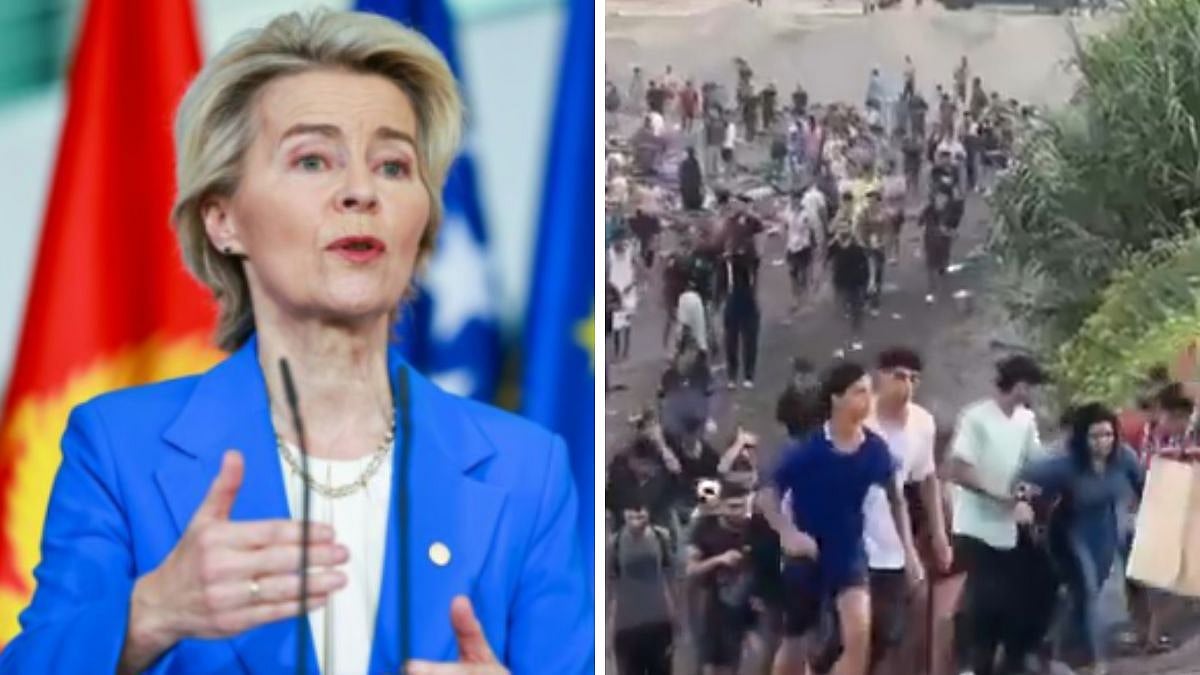
European Commission President Ursula von der Leyen on Friday condemned the situation at the Spanish enclave of Ceuta, calling the scenes emerging from the border "unacceptable" and stressing that the European Union would not tolerate irregular entries into its territory.
In a post on her official X account, von der Leyen said the EU's external borders must be protected and insisted that migration should take place in accordance with the bloc's rules.
"The images coming from Ceuta are unacceptable. We cannot allow anyone to come to our Union without abiding by our rules," she wrote.
She called for an immediate halt to dangerous border crossings, the dismantling of human smuggling networks and the swift return of individuals who are not entitled to remain in the European Union, in line with existing EU regulations.
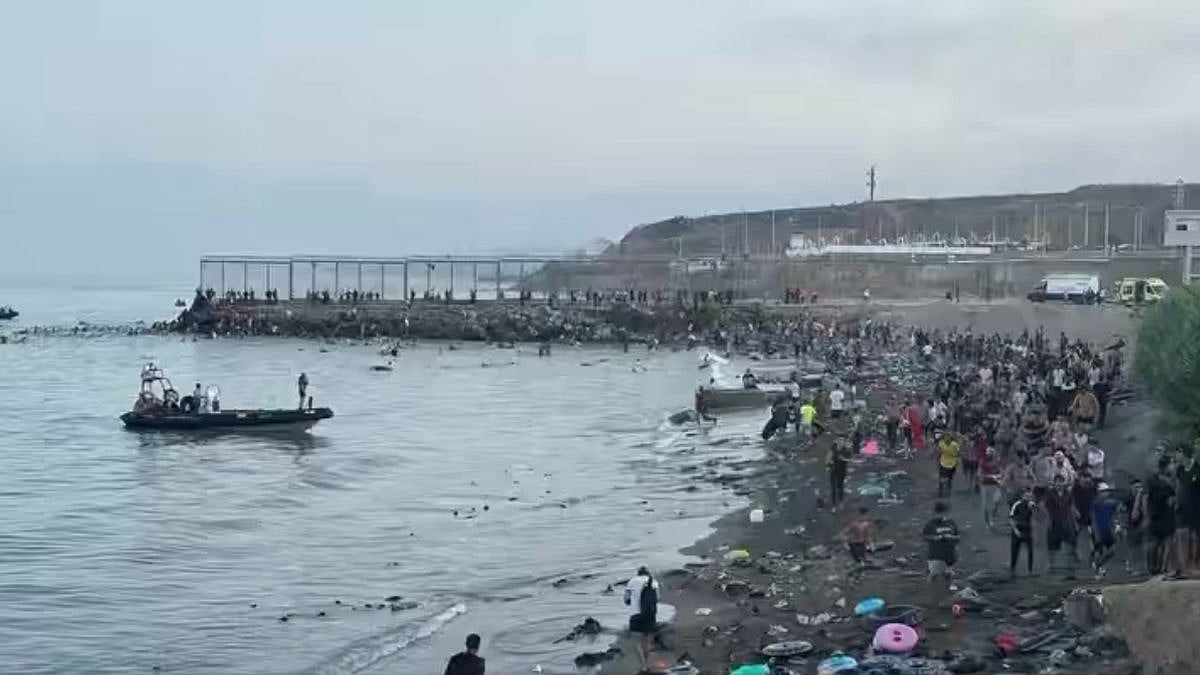
"Dangerous crossings must stop immediately. Smuggling networks must be dismantled. And returns must be swift, as our rules allow," von der Leyen said.
To address the situation, the European Commission chief said she had tasked two European Commissioners with supporting Spain's efforts to manage the border.
According to von der Leyen, European Commissioner for Internal Affairs Magnus Brunner is already working closely with Spanish authorities and is prepared to travel to key locations if necessary. She added that Brunner would coordinate additional operational support for Spain, including assistance through Frontex, the EU's border and coast guard agency.
She also said Commissioner for the Mediterranean Dubravka Šuica is in contact with her Moroccan counterpart as part of ongoing diplomatic engagement.
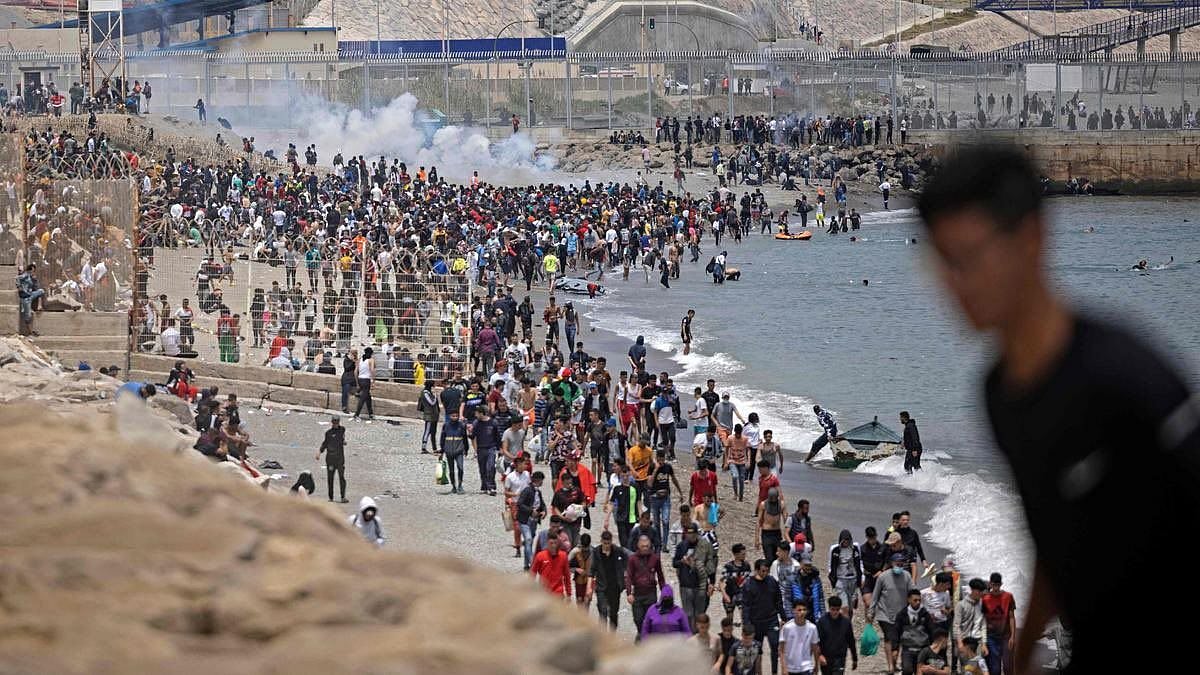
Her remarks came as Ceuta faced an unprecedented migrant influx, with around 60,000 people reportedly entering the Spanish autonomous city from Morocco over the past 24 hours, according to Ceuta President Juan Jesús Vivas. The number is equivalent to nearly 70 per cent of the city's resident population. The mass crossing also turned deadly, with at least 34 migrants losing their lives.
Describing the situation as dire, Vivas said, "The situation that Ceuta is going through is absolutely unsustainable."
Expressing confidence in cooperation between the European Union and Morocco, von der Leyen said the two sides' close partnership would help achieve "concrete results" in managing the situation.

The crisis intensified on Thursday and continued into Friday, as clashes broke out between Moroccan security forces and migrants gathered near the border. Hundreds of migrants assembled on a hill overlooking Ceuta before Moroccan authorities dispersed the crowd using tear gas. Despite the crackdown, many continued attempting to reach Spanish territory by swimming across the border, while others later returned on foot to Morocco.
Spanish Prime Minister Pedro Sánchez, who visited Ceuta amid the crisis, condemned the large-scale border breach, describing it as "a violation of Spain's territorial integrity."
He also blamed human trafficking networks for exploiting vulnerable migrants, saying smugglers mislead countless young people and often expose them to fatal risks, whether during dangerous sea crossings or at border points such as Ceuta.
Ceuta, a Spanish territory on the northern coast of Africa bordering Morocco, has long been a key gateway for irregular migration into Europe and remains one of the EU's most sensitive external border points.

