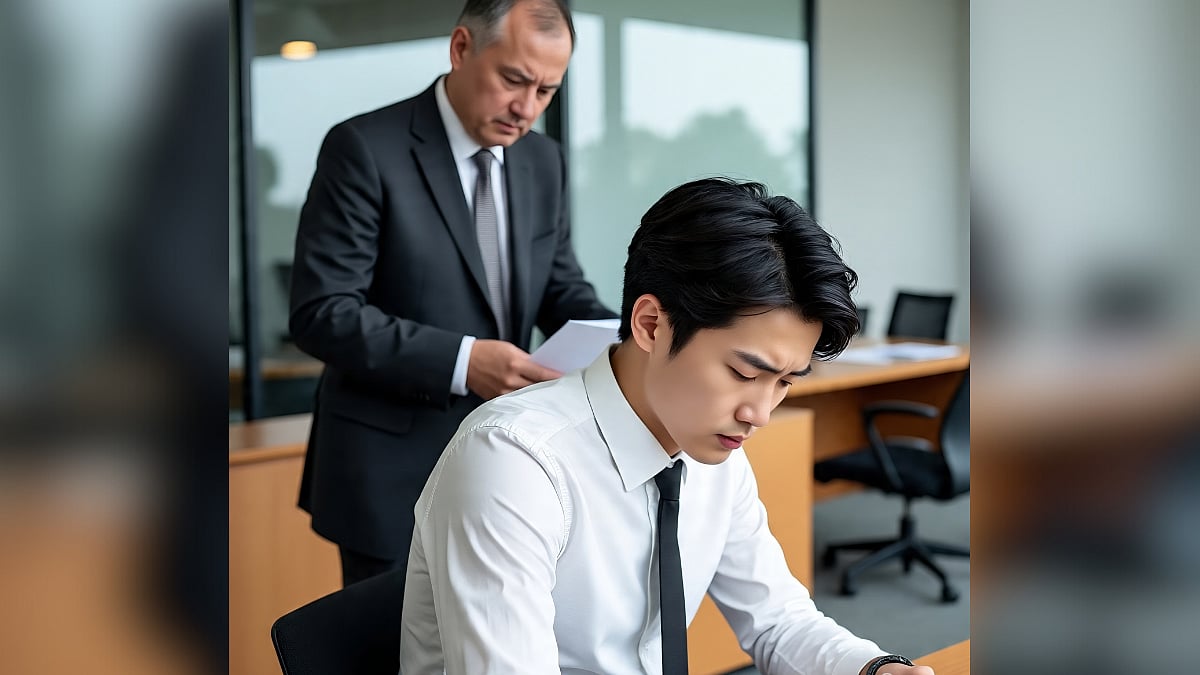
An engineer in eastern China has lost his job after his employer flagged a pattern of frequent and unusually long bathroom breaks, a case that has now drawn widespread attention following a legal battle over his dismissal.
According to a report by the South China Morning Post, the man, identified by his surname Li, was employed at a company in Jiangsu province for over a decade. Li joined the firm in 2010 and renewed an open-term employment contract in 2014. His position required him to remain on standby and respond promptly to work-related communications during office hours.

Trouble began between April and May 2024, when company records showed that Li had taken several bathroom breaks, with one absence reportedly stretching up to four hours. Managers grew concerned over his repeated and prolonged disappearances from his workstation. Attempts to contact him through the company’s internal chat system during these periods went unanswered, further raising red flags.
The employer eventually compiled surveillance footage documenting Li’s extended bathroom visits and submitted the evidence in court. Under company policy, leaving one’s post without permission beyond a stipulated duration was treated as unauthorised absence.
Li challenged the termination in court, claiming it was unlawful. He argued that he suffered from haemorrhoids, which required frequent and lengthy bathroom visits. To support his claim, he submitted online purchase records for haemorrhoid medication bought by his partner in May and June 2024, along with hospital records showing he underwent surgery in January this year. He sought compensation of 320,000 yuan, or approximately US$45,000.

However, the court ruled against Li, stating that the duration of his bathroom breaks far exceeded reasonable physical needs. It also noted that the medical evidence covered periods after many of the incidents had already occurred. Crucially, Li had failed to inform his employer about his condition or formally apply for sick leave, as required under his contract.
Following two rounds of hearings, the court mediated a settlement, directing the company to pay Li 30,000 yuan (around US$4,200) as an allowance, citing his years of service and the difficulties of sudden unemployment.

