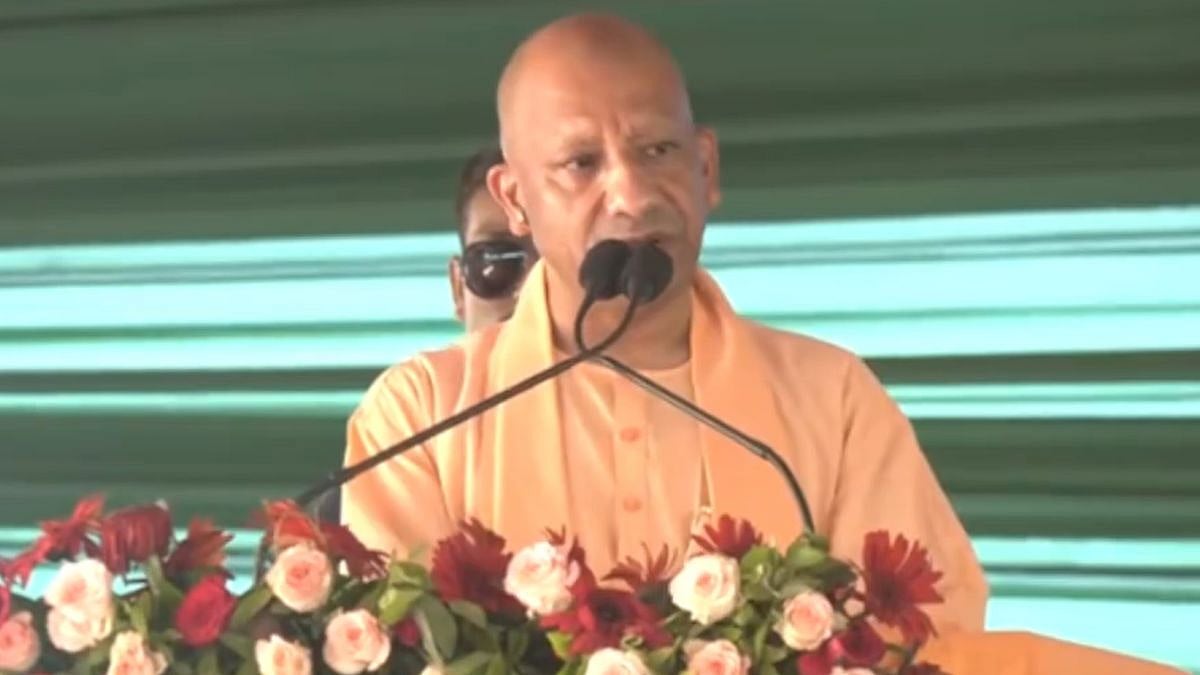
Lucknow: The Yogi government is continuously taking major steps towards making health services more transparent, high-quality and accountable. In this sequence, major action has been taken against private hospitals that failed to comply with the prescribed standards under the Ayushman Bharat Pradhan Mantri Jan Arogya Yojana.
Chief Minister Yogi Adityanath has directed that no negligence of any kind in providing better and quality treatment to the beneficiaries of the scheme will be tolerated.
CEO of State Agency for Comprehensive Health and Integrated Services (SACHIS) Archana Verma stated, the Ayushman Bharat Pradhan Mantri Jan Arogya Yojana is an important scheme to provide free and quality healthcare services to economically weaker and deprived sections of society. On the instructions of Chief Minister Yogi Adityanath, corrective measures are being taken from time to time in the state to make it more effective, transparent and reliable.
He added, in this direction, the process of empanelment and quality assessment of hospitals has been made even more stringent. Through the Hospital Empanelment Module (HEM) portal, the Yogi government is carrying out verification of empanelled hospitals on the basis of prescribed standards. Under the new system, hospitals have been mandated to fulfill 35 important standards. These include the hospital registration certificate, fire safety NOC, required infrastructure, educational qualifications of doctors, HFR registration, along with other necessary documents and arrangements.
The CEO stated, the National Health Authority and the State Health Agency provided assistance to hospitals at every level through e-mail, telephone, messages, correspondence and virtual meetings. As a positive result, more than 95 percent of hospitals have successfully migrated to the HEM 2.0 portal so far. However, some private hospitals failed to complete the process within the prescribed timeline. The Yogi government provided them several opportunities, but despite this, around 200 private hospitals failed to complete the process according to standards.
He added, these include hospitals from several districts such as Agra, Aligarh, Prayagraj, Amethi, Amroha, Azamgarh, Baghpat, Banda, Barabanki, Bareilly, Basti, Bijnor, Bulandshahr, Chandauli, Chitrakoot, Deoria, Farrukhabad, Gautam Buddh Nagar, Ghaziabad, Gonda, Gorakhpur, Hardoi, Hathras, Jaunpur, Jhansi, Kannauj, Kanpur Nagar, Kushinagar, Lalitpur, Lucknow, Mathura, Mau, Meerut, Moradabad, Muzaffarnagar, Saharanpur, Pratapgarh, Sant Kabir Nagar, Sultanpur, Varanasi, Shahjahanpur, Jalaun, Mirzapur, Ambedkar Nagar, Rampur and Sonbhadra.
On the instructions of CM Yogi, strict action has been taken against such hospitals, under which payment to 100 hospitals has been stopped, while around 100 other hospitals have been suspended from the scheme. This action has been taken to ensure that beneficiaries of the Ayushman scheme receive only standard-based and quality healthcare services. It may be noted that the Yogi government has also issued directions to all empanelled hospitals to obtain NABH quality certification.
Along with this, regular audits and monitoring of hospitals are also being conducted at the state and district levels so that any kind of irregularity can be prevented in time. The government is also placing special emphasis on maximum use of technology in healthcare services.

Instructions have been issued to implement the ABDM-enabled HMIS system in hospitals to make patient management through digital means simpler and more transparent.
In addition, the Electronic Health Record (EHR) system is also being implemented in a phased manner. This will keep patients’ health records digitally secure and make the treatment process more organized and faster. From the state level, hospitals are also being provided training from time to time for portal operations and better healthcare services.
Along with this, strict monitoring is also being maintained in cases where complaints have been received regarding improper use of doctors’ degrees or details. Action is being taken in such cases as per rules.

