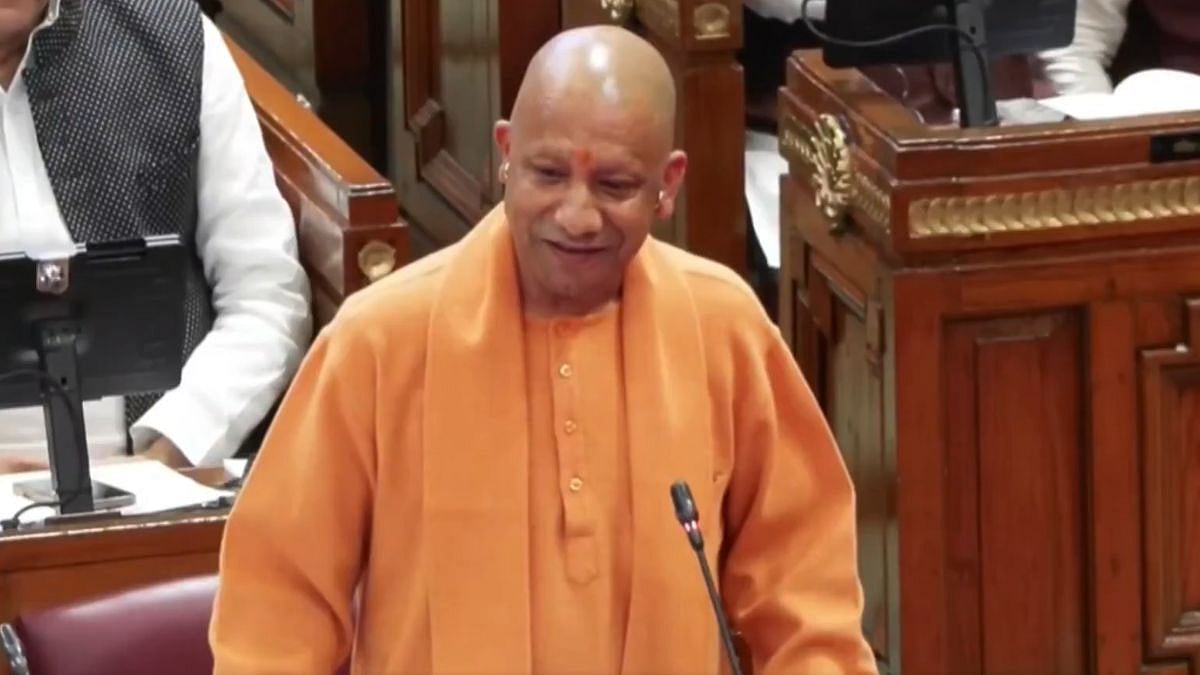
Lucknow, February 20: While participating in the discussion on the Budget 2026–27 in the Legislative Assembly, Chief Minister Yogi Adityanath highlighted extensive reforms undertaken in the fields of basic, secondary and higher education, along with several new announcements.
He stated that unprecedented priority has been given to education infrastructure, digital empowerment, teacher welfare and student facilities. The government’s objective, he clarified, is not merely to increase the number of schools but to make Uttar Pradesh a leading force in knowledge and innovation through quality, technology-driven, research-oriented and skill-based education.
Major Push for Kasturba Schools and Girl Education
A major announcement in this budget is the allocation of ₹580 crore for establishing Kasturba Gandhi Balika Vidyalayas in development blocks where such schools do not exist.
Chief Minister announced that new Kasturba Gandhi Balika Vidyalayas will be set up in blocks currently lacking these institutions. The provision of ₹580 crore is aimed particularly at benefiting girls from poor, backward and extremely backward sections of society.
Additionally, ₹300 crore has been allocated for maintenance works following school safety audits.
Strengthening Basic Education and Digital Empowerment
Speaking on basic education infrastructure, the Chief Minister said, “There has been a significant improvement in quality compared to earlier times. Dropout rates have declined, and the education system is being strengthened through composite schools.”
He added that initiatives such as smart classes, digital libraries, Mission NIPUN and digital education under Operation Kayakalp have been implemented to promote digital empowerment.
The budget provides ₹2,382 crore for CM Composite Schools and ₹300 crore for establishing smart classes in primary schools.
Honorarium Hike for Shiksha Mitra and Instructors
Regarding the honorarium of Shiksha Mitra, the Chief Minister said, “Earlier they were paid ₹3,000, which was later increased to ₹10,000. Now, from April 2026, Shiksha Mitra will receive ₹18,000 and instructors ₹17,000 as a monthly honorarium.”
He further announced that a cashless medical facility of up to ₹5 lakh will also be provided to them. Cashless medical facilities will also be extended to dependent families of teachers and staff.
Secondary Education and Sports Infrastructure
In secondary education, infrastructure and sports facilities have been strengthened under Project Alankar. Budget provisions have been made for additional building construction in PM SHRI schools.
An allocation of ₹300 crore has been made for providing sanitary napkins to girl students. Cashless medical facilities will also be implemented for teachers and non-teaching staff.
Higher Education: Rankings, Research and Global Linkages
In higher education, emphasis has been placed on strengthening quality, skills, research and digital infrastructure.
Six state universities in Uttar Pradesh have received A++ rankings in NAAC evaluation. The number of NAAC-accredited institutions has increased from 95 to 158. Institutions featured in NIRF rankings have also risen from 32 to 158.
There has been a significant increase in patent activity. While earlier the number was negligible, currently 5,677 patents have been filed and around 350 have been granted.
The Chief Minister informed that new universities have been established in Saharanpur, Aligarh, Azamgarh, Mirzapur, Devipatan and Moradabad divisions. A transparent policy has been implemented for private universities, and recognition of two universities has been cancelled due to rule violations.
He further stated that the process for establishing a campus of Western Sydney University in Greater Noida has progressed significantly.
Also Watch:
Through initiatives such as the Skill India Mission, CM Vidyalakshmi Scheme, Chevening Scholarship, AI Certification Support Scheme, STEM Hostel Scheme (for girls) and Rani Lakshmibai Scooty Scheme, youth are being prepared for global competitiveness.
The government has also made separate budgetary provisions for each university to promote research and innovation.

