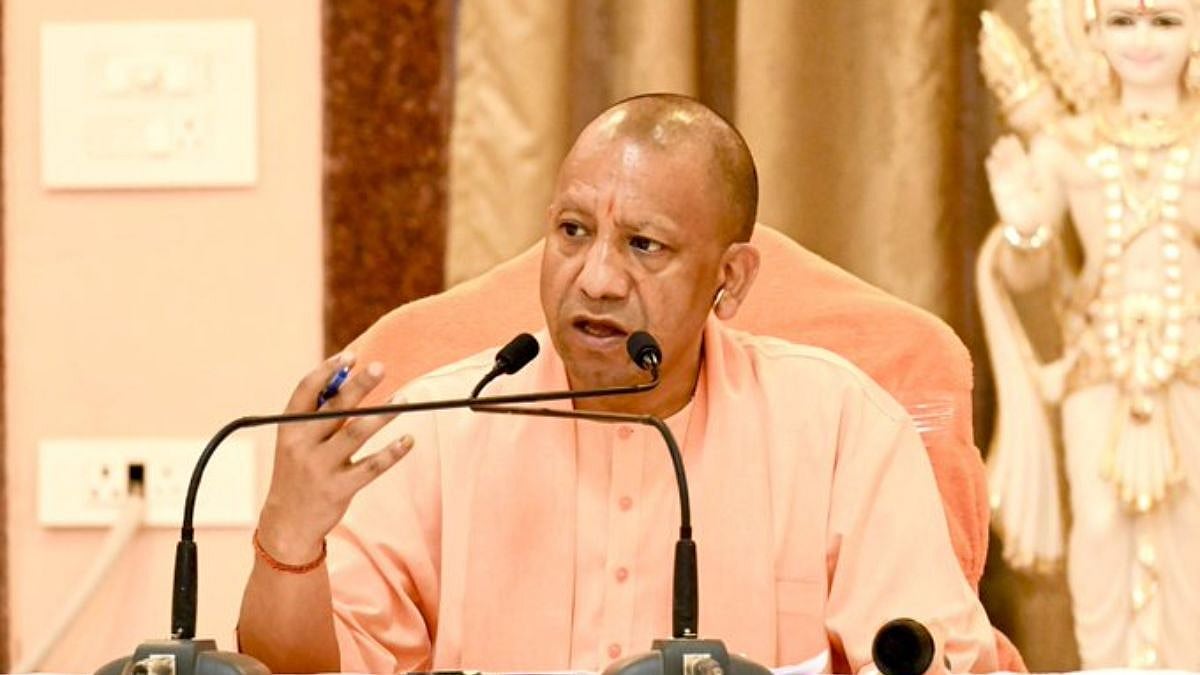
Lucknow: Uttar Pradesh government has signaled concrete steps toward making the state a leader in the field of quantum computing. Chief Minister Yogi Adityanath has made it clear that Uttar Pradesh will present a strong claim in emerging deep-tech domains such as quantum computing. Discussions are progressing around a potential tripartite collaboration model involving IBM and IIT Kanpur.
Speaking at the inauguration of IBM’s AI GOVTech Innovation Center in Lucknow, Chief Minister noted that India’s first computer was installed at IIT Kanpur, linking Uttar Pradesh to a significant technological legacy. Building on this heritage, the state now aims to embark on a new journey in quantum computing. He indicated that if IBM, IIT Kanpur, and the state government work together, a national-level center for quantum technology could be developed.
The state government has already made budgetary provisions to establish Centers of Excellence in areas such as robotics, drone technology and med-tech. Several Centers of Excellence are currently operational across different sectors.
In this sequence, quantum computing is being viewed as the next strategic domain. Possibilities are being explored to provide the necessary infrastructure for quantum computing at the IIT Kanpur campus and to strengthen partnerships with industry.
Experts believe that if quantum research and testing facilities are developed in Uttar Pradesh, they will promote high-level research, foster a startup ecosystem, and attract global investment. Additionally, new skill development and employment opportunities for youth in the technology sector will be created.
The government’s objective is to secure a prominent position for Uttar Pradesh on the national map in deep-tech and advanced technology sectors. The initiative in quantum computing is seen as part of this broader strategy.
Quantum computing is based on a technology fundamentally different from traditional computers. Conventional computers operate using bits, where each bit has a value of either 0 or 1. In contrast, quantum computers use qubits, which can exist simultaneously in both 0 and 1 states - a phenomenon known as superposition.
Another key principle of quantum technology is entanglement, through which two qubits become interconnected in such a way that a change in one instantly affects the other. Because of these characteristics, quantum computers can perform extremely complex calculations in a very short time. They hold vast potential in fields such as medical research, cybersecurity, climate forecasting, artificial intelligence and financial analysis.
Benefits of a Quantum Computing Ecosystem for the State
The state will establish itself as a center for advanced research at national and international levels.
Multinational companies and tech giants working in quantum technology will be attracted to invest in the state.
Deep-tech startups, particularly in cybersecurity, AI, fintech, and health-tech, will grow rapidly.
High-paying employment opportunities will emerge in quantum research, engineering, data science and software development.
IIT Kanpur and other technical institutions will gain increased opportunities for global research collaborations and projects.

Analysis of complex biological data will accelerate the development of new medicines and treatment methods.
Productivity and efficiency in manufacturing, logistics and energy sectors will improve through solutions to complex computational problems.
Policy-making will become more scientific and effective through analysis of large datasets and complex modeling.
The integration of quantum computing, AI, and deep-tech could position the state prominently not only on the national but also the global technology map.

