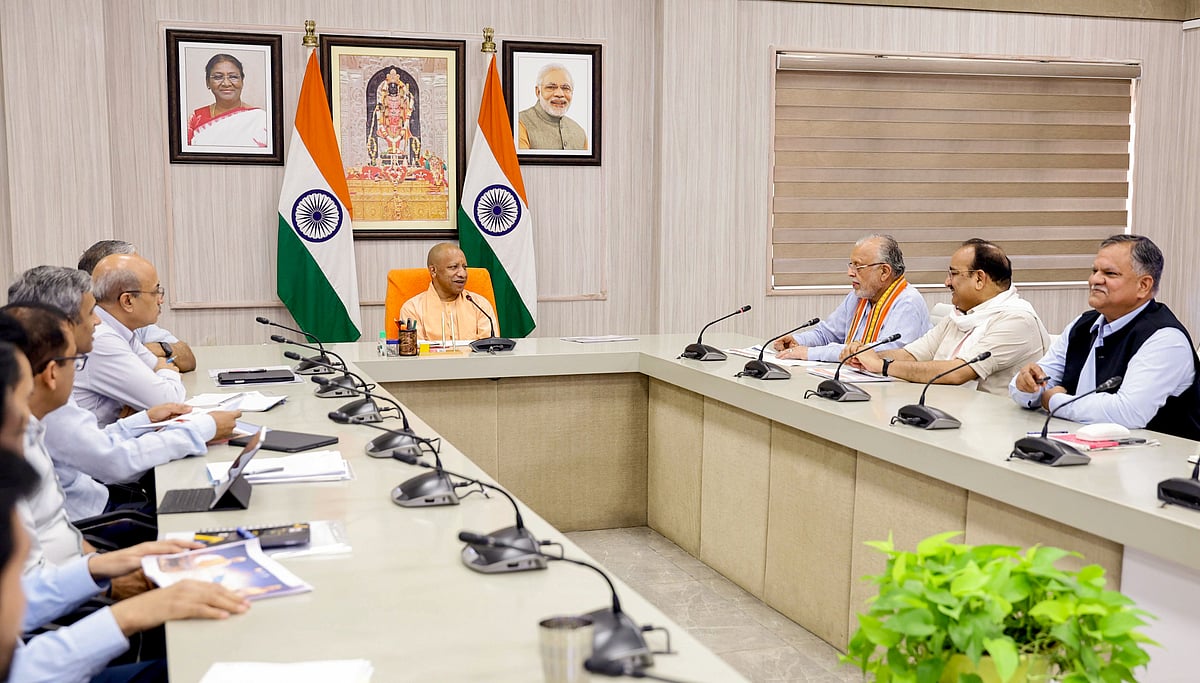
Lucknow: Chief Minister Yogi Adityanath on Wednesday conducted a high-level review of three important subjects linked to the future economy of the state, which include the Uttar Pradesh Data Centre Cluster (UPDCC), Project Ganga, and possible exemption in mandi fee and cess to promote in-house processing of wheat.
Reviewing the Uttar Pradesh Data Centre Cluster (UPDCC), the Chief Minister said that the project will create the basic infrastructure for Uttar Pradesh’s AI mission.
He said, "The Data Centre Cluster should not remain limited to the NCR region and other parts of the state should also be connected with it."
Chief Minister directed that the project can begin from the Bundelkhand Industrial Development Authority (BIDA) area, where large-scale land is available. Dialogue should be established with major tech companies, including the Tata Group, to develop Lucknow as an 'AI City'.
It was informed during the meeting that the Uttar Pradesh Data Centre Cluster is a long-term strategy to make the state the biggest AI compute power centre of India and the Global South. Its objective is to make Uttar Pradesh a global hub for artificial intelligence, data centres, cloud infrastructure and high-tech digital manufacturing.
The presentation informs that this is not just a project but a blueprint for the new economic structure of Uttar Pradesh for the next 50 years. Under this, targets have been set to build a 5 trillion dollar economy, generate more than 1.5 lakh direct jobs and develop a 5-gigawatt AI compute corridor by 2040.
It was told during the meeting that by 2040, the world’s new economy will develop around 'future arenas' such as AI, cloud, cyber security, semiconductors, electric vehicles, robotics and space technology, whose combined global market could reach 29 to 48 trillion dollars.
For India, sectors like AI software and services, cloud services, cyber security, semiconductors, aerospace and EVs will become major economic engines of the future.
The meeting highlighted Uttar Pradesh’s 5 major structural strengths which include the geographical location, vast land availability, large youth population, rapidly developing infrastructure and strong leadership. It was stated that Uttar Pradesh’s inland location keeps it safe from sea risks and cyclones, while expressways, airports, logistics networks and power infrastructure are already developing rapidly.
Due to Indian Institute of Technology Kanpur, National Institute of Technology Prayagraj and more than 50 engineering institutions, the state has a large pool of technical talent.
The meeting described Uttar Pradesh as Asia’s most secure, scalable and connected inland AI territory. It was stated that almost all major fibre networks of the country pass through UP and the state is connected with all sea cable landing points of India.
Connectivity of less than 5 milliseconds within the state and 5-12 milliseconds connectivity to digital hubs like Mumbai and Chennai is available. For global tech companies, UP is an ideal AI infrastructure hub with lower cost, better scalability and higher network redundancy.
Chief Minister also reviewed 'Project Ganga' - Government Assisted Network for Growth and Advancement. He directed that youth selected as digital entrepreneurs should be given quality training. He said a system should also be developed so that companies carrying out survey work can use these youths.
Chief Minister stressed rapid expansion of the optical fibre network and complete transparency in all works. Proper incentives should be provided to digital entrepreneurs from the beginning.
It was informed in the meeting that Project Ganga is an ambitious initiative to bring high-speed broadband networks to rural Uttar Pradesh. Its objective is not only to provide internet but also to promote telemedicine, digital education, skill development, e-governance, digital employment and rural entrepreneurship. Under the project, more than 10,000 youths are targeted to be developed as Digital Service Providers (DSPs), which is expected to create around 50,000 direct and over 1 lakh indirect jobs.
Under the scheme, a target has been set to connect more than 20 lakh homes with fibre-based high-speed internet networks. Each DSP will be able to connect 200 to 300 homes in their area. Special priority has also been given to women entrepreneurship and a target has been fixed to include around 50 percent women entrepreneurs.
In the meeting, it was informed that only limited services are possible through mobile internet, whereas high-speed broadband is necessary for real digital transformation. Strong digital infrastructure was described as essential for services like AI-based agriculture, drone monitoring, smart villages, virtual labs, telemedicine and cloud computing.
Under Project Ganga, DSPs will not only be internet service providers but will also develop a complete network of digital services in rural areas. They will provide services such as high-speed broadband, IPTV, OTT access, CCTV solutions, public Wi-Fi, cyber security and enterprise connectivity. Under the scheme, each DSP will be provided interest-free loans of up to Rs 5 lakh. The project is currently being prepared as a 'proof of concept' in 21 priority districts, after which it will be expanded across the state.
Chief Minister also conducted a detailed review of the strategy to promote in-house processing of wheat. Stressing the need for reforms in the mandi tax and mandi fee system, he said that the state’s mandi should be made modern, clean and attractive. He directed that cleanliness, painting, lighting during festivals, removal of encroachments and better management should be ensured in mandis.
Mentioning the possible impact of El Niño, the Chief Minister said that crops may be affected in the coming years, so the state must prepare from now for food security. The state’s food grain reserves should remain adequate and strong.
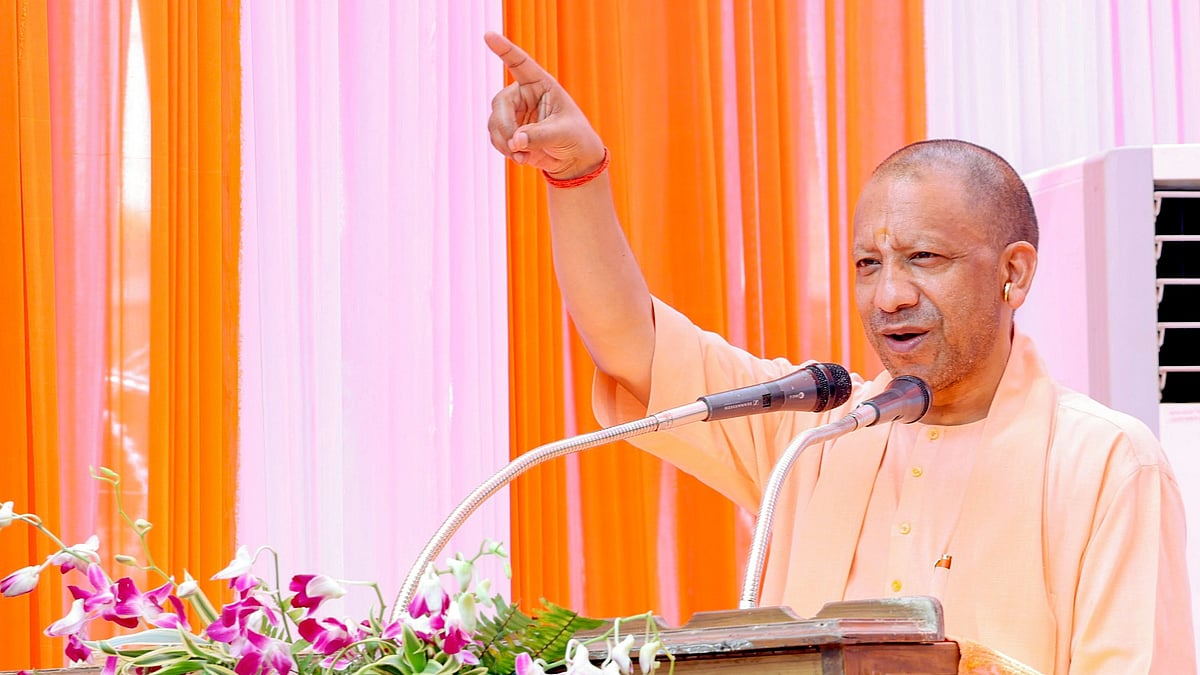
During the meeting, it was informed that Uttar Pradesh is the largest wheat-producing state in the country. In 2025-26, wheat production in the state is estimated at 372 lakh metric tonnes, while total availability may reach 407 lakh metric tonnes. Around 2.88 crore farmers in the state are connected with wheat production. Despite this, due to limited processing capacity, a large quantity of wheat goes to other states as raw grain, causing value addition, GST revenue and employment opportunities to move outside the state.
The state has 559 roller flour mills with a total milling capacity of 218.4 lakh metric tonnes, but actual utilization is limited to only 126.45 lakh metric tonnes. Apart from this, more than 40,000 flour mills are also operational.
The report stated that if wheat processing is promoted within the state, there can be major growth in employment, electricity consumption, GST collection and food industries.
The committee suggested that registered mills in Uttar Pradesh purchasing wheat for processing within the state should be given exemption in mandi fee and development cess, but this exemption should not apply to trading activities.

