Lucknow: Uttar Pradesh has recorded a 36.7 per cent decline in annual average PM2.5 levels between 2021 and 2025, but experts have warned that air pollution remains a serious concern and called for a shift from city-centric measures to an integrated strategy covering rural and urban areas.
A study by Climate Trends found that the state's annual average PM2.5 concentration declined from 81.5 micrograms per cubic metre in 2021 to 51.6 micrograms per cubic metre in 2025. The proportion of days when pollution levels exceeded the national 24-hour standard of 60 micrograms per cubic metre also fell from 54 per cent to 28.2 per cent during the period.
The findings were presented at a high-level expert meeting in Lucknow on Thursday, organised by Climate Trends in partnership with IIT Kanpur, King George's Medical University and Doctors for Clean Air and Climate Action.
Pollution Levels Remain Above National Standards
Despite the improvement, the annual average PM2.5 concentration in the state remains above the national standard of 40 micrograms per cubic metre. More than one in four days in 2025 also recorded pollution levels above the prescribed daily limit.
The study, based on data from the Central Pollution Control Board's continuous air quality monitoring stations, identified western Uttar Pradesh as a major pollution hotspot. Ghaziabad, Noida, Greater Noida, Muzaffarnagar and Meerut recorded the highest average pollution levels over the five-year period.
Pollution levels also showed a marked seasonal variation, with November recording the highest average PM2.5 concentration at 112.6 micrograms per cubic metre, while July had the lowest at 24.6 micrograms per cubic metre.
Experts Call For Expanded Rural Monitoring
Experts said the next phase of air pollution control in Uttar Pradesh must extend beyond major cities and include villages, smaller towns and peri-urban areas, where air quality monitoring has remained limited.
IIT Kanpur has deployed more than 1,400 indigenously developed low-cost air quality sensors across Uttar Pradesh and Bihar under its Ambient Air Quality Monitoring over Rural Areas using Indigenous Technology (AMRIT) project. The network covers rural and urban blocks and uses sensor readings, weather information and machine learning to identify pollution patterns and airsheds, including regions that cross state boundaries.
Prof S N Tripathi, Dean of the Kotak School of Sustainability at IIT Kanpur, said the monitoring network had provided, for the first time, a block-level picture of air quality rather than limiting assessments to cities.
Rural Areas Face Significant Health Risks
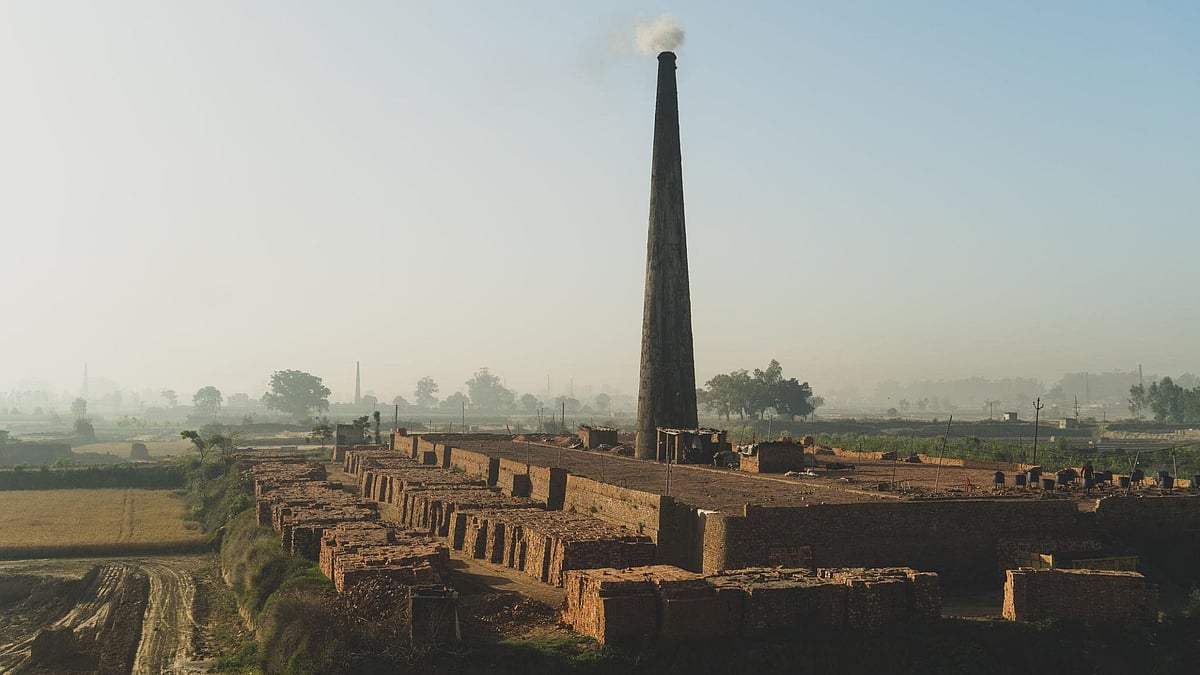
He said the most polluted areas were spread across the Upper and Middle Gangetic Plain airsheds. Pollution sources included household cooking and heating fuels, brick kilns and open waste burning, which were common in both rural and urban areas.
Citing modelling for northern India, Tripathi said rural residents faced almost the same pollution-related health risks as urban residents. However, because of the larger rural population, villages accounted for roughly three-fourths of pollution-related deaths.
He added that during the post-monsoon and winter months, PM2.5 levels could rise to two to three times the national standard, with unhealthy air conditions prevailing on nearly nine out of 10 days.
Need For Regional Pollution Control Strategy
Uttar Pradesh Pollution Control Board chairman R P Singh said air quality management over the past decade had largely followed a city-to-city approach and stressed the need for a broader regional strategy.
He called for a single coordination authority that could plan, take decisions and implement measures to tackle pollution across the Indo-Gangetic plains.
Air Pollution Remains Public Health Emergency
Health experts also warned about the growing impact of air pollution. Dr Arvind Kumar, chairman of the Institute of Chest Surgery at Medanta Hospital and founder trustee of the Lung Care Foundation, said nearly 50 per cent of his lung cancer patients were now non-smokers.
Also Watch:
He said air pollution was not merely an environmental problem but a public health emergency, affecting the lungs, heart, brain and even unborn children.
Dr Palak Balyan, Research Lead at Climate Trends, said the improvement in air quality offered an opportunity for Uttar Pradesh to strengthen its pollution control measures through timely interventions in both rural and urban areas.
Experts stressed that an airshed-based approach, supported by continuous monitoring and coordination across administrative boundaries, would be crucial to sustaining the gains made by the state.

