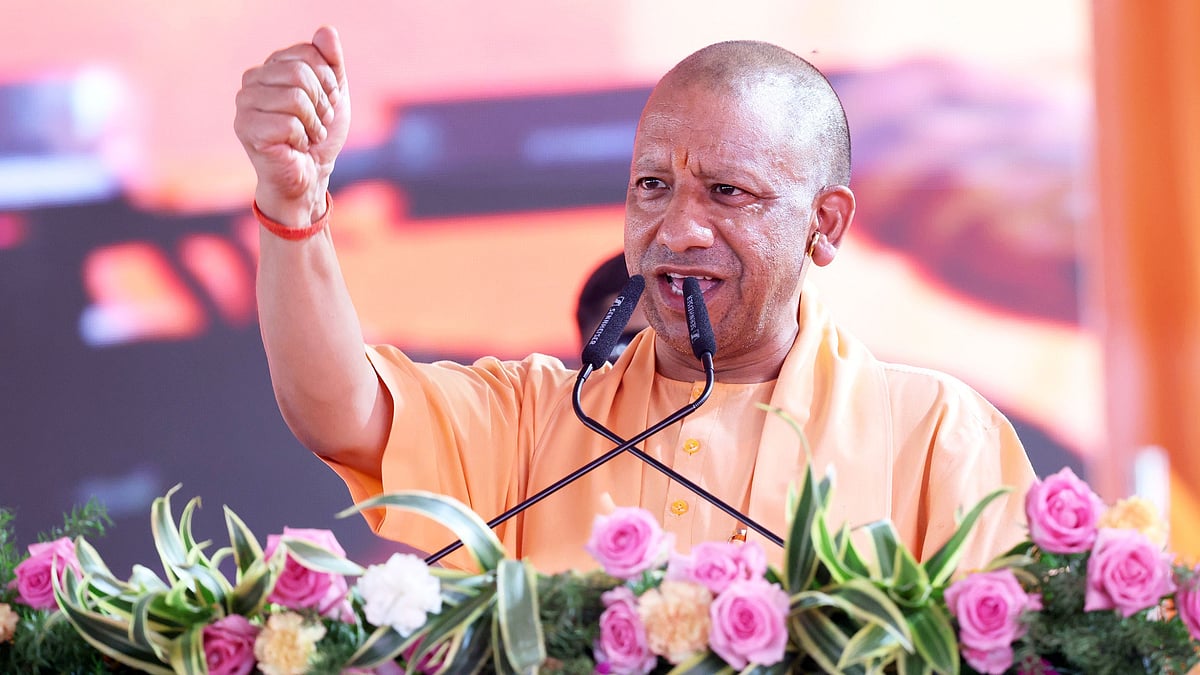
Lucknow: Uttar Pradesh Chief Minister Yogi Adityanath's claim that 1.27 crore Hindu voters are missing from electoral rolls has given a fresh political dimension to the BJP's campaign ahead of the 2027 Assembly elections, with the party seeking to consolidate Hindu votes by raising concerns over alleged discrepancies in the voter lists.
The Chief Minister has sought to link the issue of missing voters with the Special Intensive Revision (SIR) of electoral rolls, alleging that the number of Hindu voters has declined while the Muslim electorate has registered an increase. The claim has triggered a political debate, with the BJP attempting to turn the voter list revision into a wider narrative around Hindu identity and electoral representation.
Adityanath has reportedly cited discrepancies in the electoral rolls of different tiers of local and Assembly elections. He claimed that around 66 lakh voters listed in panchayat electoral rolls were missing from Assembly voter lists. He also referred to discrepancies involving 55 lakh voters and alleged that government welfare beneficiaries in the 18-19 age group were missing from electoral records.
Chief Minister Seeks Electoral Roll Corrections
The Chief Minister has submitted a memorandum to the Election Commission seeking the inclusion of eligible voters whose names are missing from the electoral rolls. He has also asked the poll body to examine the alleged discrepancies.
However, the political significance of the issue extends beyond electoral roll corrections. Adityanath has repeatedly invoked his 80:20 formulation, arguing that 80 per cent of voters support the BJP's development and security agenda while the remaining 20 per cent back the Opposition. His latest remarks appear to add a sharper religious dimension to this political formulation.
BJP Revives Hindu Consolidation Narrative
The Chief Minister has also revived his earlier slogan, 'Batenge toh Katenge', warning that divisions among Hindus along caste lines could weaken the community politically. The slogan, first used during the Maharashtra Assembly election campaign in 2024, has since become an important part of the BJP's broader appeal for Hindu consolidation.
The BJP appears keen to make the issue a political talking point before the Assembly elections, particularly at a time when the Samajwadi Party is attempting to expand its PDA (Pichhda, Dalit, Alpsankhyak) social coalition.
SP president Akhilesh Yadav has been trying to counter the BJP's Hindutva narrative by broadening his party's social base and reaching out to different caste groups. The BJP, meanwhile, is seeking to challenge the SP's strategy by repeatedly bringing the issue of religious identity into the electoral discourse.

Opposition Questions Claims Over Missing Voters
The political controversy has also drawn the Congress into the debate. Uttar Pradesh Congress president Ajay Rai and other Opposition leaders have questioned the Chief Minister's claims. Congress leader Aradhana Mishra said the concerns raised by Adityanath were similar to apprehensions expressed earlier by Rahul Gandhi regarding alleged irregularities in voter lists.
The issue has also exposed differences within the Opposition over the electoral narrative ahead of the 2027 polls. Congress leaders have accused the BJP of using the voter list revision to divert attention from questions relating to electoral transparency and democratic rights.
Also Watch:
Electoral Debate Intensifies Ahead Of 2027
For the BJP, however, the controversy offers an opportunity to reinforce its Hindutva narrative while questioning the SP's attempts to build a broader social coalition. By projecting the alleged deletion of Hindu voters as an issue requiring urgent attention, the party is seeking to place religious identity at the centre of the electoral debate.
With the SIR exercise emerging as a major political issue, voter list discrepancies could become another flashpoint between the ruling BJP and Opposition parties in the run-up to the 2027 Assembly elections.

