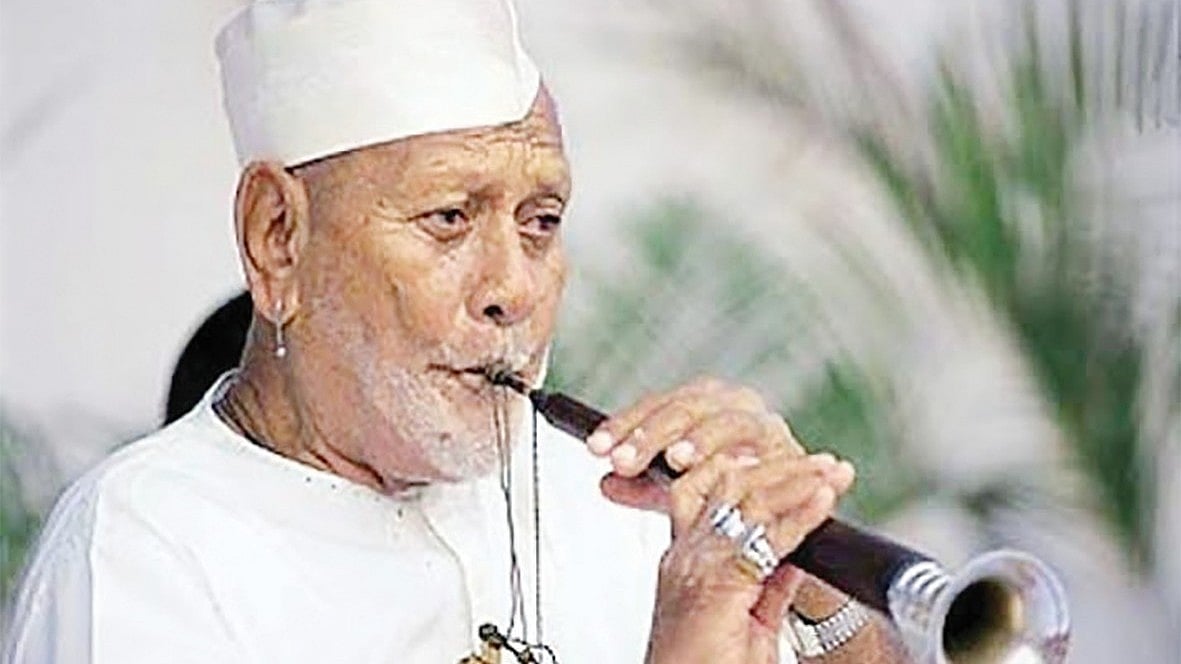
Varanasi: The shehnai that once echoed from the Red Fort on India’s first Independence Day now seems to have fallen silent in the family of Ustad Bismillah Khan. The Bharat Ratna awardee, who transformed the shehnai from a royal-court and ceremonial instrument into a respected form of classical music and took it to international concert stages, is being remembered by his family amid financial hardship and official indifference.
Bismillah Khan’s musical journey
Born in Dumraon, Bihar, on March 21, 1916, Bismillah Khan was named Qamaruddin. His grandfather reportedly called him “Bismillah” on seeing him, and the name stayed with him. He later moved to Varanasi and trained under his maternal uncle Ali Bux, a shehnai player at the Balaji Temple.
His music became a symbol of India’s composite culture. He performed at temples, played devotional melodies and also rendered mournful tunes during Muharram. He famously remained deeply attached to Varanasi and the Ganga, even rejecting the idea of permanently settling in the United States.
Also Watch:
Legacy of a Bharat Ratna artist
On August 15, 1947, Bismillah Khan played Raag Kafi from the Red Fort as India celebrated independence. He was later invited to perform there again during the 50th anniversary of Independence in 1997. His extraordinary career brought him the Padma Shri, Padma Bhushan, Padma Vibhushan and Bharat Ratna, among several other honours.
But the condition of his descendants today tells a different story.

