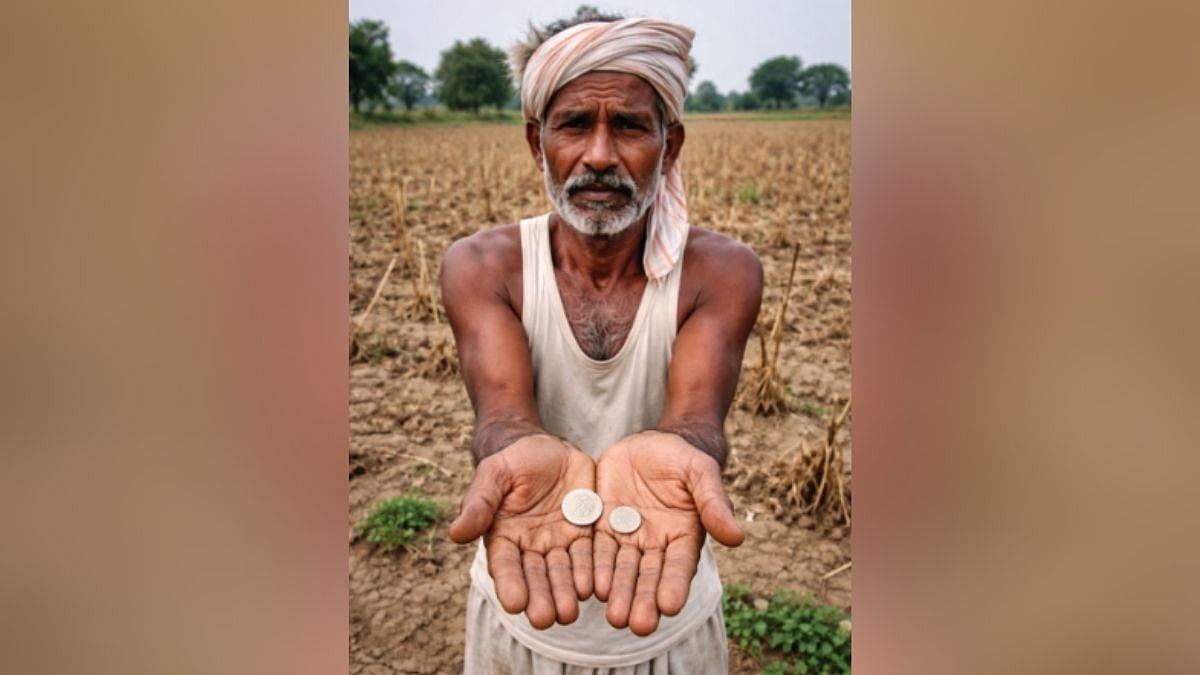
Bareilly, Jan 21: Bareilly has become the centre of a major controversy after shocking figures emerged under the Prime Minister’s Crop Insurance Scheme.
A local farmer, Baburam, received an insurance claim of just ₹2.72 for damage to his paddy crop, triggering widespread anger among farmers across the district. Several other farmers also reported receiving claims ranging from ₹2 to ₹10, despite suffering significant crop losses due to adverse weather conditions.
Premiums high, payouts negligible
The issue gained further attention when official data revealed that the insurance company operating in the district collected nearly ₹9.5 crore as premium during the season.
This amount included government subsidy as well as farmers’ own contributions. In sharp contrast, the total compensation paid to farmers remained extremely low, raising serious questions about the credibility and intent of the scheme.
Assessment process questioned
Farmers allege that the crop loss assessment process is flawed and disconnected from ground realities. They say the token payouts are an insult to their hardships, especially at a time when input costs, loans and household expenses continue to rise. Many affected cultivators claim that crop-cutting experiments and yield data do not reflect actual losses suffered in the fields.
Debate over scheme effectiveness
The controversy has reignited debate over the effectiveness of crop insurance schemes that were introduced to safeguard farmers from natural calamities and financial distress.
Farmer unions have demanded a transparent audit of claim calculations and strict action against insurance companies if irregularities are found. Agriculture department officials, however, argue that compensation is calculated strictly on the basis of notified yield data and established norms. They maintain that individual losses do not always translate into higher payouts if average yield benchmarks are not met.
Also Watch:
Calls for urgent reforms
As outrage grows, farmers are calling for urgent reforms to restore trust in crop insurance, warning that without fairness and transparency, such schemes risk losing their relevance altogether.

