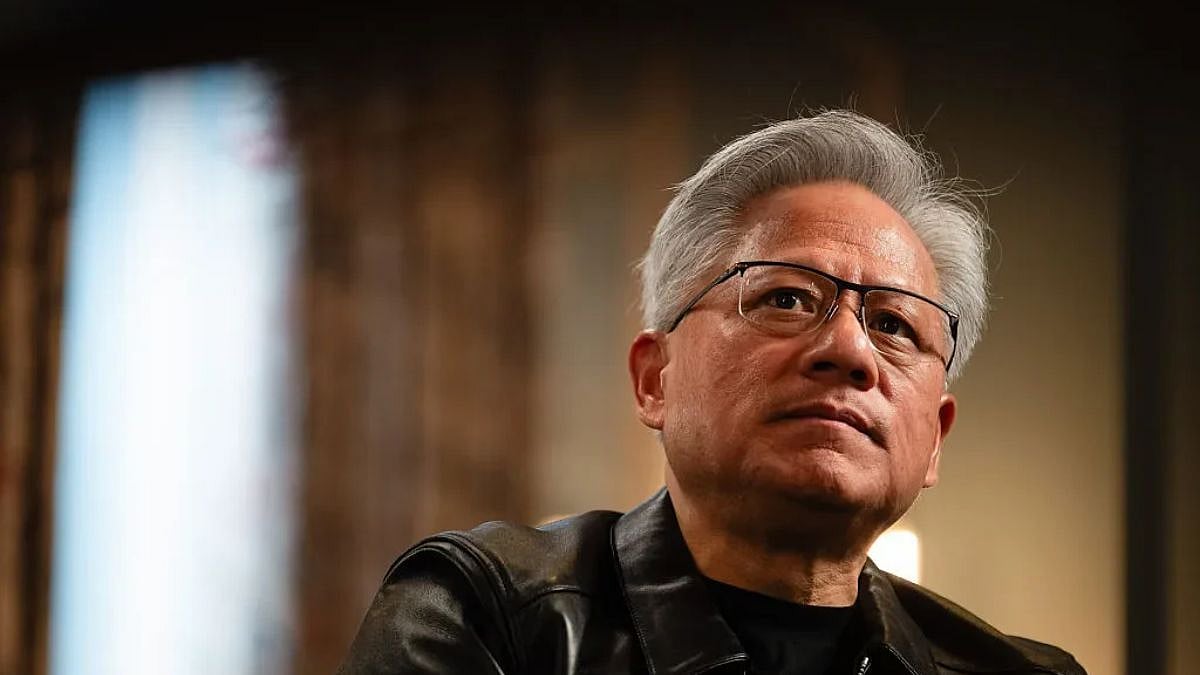
Defense Secretary Pete Hegseth and other senior Pentagon officials discussed using the Defense Production Act as leverage to pressure Nvidia's board to reinstate chief executive Jensen Huang. Hegseth and his senior deputy, Steve Feinberg, raised the 1950 law during weekend deliberations among senior Trump administration officials. Nvidia's board formally restored Huang as CEO on Monday morning.
The Wall Street Journal reports to growing scrutiny of the administration's role in Huang's return. The editorial board wrote on Monday that President Donald Trump's "extraordinary political intervention will have legal and political costs." The Journal argued that the US economy should not hinge on one man and one company, and suggested that Trump assured the board his administration would not punish the company over possible export-control or securities violations if it rehired Huang.

According to the report, Pentagon leaders argued that Huang's leadership was vital to US national security. The two officials discussed how the Defense Production Act could be used as leverage to push the board to restore an executive at a company they described as critical to national security. One person familiar with the talks described the mechanism - the act could be used to force Nvidia to shift more of its production to military projects. Another account of the discussions said officials explored diverting a greater share of manufacturing capacity to military work unless the board brought Huang back. The Post noted that such a move could cut into Nvidia's production plans and profits.
Pentagon denies the account
A Pentagon official, speaking anonymously, rejected the report. The official said the conversations described between senior Defense Department leaders never happened and that no such proposal was made by the Secretary, the Deputy Secretary or the Under Secretary. The Post's report, as relayed by other outlets, also left open how far the idea travelled. It was unclear whether the proposal reached Trump or Vice President JD Vance, and a person familiar with the board's thinking said the board did not view the talks as a threat.

What the law allows
The Defense Production Act gives the president wide latitude to direct domestic manufacturing capacity toward national defense needs, but does not explicitly authorise the government to appoint or reinstate corporate executives. Bill Greenwalt of the conservative American Enterprise Institute told the Post that the law does not support tying up Nvidia in government contracts, and that export controls would be a more effective tool.
White House push
The reported Pentagon discussions took place alongside a broader administration effort. Trump and Vance became convinced Huang had to return and were willing to use federal muscle in a Cabinet 'full-court press' over the weekend. Trump told CNBC he spoke to Nvidia's board directly about reinstating Huang. Vance worked to assure the board that the administration did not believe Huang had committed a crime or posed a national security risk.
Nvidia's own statement on Monday said the board received input from senior levels of the U.S. government and, based on that input, is confident Huang's reinstatement poses no national security risk.
Reaction in Washington
Elizabeth Warren, the incoming chair of the Senate Banking Committee, called the decision to reinstate Huang "reckless" and said executives and the board "still owe Congress answers." Democratic Senator Kirsten Gillibrand demanded public testimony from both Huang and the board. Huang is due to testify before the Senate Banking Committee in December.
Background
Huang resigned on November 12 after reports that he had extramarital affairs. The board said days later that it did not plan to bring him back, then voted unanimously on November 23 to reinstate him. Nvidia has said its independent-director committee's investigation into a foreign intelligence effort targeting Huang will continue to conclusion.
Level up your brain the fun way. Play daily games and quizzes on FPJ Smart!

