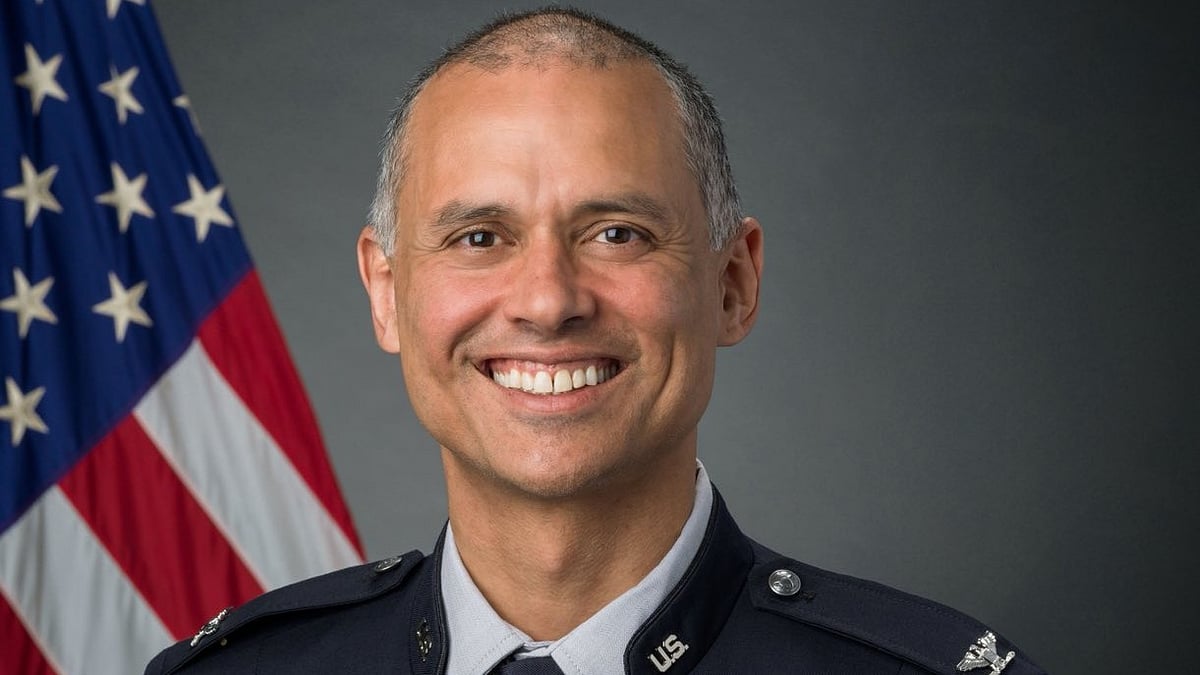
NASA astronaut Anil Menon, who is of Indian origin, has successfully reached the International Space Station aboard the Soyuz MS-29 spacecraft, marking the beginning of an eight-month mission focused on scientific research. Menon lifted off from the Baikonur Cosmodrome in Kazakhstan alongside Roscosmos cosmonauts Pyotr Dubrov and Anna Kikina, and the crew docked with the station roughly three hours after launch, according to Space.com. The mission is Menon's first spaceflight and forms part of the continuing operational partnership between NASA and Roscosmos aboard the orbiting laboratory.
Launch and docking details
The Soyuz MS-29 spacecraft lifted off at 10.47 am EDT (14.47 UTC) atop a Soyuz-2.1a rocket. The ascent was nominal throughout, with side booster separation occurring about two minutes after launch and second stage separation following roughly two and a half minutes later. Third stage orbital insertion and separation was completed at around eight minutes and 46 seconds into the flight, placing the spacecraft on a fast two-orbit rendezvous profile toward the space station.
Who is Anil Menon?
Menon previously worked as an emergency physician, engineer, and flight surgeon before joining NASA's astronaut corps. He also served as SpaceX's first-ever flight surgeon before his selection by NASA. His medical background is expected to play a central role in the research assignments planned for his stay aboard the station.
Research focus for the mission
The expedition combines routine station operations with scientific investigations centred on technologies expected to matter for future deep space missions to the Moon and Mars. One of the primary objectives involves studying how semiconductor crystals can be produced in microgravity, since the absence of gravity alters crystal formation in ways that could benefit manufacturing on Earth.
Healthcare research forms another significant part of the mission. Communication delays on future Moon and Mars missions will make real-time medical guidance from Earth increasingly difficult, creating demand for technologies that support autonomous healthcare in space. Menon is expected to test artificial intelligence and augmented reality systems designed to assist astronauts during medical examinations. NASA said Menon will perform ultrasound using augmented reality and artificial intelligence methods that could eliminate the need for medical support from Earth on future space missions. Such systems could allow crew members with limited medical training to carry out complex diagnostic procedures with intelligent guidance.
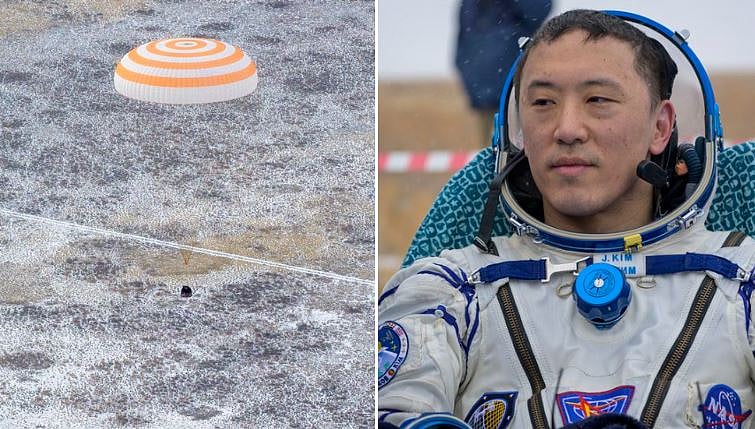
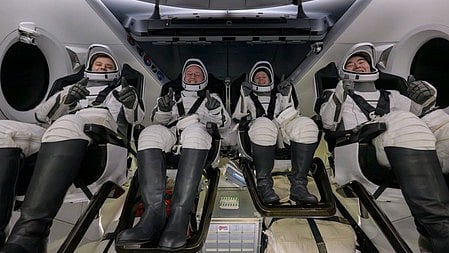
The mission marks the second spaceflight for both Dubrov and Kikina. Dubrov previously lived aboard the ISS from April 2021 to March 2022, while Kikina spent five months on the station between October 2022 and March 2023. Kikina is the only woman in Russia's active cosmonaut corps and was the first Russian to fly on a private American spacecraft when she travelled to the ISS aboard SpaceX's Crew-5 mission during her earlier stint.
Menon, Dubrov, and Kikina will join the Expedition 74 crew already stationed aboard the ISS, where they are expected to remain for approximately eight months, conducting research, performing maintenance, and supporting ongoing scientific investigations.

