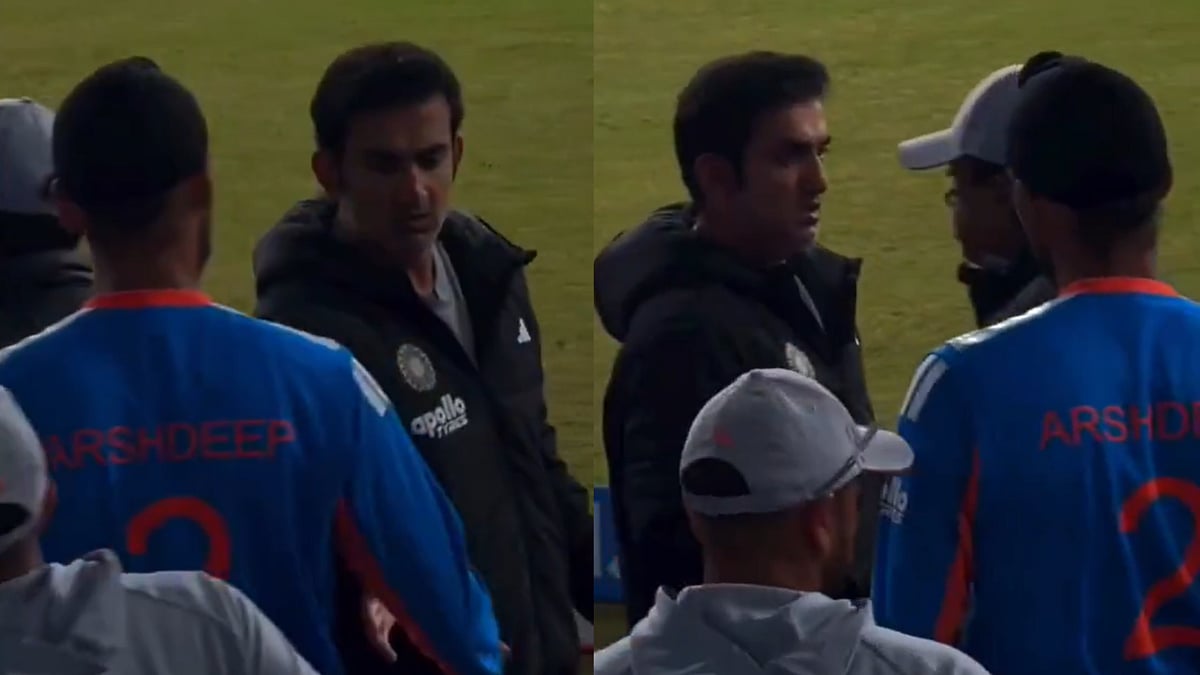
In the second T20 International between India and South Africa at Mullanpur, all eyes were not just on the action on the field, but also on the animated reaction of India’s head coach Gautam Gambhir during and after the match.
South Africa batted first and posted a competitive total of 213/4, powered by a commanding 90 from Quinton de Kock, who was later named Player of the Match. In response, India struggled with both bat and ball, eventually being bundled out for 162 in 19.1 overs, handing South Africa a 51-run victory that leveled the T20I series. Tillak Varma offered some resistance with a quickfire 62, while Jitesh Sharma contributed 27 runs, but it wasn’t enough as India’s bowling and batting alike failed to contain the Proteas.

Throughout the match, and particularly during one crucial over, Gautam Gambhir was seen visibly frustrated and animated, especially with the performance of Arshdeep Singh, who bowled a highly unusual over containing seven wides, losing rhythm and control. This moment drew a strong reaction from Gambhir in the dugout and on video clips circulating online.
When the match concluded and the Indian team began the customary post-match handshakes, cameras captured Gambhir wearing an angry expression as he shook hands with several Indian players, including Jitesh Sharma and Arshdeep Singh. His body language suggested not just disappointment, but clear displeasure at how the team performed in a high-pressure situation.
While coaches are expected to support and motivate, Gambhir’s visible frustration has ignited debate among fans and pundits over whether his intensity helps or hinders the team’s confidence in tough moments.
'...You Are Not Always Right': Shahid Afridi Reignites Feud With Team India Head Coach Gautam Gambhir, Questions His Coaching Approach
Former Pakistan skipper Shahid Afridi has once again taken aim at current India head-coach Gautam Gambhir, re-igniting a long-standing feud that dates back to heated on-field clashes.
In a recent interview, Afridi remarked, “The way Gautam started his stint, it looked like he thought whatever he said was right. But after some time, it was proved that you are not always right.”
This blunt critique comes after a string of tensions between the two, particularly from their days as adversaries on the international circuit. According to Afridi, reflected in his autobiography, he has long considered Gambhir someone with a negative attitude and lacking in positivity.
Afridi’s renewed criticism feels less like a passing comment and more like a deliberate attempt to cast doubt on Gambhir’s leadership and his approach, both on and off the field.
