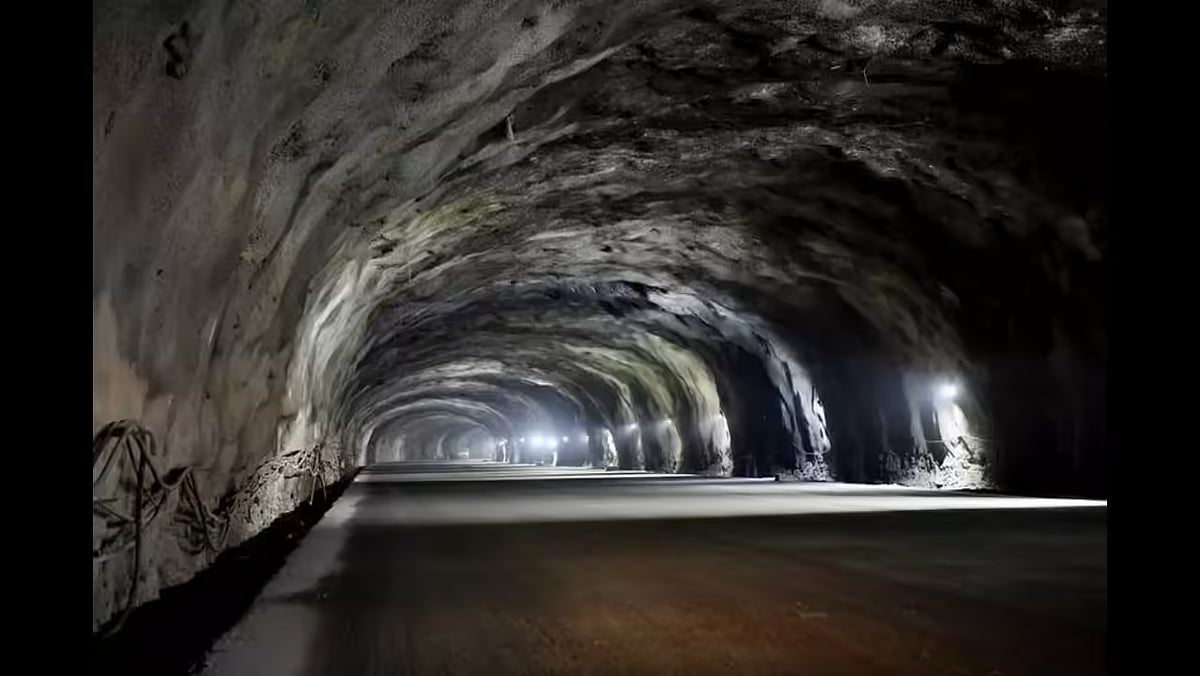
Pune: The proposed Yerawada–Katraj underground tunnel project has once again come under scrutiny, with the Pune Unified Metropolitan Transport Authority (PUMTA) directing its appointed consultant to revise and resubmit the pre-feasibility report after raising concerns over the project’s viability.
During a recent review meeting, officials observed that the submitted study lacked sufficient supporting data and realistic traffic projections. Given the project’s estimated cost of ₹32,000 crore, the authorities stressed that it must demonstrate substantial public benefit before moving forward. The consultant has now been asked to strengthen the report by incorporating detailed technical inputs, referring to global traffic analytics such as TomTom report, and consulting subject experts before resubmitting the revised study within 15 days.
Officials from the Pune Metropolitan Region Development Authority (PMRDA) stated that the project would not receive approval unless a technically sound and comprehensive pre-feasibility report is presented. Concerns were also raised about the practicality of the proposed entry and exit points mentioned in the earlier submission.
The Yerawada–Katraj tunnel is planned as a north–south underground corridor intended to link eastern parts of Pune with its southern suburbs by passing beneath some of the city’s most congested traffic stretches. The project aims to cut travel time and ease pressure on major arterial roads by diverting through-traffic underground.
The renewed evaluation comes amid continued emphasis by Chief Minister Devendra Fadnavis on the need for underground infrastructure to address Pune’s growing traffic congestion. At a recent public event, he highlighted that surface road expansion in the city has nearly reached its limit, with roads accounting for just 9% of the total land area while vehicular volume has more than doubled their designed capacity. Referring to the previously announced tunnel plan, Fadnavis described underground connectivity, often termed the ‘Paatal Lok’ model, as essential for improving long-term traffic flow.

However, the proposal has sparked debate in the past as well, with PUMTA members questioning its technical and financial feasibility, environmental implications, and overall cost-benefit justification. Some stakeholders have expressed concern about tunnelling through sensitive hill terrain, while others have questioned whether the projected traffic demand justifies such a large-scale investment.
Key details regarding alignment, funding mechanisms, cost structure, and execution timelines are expected to be finalised only after the revised feasibility report is reviewed and approved by PUMTA. Urban planning experts have also urged caution, noting that feasibility assessments must account for geological risks and potential cost escalations, rather than focusing solely on projected benefits.

