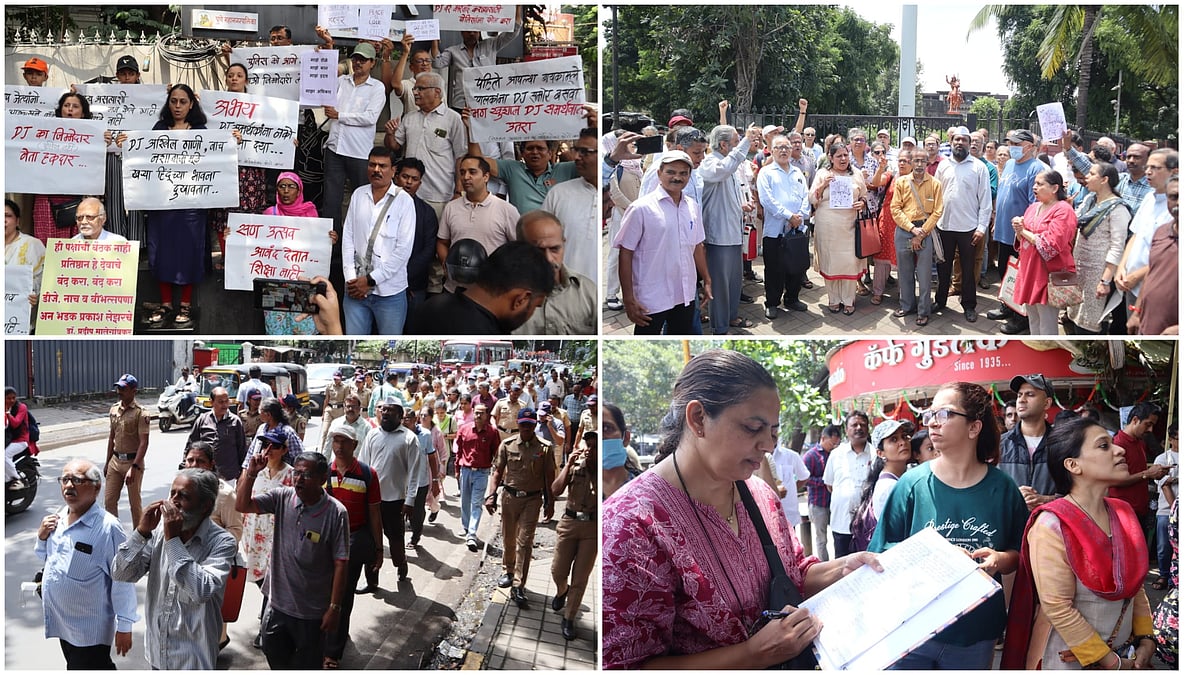
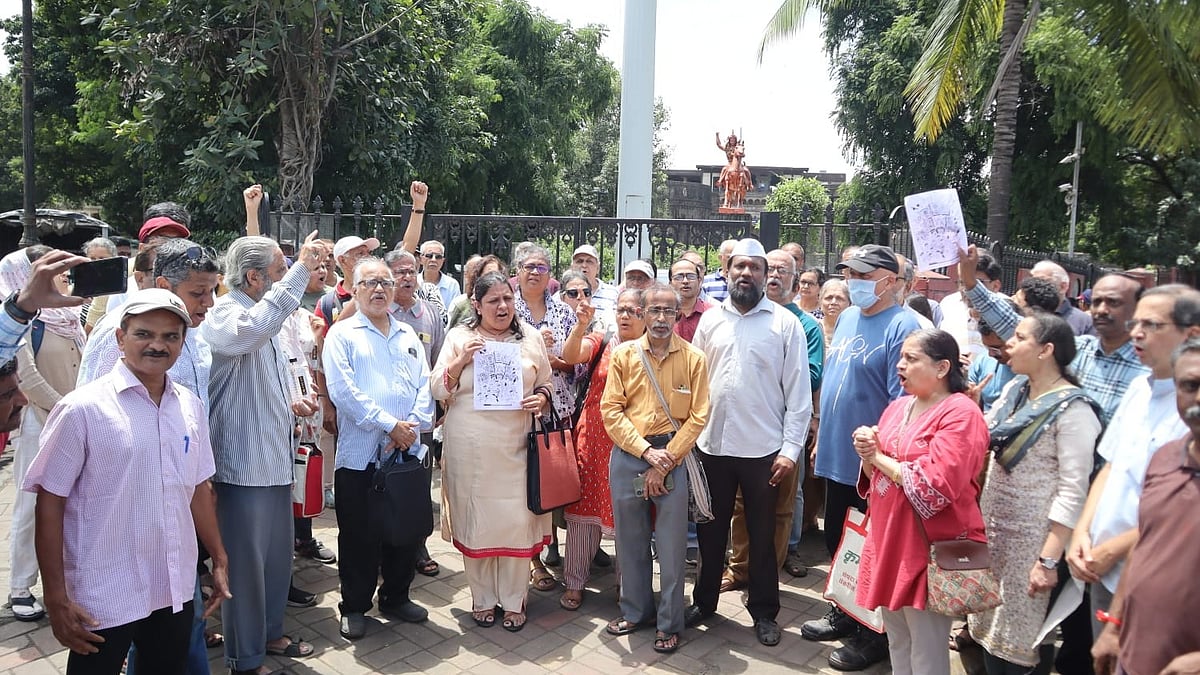
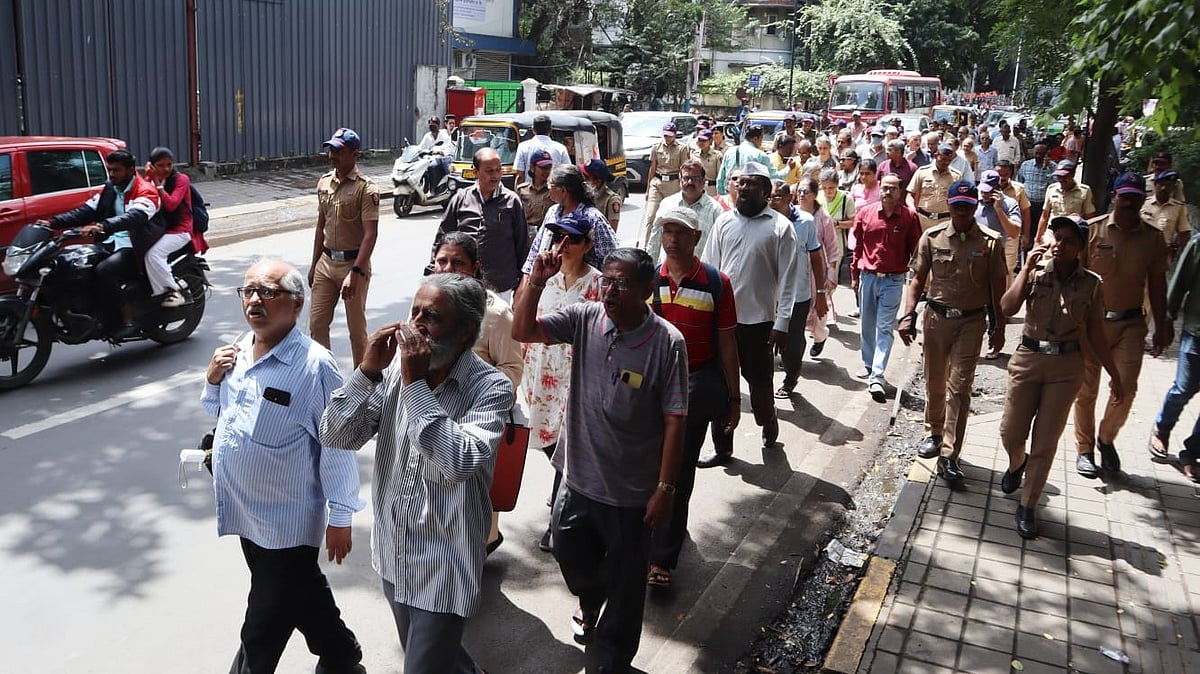
Pune: As the debate over the use of high-decibel DJs during religious festivals intensifies in Pune, citizens from the city’s Peth areas and other parts gathered at Goodluck Chowk and Abhinav Chowk on Sunday to protest against excessive noise generated by DJs, amplifiers, additional sound systems and extended speakers.
The protesters made it clear that their opposition was not to any religion, caste, community or festival, but to what they described as the growing culture of extremely loud music during public celebrations.
The protest at Abhinav Chowk began at 10.30 am, while citizens gathered at Goodluck Chowk from 11 am. Around 250-300 Punekars participated in the protest. Of them, 170-190 signed a sheet of paper that will be submitted to the Commissioner of Police, stating their opposition to DJs. Participants said celebrations should be allowed, but not at the cost of residents’ peace and well-being.
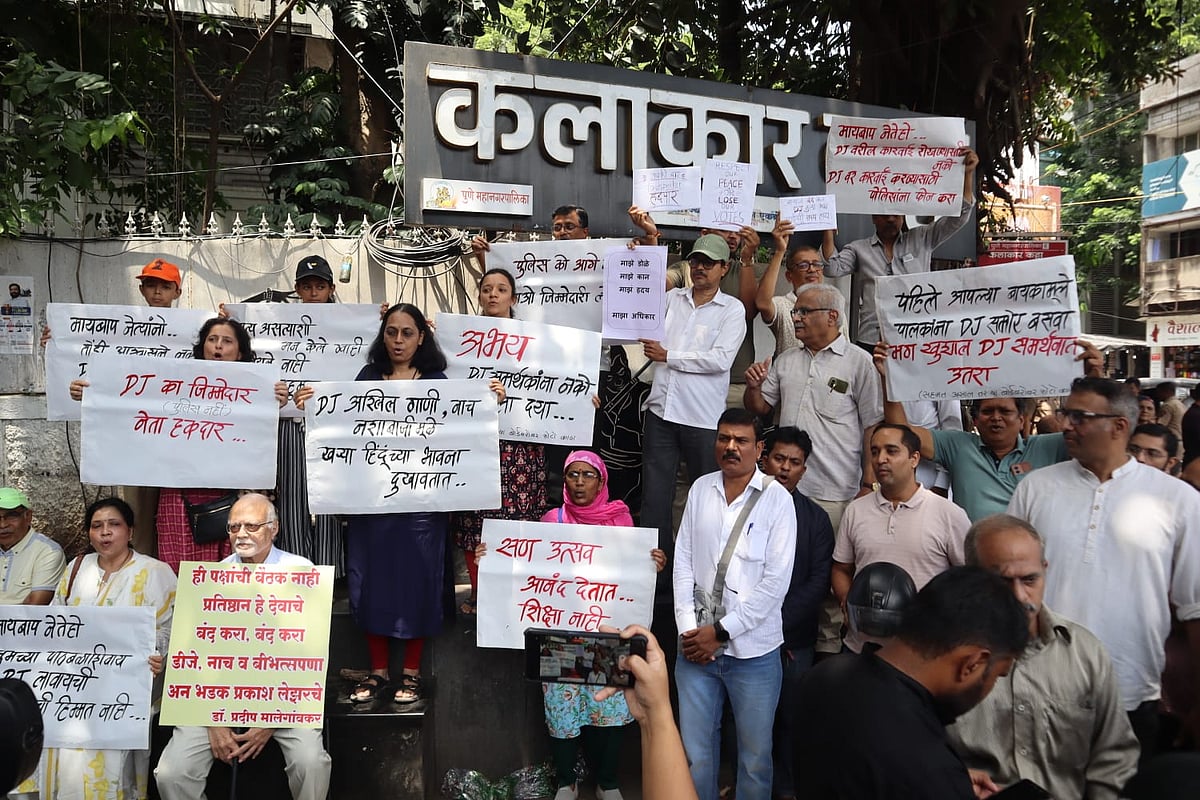
‘Why should an entire neighbourhood suffer?’
Pallavi Kumar, a protester at Goodluck Chowk, said, “We are not against any religion, community, caste or festival. People have every right to celebrate their festivals. Our objection is only to the unbearable noise created by DJs, additional sound systems, amplifiers and extended speakers. Why should celebrating a festival mean that the entire neighbourhood has to suffer from extremely loud sound?”
Sunil Gawade, another protester, questioned the nature of the music played during such celebrations. “Many times, what is being played on these DJs has nothing to do with the festival or the deity being worshipped. Bollywood and Hollywood songs are played simply for entertainment, with massive sound systems and amplifiers. If the purpose is religious celebration, why does the celebration need deafening music and songs that have no connection with the festival?” he said.
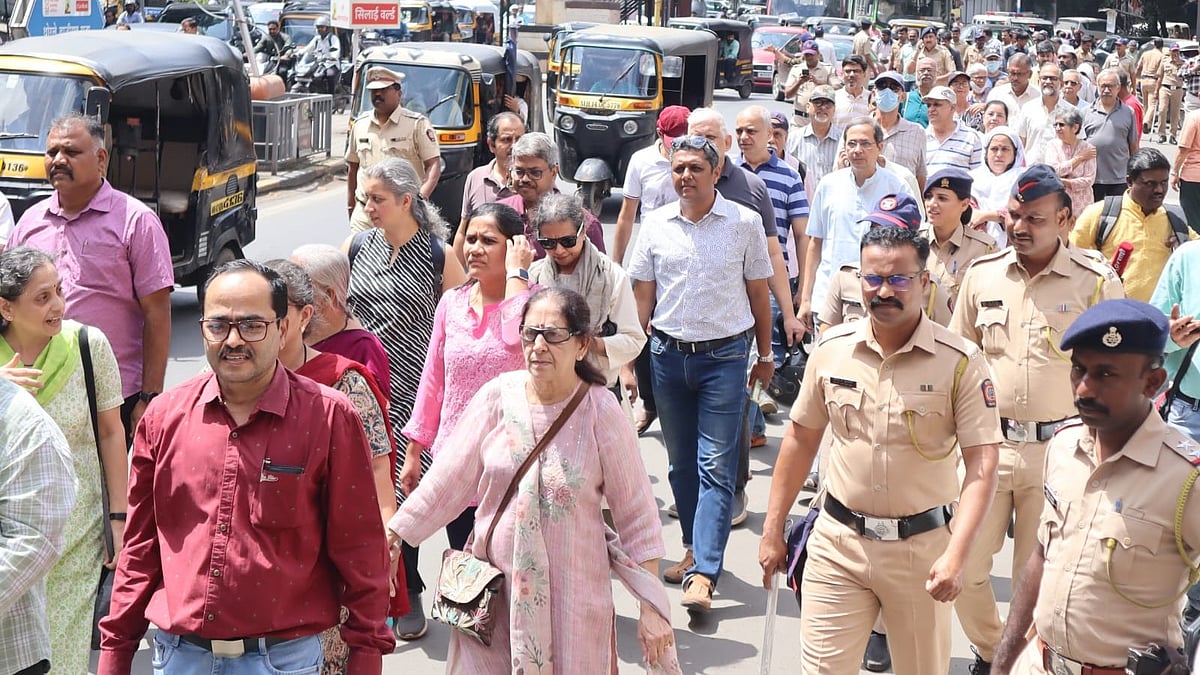
‘Is enforcement of noise rules too much to ask?’
Yogesh Sarpotdar, a resident of Shaniwar Peth who participated in the Goodluck Chowk protest, questioned the government’s enforcement of existing noise regulations. He said, “The government needs to decide what it actually wants: peaceful festivals or a competition over who can play the loudest DJ. There are already noise rules in place, so why are ordinary citizens forced to repeatedly raise the same issue? Why is enforcement so weak when the consequences are faced by residents, children, senior citizens and working people?”
Rudra, a science student who participated in the protest, said the issue should not be reduced to a difference in musical preferences. He said, “This is not just about whether someone likes music or does not like music. Extremely loud DJ sound affects people who live nearby and those who have to work, study or sleep. We want festivals to remain celebrations, but celebrations should not come at the cost of another person’s peace, health and right to live without excessive noise. People also get deaf after the loud sound hits their ears and many have suffered heart attacks. Why should someone play music or tracks at such extreme levels that can destroy someone else’s life?”

‘Celebrate, but don’t turn it into suffering’
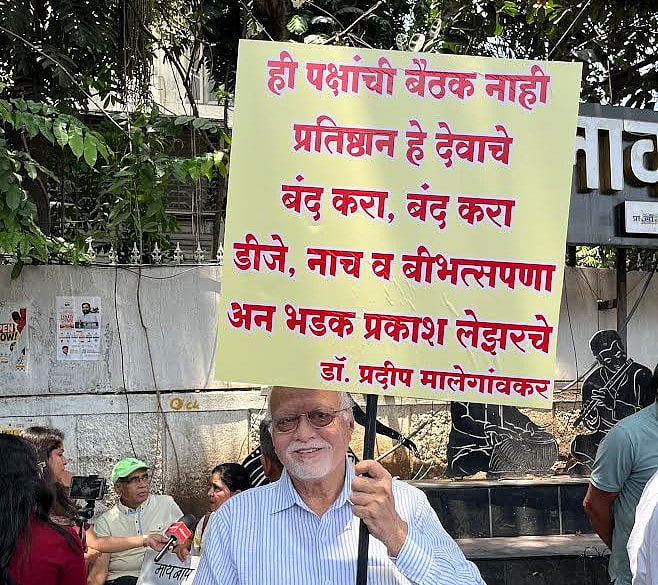
At Abhinav Chowk, 76-year-old Dhruva Patil said protesters were seeking a balance between the right to celebrate and the right of residents to peace. “Our message is very clear: celebrate, but celebrate without creating unbearable noise. Nobody is asking anyone to stop celebrating their religion. We are only asking that additional sound systems, amplifiers and extremely loud DJs should not be used to turn a public celebration into a source of suffering for everyone around it,” Patil said.
‘I have seen Pune’s festival culture change’
For Tejas Kadam, 78, who participated in the protest at Goodluck Chowk, the debate over DJs is also a debate about how Pune’s traditional festival culture has changed over the decades.
Kadam, who has witnessed the transformation of Pune’s Peth areas over the years, said celebrations in the city were once centred around community participation, devotion and traditional forms of music rather than the volume of sound systems.
“I have seen Pune and its Peth areas change in front of my eyes. I have seen Ganeshotsav being celebrated here for decades. In the old days, the festival was about bringing people together, visiting Ganpati mandals, listening to bhajans, aarti, dhol-tasha and taking part in the traditions of the city. There was excitement, there was devotion and there was celebration, but there was also a sense of discipline and respect for the people living around us,” Kadam said.
According to him, the problem has emerged with the increasing dependence on powerful sound systems. “Today, I feel we have slowly changed the meaning of celebration. The problem is not Ganeshotsav, and it is certainly not any religion. The problem is the culture of extremely loud DJs, powerful amplifiers and additional sound systems that have come into these celebrations. I have lived long enough to know that DJs and these huge sound systems were never the foundation of Pune’s Ganeshotsav. The festival existed for generations before this culture came in. The songs played during festivals also make no sense because they do not relate to the core values of the festive celebration and atmosphere. Songs played on loudspeakers and DJs are just for fun and youngsters’ enjoyment. If this continues, the core value and meaning of every festival will start vanishing,” he said.
Kadam said the impact of excessive sound was being felt inside people’s homes. “Today, sometimes the volume becomes so high that you cannot have a normal conversation inside your own house. Elderly people, children, patients, students and working people have to bear it. And what is being played? Many times, the songs have no connection with Ganpati or the festival at all. Bollywood and other entertainment songs are played simply to make the crowd dance and create more excitement. If this is about devotion and tradition, why does the sound have to be so loud?” he said.
‘What kind of Pune do we want to leave behind?’
Kadam also questioned the authorities over how celebrations can be regulated without hurting religious sentiments.
“I am asking our government and our administration one simple question: Can we not celebrate our festivals with happiness without disturbing the lives of other citizens? Pune has a great cultural history. We should be protecting that culture, not allowing the festival to become a competition over who has the biggest speakers and the loudest DJ,” he said.
“I have nothing against young people enjoying themselves. They should celebrate. But enjoyment cannot mean that an entire neighbourhood has to surrender its peace. We have to ask ourselves what kind of Pune we want to leave for the next generation: a Pune known for its culture and traditions, or a Pune where the loudest sound system is considered the biggest celebration,” Kadam added.
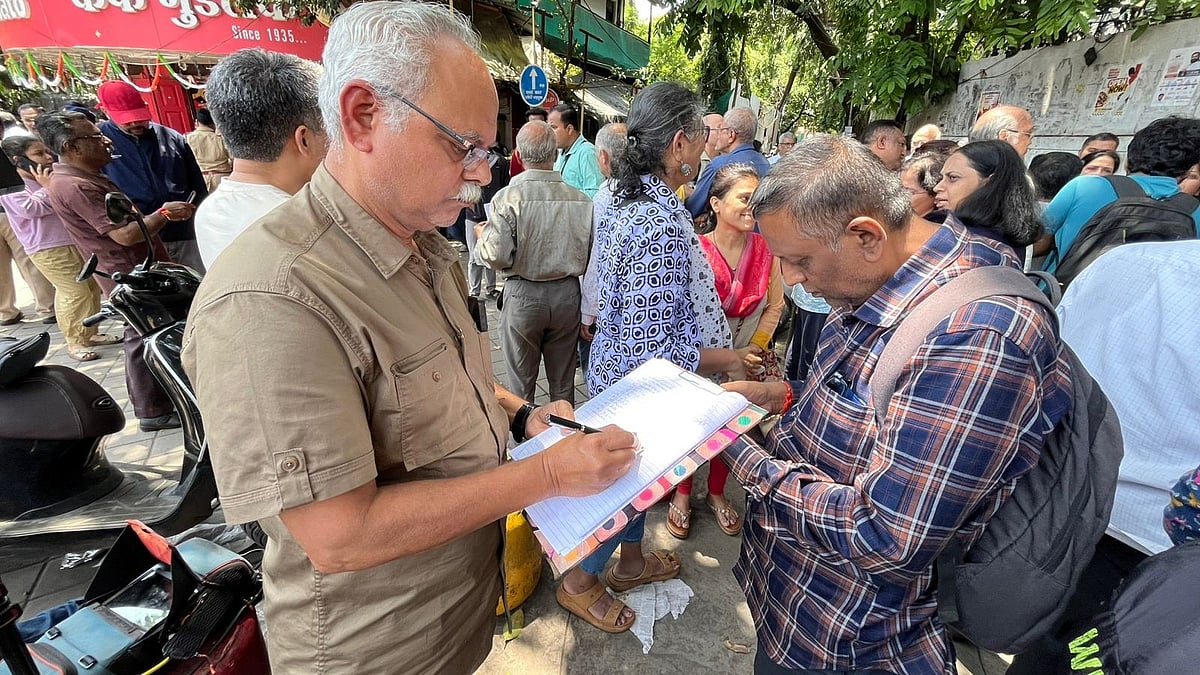
The protesters said they wanted authorities to ensure that existing noise regulations were enforced effectively while allowing citizens to celebrate festivals without excessive restrictions on traditional and cultural activities.
Kadam also said, “At my age, I am not standing here against a festival. I am standing here for the festival and for the old culture of Pune. I want our Ganeshotsav to remain joyful, respectful and rooted in our traditions. Celebrate with all your heart, but please do not make another person’s home suffer because of your celebration.”

