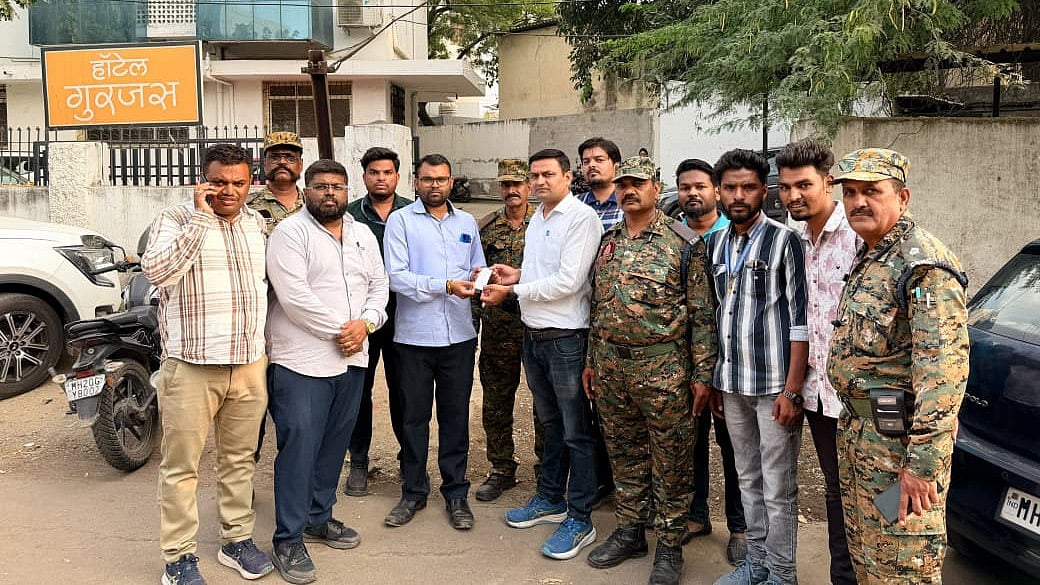
Chhatrapati Sambhajinagar: To ensure a smooth water supply across the city and prevent the wastage of drinking water, the Chhatrapati Sambhajinagar Municipal Corporation (CSMC) has intensified its enforcement drive.
Acting on the directives of Municipal Commissioner Amol Yedge, a special municipal squad conducted a surprise inspection on Wednesday morning and took action against those found wasting drinking water. The civic body imposed fines totalling ₹25,000 on three water connection holders.
During the inspection, the team observed significant wastage of drinking water at two locations, Hotel Gurjas near the SSC Board area and the Vantagio complex in Usmanpura. Taking serious note of the negligence, the civic body imposed a fine of ₹10,000 on each of the two water connection holders. It also collected a fine of ₹5,000 from another connection holder.
The operation was carried out in the presence of Sub-Engineer Milind Bhamre, Team Leader Rohit Ingale, Junior Engineers Vikrant Sawant and Sumit Borade, along with personnel from the Unauthorised Water Connection Detection Team and the Civic Friends (Nagari Mitra) squad.
The municipal administration has warned that wastage and misuse of drinking water will not be tolerated under any circumstances. It has also announced that the inspection drive will be intensified across the city in the coming days.

Paithan SDO Appeals to Citizens to Use Water Judiciously
In view of the drought-like conditions, Paithan-Phulambri Sub-Divisional Officer (SDO) Neelam Bafna has appealed to citizens to use water sparingly and responsibly to ensure an adequate supply of drinking water in the coming period.
She urged citizens to conserve water in their daily lives, avoid leaving taps running and refrain from unnecessary water use. If leaks are detected in domestic or public water supply systems, the Gram Panchayat or local governing body concerned should be informed immediately.
Drinking water should not be used for gardening or cleaning surrounding areas. Instead, water should be reused wherever possible. Citizens should also protect ponds, wells and other traditional water sources from pollution.
At least 10% of the available live water storage in major reservoirs will be reserved for emergencies. This reserve may be used exclusively for drinking water during critical situations and cannot be utilised for general purposes.
Unauthorised extraction of water from dams, canals, rivers, lakes and other public water sources is prohibited. Joint teams comprising officials from the Revenue, Police and Water Resources departments have been formed to curb such extraction.
The administration has warned that anyone found extracting water without authorisation will face seizure of equipment, including electric pumps, pipelines and other materials, along with criminal and penal action under existing laws and regulations.
Farmers have been advised to plan irrigation based on available water reserves. They should adopt micro-irrigation methods such as drip or sprinkler irrigation and consult the Agriculture Department to prioritise crops that require less water.
The administration has urged citizens, farmers, traders, industrial establishments, Gram Panchayats and local self-government bodies in Paithan and Phulambri talukas to cooperate in implementing water conservation measures to overcome potential shortages.

