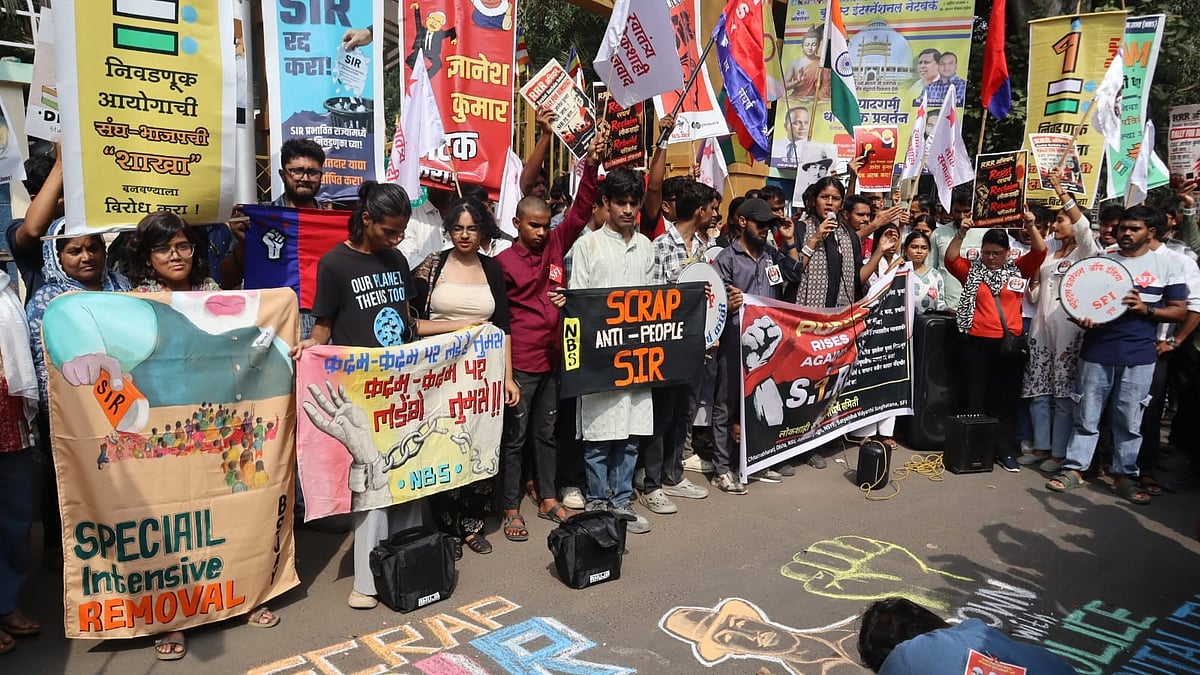
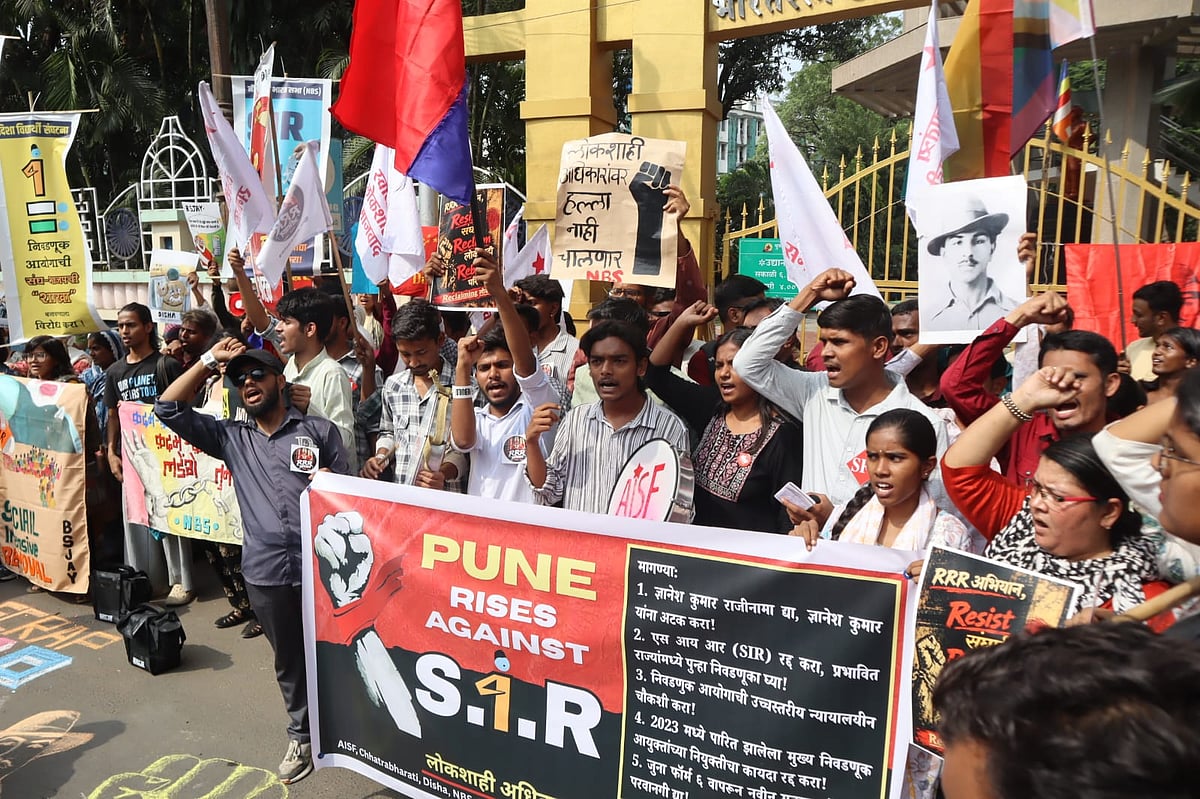
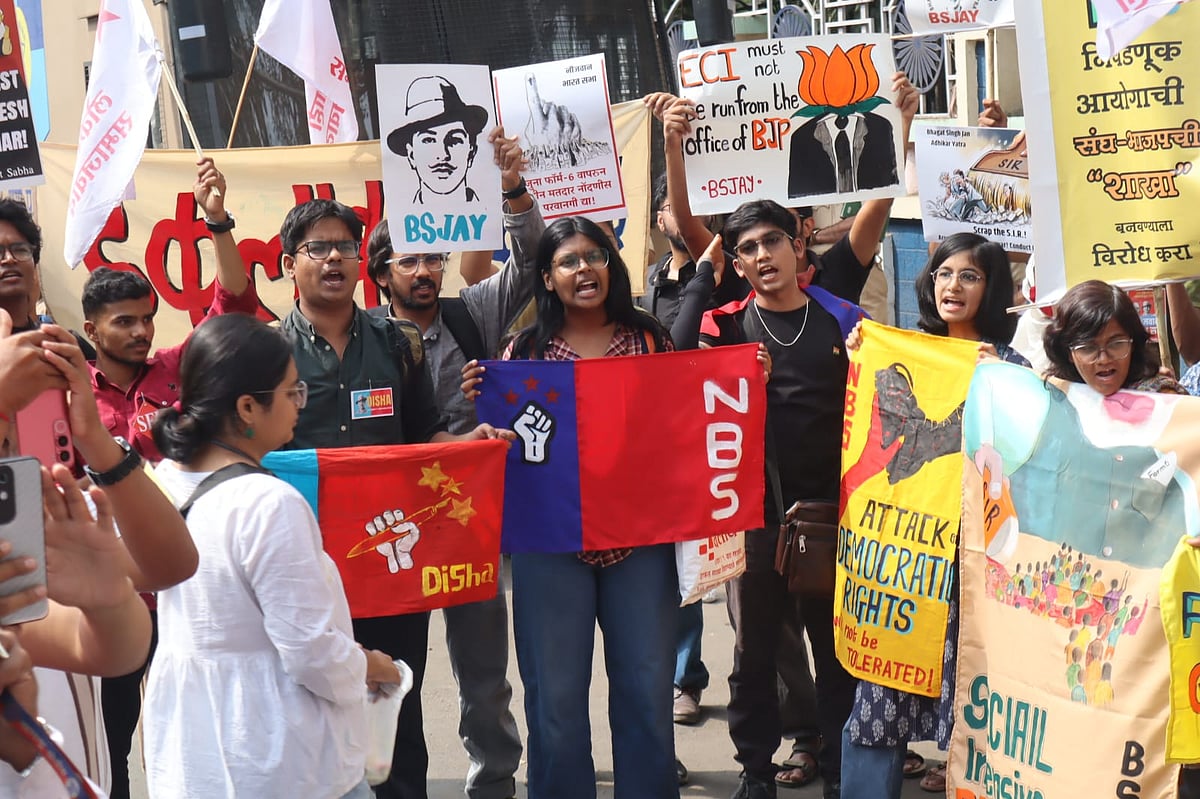
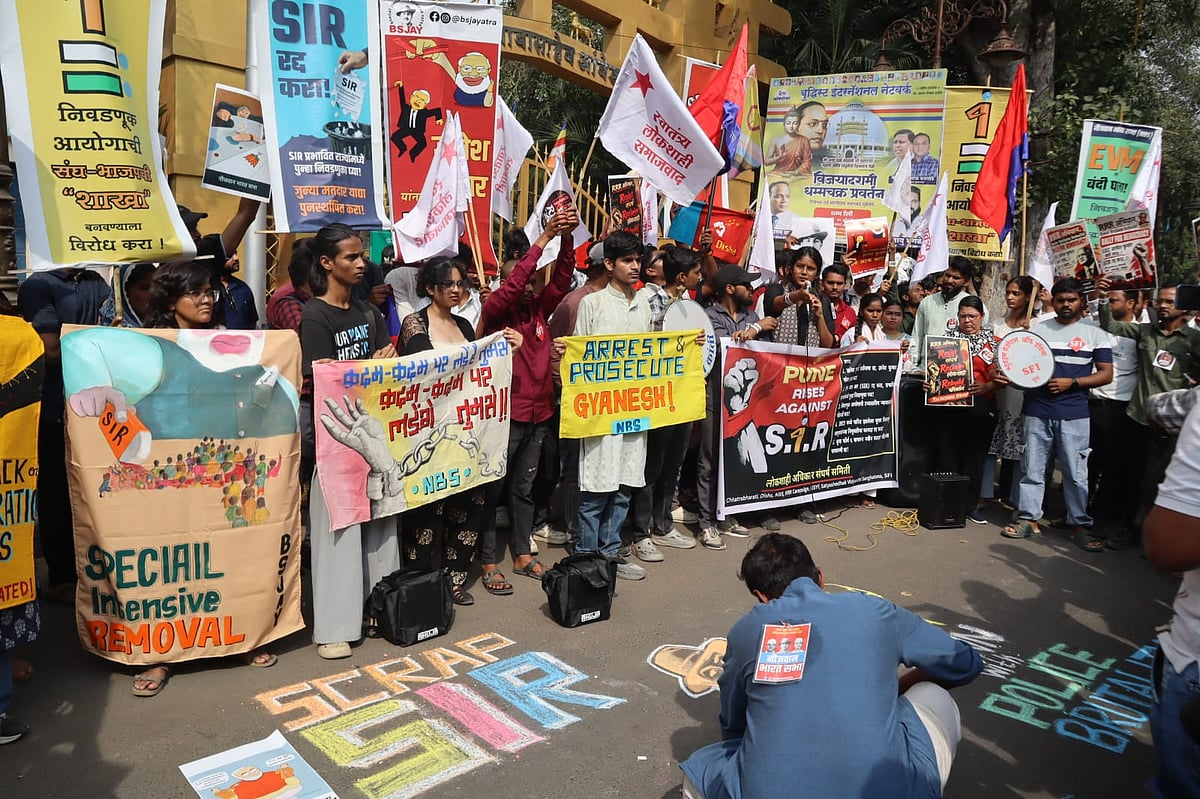
Pune: In what organisers described as Pune’s first protest against the Chief Election Commissioner (CEC) over the Special Intensive Revision (SIR) of electoral rolls with "verbal police permission", student and youth organisations staged a demonstration in front of the Dr Babasaheb Ambedkar statue opposite the Pune District Collector’s Office on Friday. The protest also highlighted concerns over what participants described as growing restrictions on the right to peaceful assembly and dissent.Anand Chaini
Anand Chaini
Anand Chaini
Anand Chaini
The demonstration was organised under the banner of the Lokshahi Adhikar Sangharsh Samiti, with participation from organisations including the Students’ Federation of India (SFI), All India Students Federation (AISF), Chhatra Bharati, Disha Students Organisation, Democratic Youth Federation of India (DYFI), Naujawan Bharat Sabha, Jawab Do, RRR Campaign, New Students and Youth Federation, and Satyashodhak Vidyarthi Sanghatana, among others.

Carrying banners and placards, the protesters raised objections to the SIR exercise and demanded accountability from the Election Commission. Their demands included the resignation and arrest of Chief Election Commissioner Gyanesh Kumar, cancellation of the SIR exercise and fresh elections in affected states, a high-level judicial inquiry into the functioning of the Election Commission, and the repeal of the 2023 law governing the appointment and service conditions of the Chief Election Commissioner and other Election Commissioners.
The protesters also demanded that voters be allowed to register through Form 6 and raised concerns about the implications of electoral roll revisions for eligible voters. They argued that any exercise affecting electoral rolls must be transparent and should not deprive eligible citizens of their voting rights.
A key aspect of the demonstration was the demand to protect the constitutional right to protest. Participants alleged that protesters across the country, from Delhi to Maharashtra, were increasingly facing restrictions, police action and detentions when organising demonstrations against government policies and public authorities.
The organisers argued that requiring permission, invoking legal provisions to restrict gatherings and detaining demonstrators could discourage citizens, particularly students and young people, from questioning decisions taken by public institutions. They maintained that peaceful protest was an essential democratic mechanism for holding authorities accountable.
Somnath Nirmal, state president of the Students’ Federation of India (SFI), said, “Our protest is against the SIR exercise and the functioning of the Election Commission, but it is also about protecting our democratic rights. Students and young people must be able to question authorities and peacefully express their concerns without fear of detention or intimidation.”
Niharika Bhonsle, representing the National Students’ Youth Federation (NSYF), said, “The right to protest cannot remain only on paper. When demonstrations are restricted through police action or legal provisions, ordinary citizens lose an important way to demand accountability. Peaceful dissent should be protected, not treated as a problem.”
Om Shinde, head of the All India Students Federation (AISF), Pune, said, “We have raised demands concerning the Election Commission and the SIR exercise because electoral transparency is crucial to democracy. At the same time, the administration must ensure that citizens can assemble peacefully and voice their objections without unnecessary restrictions.”
The organisers claimed that the police had given verbal permission for the demonstration, scheduled from 2pm to 4pm, based on a mutual understanding.
When The Free Press Journal approached the senior police inspector present at the protest site for clarification regarding the permission, he did not respond to questions.

