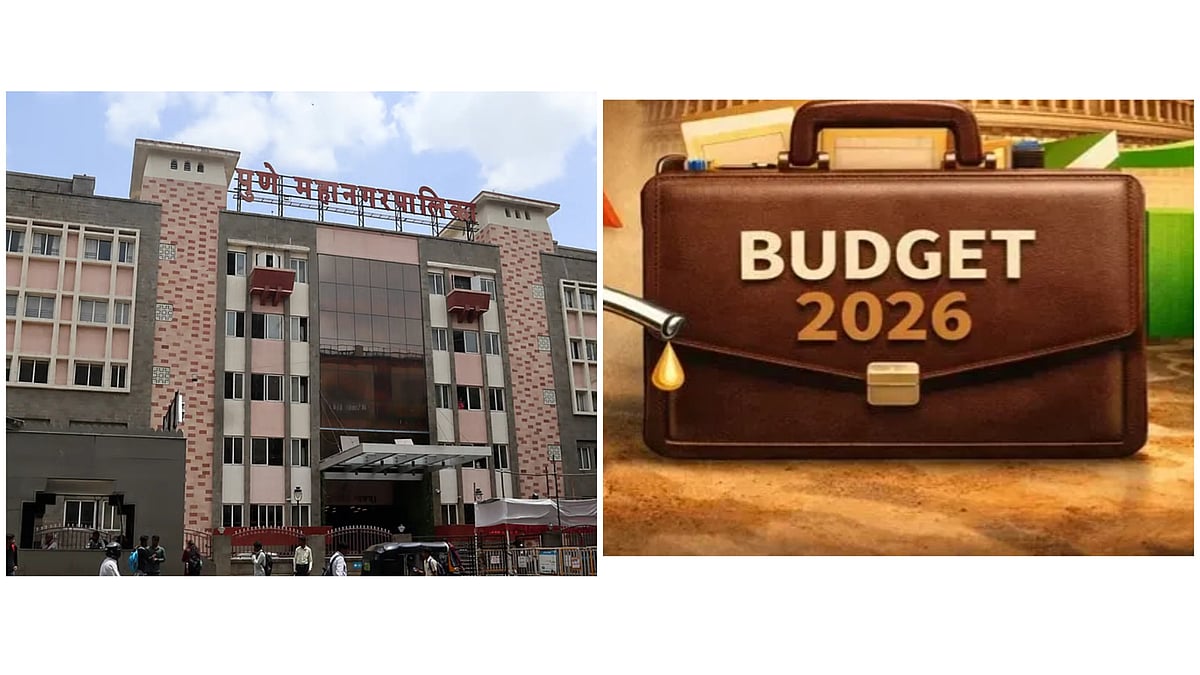
Pune: The Pune Municipal Corporation (PMC) has unveiled an ambitious plan to increase its revenue by nearly ₹5,000 crore, with implementation set to begin from April 1. The announcement was made by Standing Committee Chairman Shrinath Bhimale following the presentation of the civic body’s ₹15,699 crore budget on Tuesday.
The budget was presented in the general body meeting by Standing Committee Chairman Bhimale. Based on expectations of increased revenue, the budget is ₹1,674 crore higher than the one proposed earlier by the Municipal Commissioner, which stood at ₹13,995 crore. The Standing Committee expanded the budget size based on the Revenue Enhancement Committee’s report, projecting higher income. It is estimated that an additional ₹500 crore will come from property tax, ₹500 crore from government grants, and ₹200 crore from construction permissions and development charges.
Addressing the media, Bhimale outlined a series of measures aimed at strengthening the corporation’s financial position. A major initiative involves removing approximately 3,600 km of illegal overhead cables across the city and shifting them underground. This move alone is expected to generate around ₹1,400 crore.
Additional revenue streams have also been identified. The civic body anticipates collecting nearly ₹1,000 crore from construction permissions in newly merged villages. A revised tax policy is projected to bring in ₹700 crore, while stringent action against unauthorised constructions could add another ₹400 crore. Recovery of pending dues from government bodies and educational institutions is expected to contribute ₹140 crore.
Further, officials estimate that identifying unregistered properties and bringing them under the tax net could generate an additional ₹340 crore.
To boost non-tax revenue, the PMC has also decided to commercially develop amenity spaces. Of the 950 such spaces available, 164 have been shortlisted for development on a rental basis.
The civic administration is also counting on financial support from the state government for key infrastructure and public service projects. Funds of ₹500 crore for flyovers, ₹350 crore for fire services, and another ₹350 crore under schemes like AMRUT 2 and NDMA are expected.

However, officials acknowledged that the corporation continues to rely significantly on state funding. Challenges such as pending dues, tax structure limitations, and unresolved issues in merged villages remain hurdles in achieving sustained revenue growth.
Bhimale also stated that a state directive assigning land survey responsibilities to the PMC could be withdrawn. If that happens, long-pending construction proposals may be cleared, which will boost revenue through development charges.
The civic body expressed confidence that the combined implementation of these measures will help strengthen its financial base in the coming financial year.

