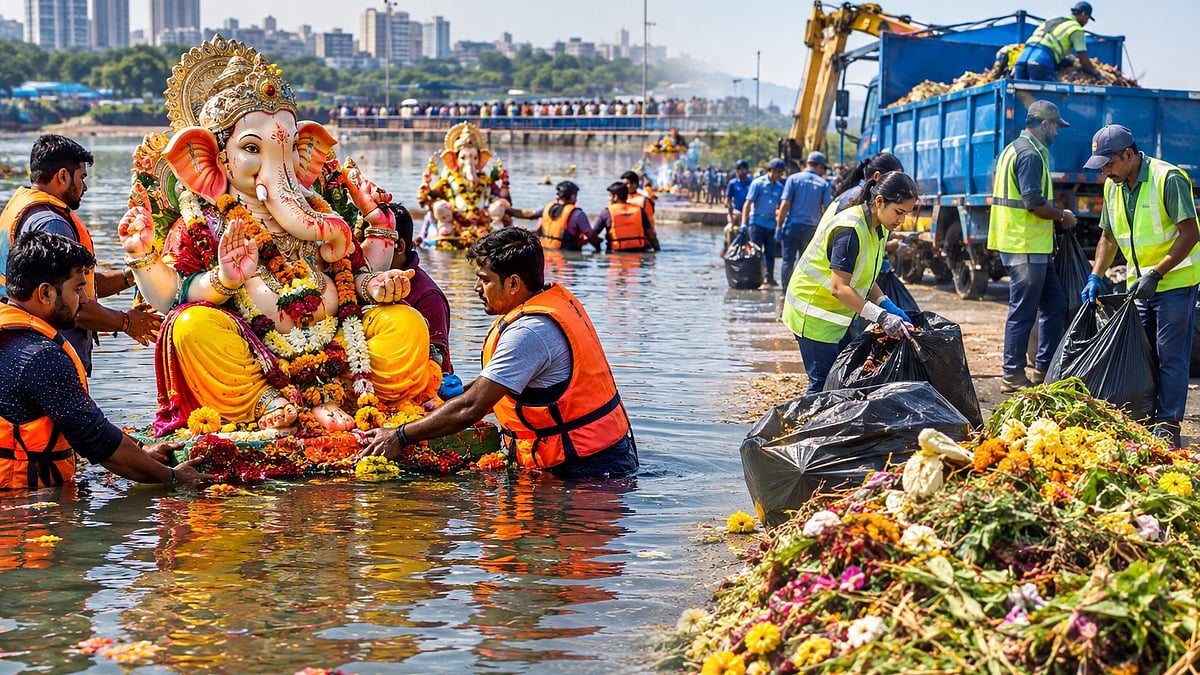
Pune: The Pune Municipal Corporation (PMC) recorded the immersion of 6,77,057 Ganesh idols at artificial immersion facilities across the city during Ganeshotsav, while 7,15,059 kg of nirmalya was collected as part of efforts to prevent pollution of natural water bodies.
According to the PMC’s Ganeshotsav 2026 report, the civic body made arrangements across its 15 regional offices, including artificial immersion facilities, iron tanks and idol collection centres. The facilities were aimed at encouraging citizens to avoid immersing idols in rivers, lakes and other natural water bodies.
Between September 14 and 25, a total of 1,09,479 idols were immersed in constructed artificial ponds, while 3,94,349 were immersed in iron tanks. Another 1,73,229 idols were received at idol collection centres, taking the overall figure to 6,77,057.
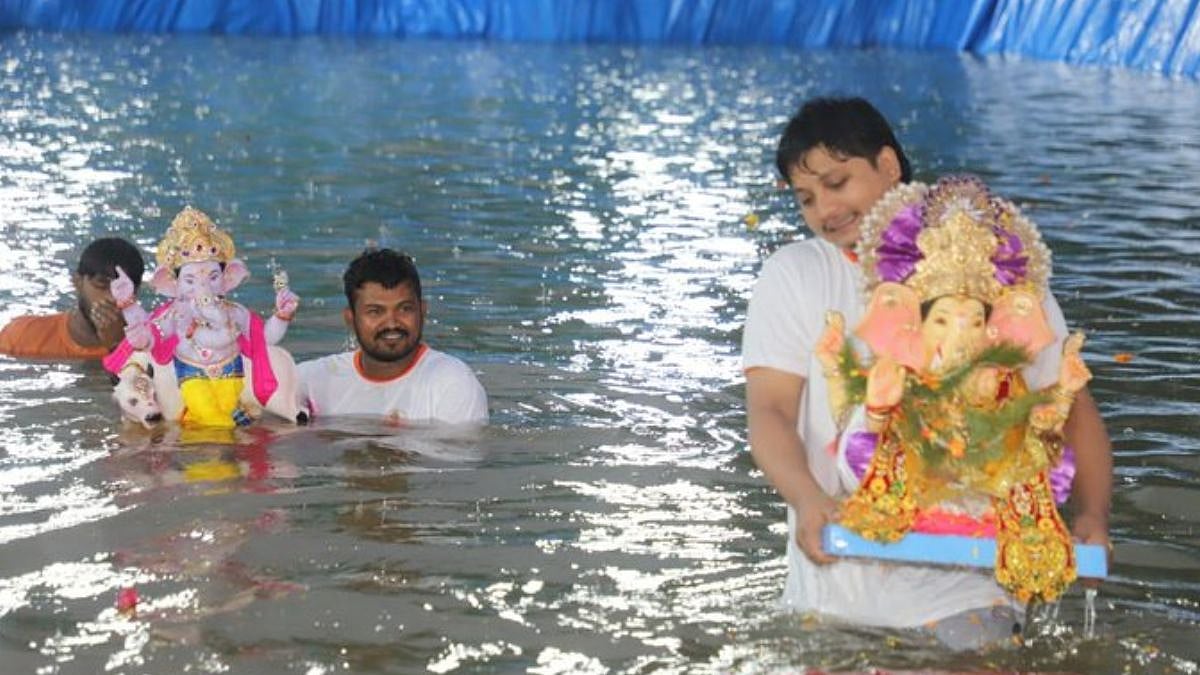
The PMC provided 58 constructed immersion ponds at 38 locations, 512 iron tanks at 305 locations and 224 idol collection centres across the city. Another 45 centres were made available for the collection of Shadu clay idols and Shadu soil through the regional offices.
The civic body also set up 358 nirmalya collection containers at 267 locations to collect floral offerings and other organic material generated during the festival.
For the Ganeshotsav arrangements, the PMC deployed 16 senior health inspectors, 161 health inspectors, 292 mukadams and 4,177 permanent sanitation workers. It also made 1,670 vehicles available based on requirements from the regional offices.

The Kasba Peth regional office, which witnessed significant activity during the immersion period, recorded 14,477 idols being immersed or collected through the environmentally friendly facilities provided in the area. Of these, 9,865 idols were immersed in constructed ponds, 3,328 in iron tanks and 1,284 were received at designated idol collection centres. Arrangements were made at 18 locations in the area.
The PMC also reported the collection of 9,18,537 kg of waste through its 15 regional offices during the festival. The waste included wet and dry waste, decoration material and discarded footwear.

