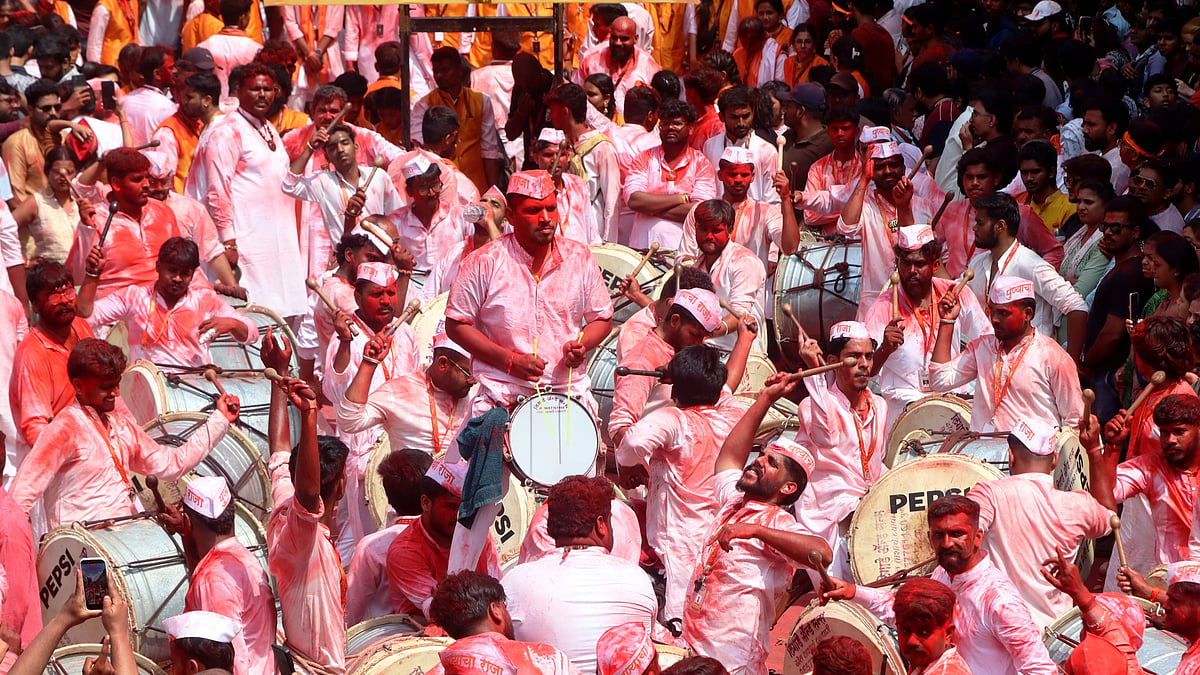
Pune: Pune's Ganeshotsav ended after an extended immersion procession that lasted 33 hours and 33 minutes, according to Pune Police Commissioner Amitesh Kumar. The final Ganpati idol moved through Tilak Chowk at around 6.15 pm on Saturday, marking the end of the main procession after more than a day of continuous movement through the city's central areas.
Kumar said the duration itself was not the police's main concern. Instead, the focus was on ensuring that the massive crowds gathered during the 12-day festival could move safely and that the immersion procession continued without a major law-and-order incident.
Six Lakh Metro Passengers Added To Crowd Pressure
This year's Ganeshotsav presented an additional crowd-management challenge because of Metro services. Kumar said around six lakh people travelled by Metro in a single day, significantly increasing the number of citizens reaching central Pune to watch the celebrations and immersion procession.
The large footfall was particularly important for police because thousands of devotees were already expected in central parts of the city during the festival's final days. The Metro provided an important public transport option, but it also brought a much larger number of people into areas where police had to manage dense crowds and movement.
Kumar said police had made extensive arrangements to deal with the increased footfall and prevent a stampede-like situation. A large deployment was made across Pune during Ganeshotsav, with special attention given to central areas and the main immersion routes.
The Commissioner said police had planned the arrangements around the safety of devotees rather than simply trying to reduce the duration of the procession. He said the large number of people brought into the city centre by Metro created a major challenge, but the situation remained under control because of advance planning, security deployment and coordination between different agencies.
No Major Untoward Incident During Festival
According to Kumar, no major untoward incident or law-and-order problem was reported during the immersion procession. He said office-bearers and volunteers of Ganesh mandals cooperated with police throughout the procession.
The coordination was important as hundreds of mandals, devotees, dhol-tasha groups and volunteers moved through central parts of the city over an extended period. Police personnel were deployed along the routes to regulate movement and manage crowds.
The police also had to ensure that emergency services were not blocked by crowds and processions. Kumar said 33 ambulances were able to pass through Tilak Chowk despite the heavy crowd during the immersion procession.
Special arrangements were made to keep emergency movement possible on the main routes. Kumar said the ability to keep emergency services moving was an important part of the crowd-management plan during the long immersion procession.
Police Focused On Safety Rather Than Procession Duration
Kumar said police were not treating the number of hours taken by the procession as their main measure of success.
“How many hours the festival lasted is not a priority topic for me,” he said, stressing that the primary objective was to conduct the festival without hindrance and protect devotees.
The police had taken special precautions to prevent a stampede-like situation because of the unusually large crowds in central Pune. The Commissioner said the Metro had contributed to a major increase in the number of people reaching the city centre, making crowd management more difficult.
The 2026 immersion procession was also closely watched because police had taken steps before the festival to manage its duration. Last year, the main procession was officially recorded by Pune Police as lasting 32 hours and 26 minutes.
This year, police had restricted participation by some newer mandals on the traditional main routes as part of efforts to improve the movement of the procession. Mandals with at least two years of previous participation were allowed to take part under the revised arrangement, while some others were directed towards alternative routes.

Five Manache Ganpati Led The Procession
The traditional immersion procession began on Friday, Sep 25, with Pune's five Manache Ganpati leading the celebrations. Kasba Ganpati left Mandai at around 9.45 am, followed by Tambdi Jogeshwari, Guruji Talim, Tulshibaug and Kesariwada Ganpati.
The idols proceeded towards the traditional central-city routes before moving towards the immersion points. Reports said the five Manache Ganpati completed their immersion by around 6.10 pm on Friday, after which processions of other major public mandals continued through the city.
The main procession routes included Laxmi Road, Tilak Road, Kumthekar Road and Kelkar Road, which converged towards Alka Talkies Chowk.
Traffic restrictions and diversions remained in place as immersion processions continued. Police had also imposed a 48-hour ban on heavy vehicles across Pune city from Sep 25 to Sep 26 to reduce traffic pressure during the festival.
Pune's 12-Day Ganeshotsav Ends After Massive Crowds
Ganeshotsav began with Ganesh Chaturthi on Sep 14 and continued for 12 days until Anant Chaturdashi on Sep 25. Large crowds gathered in central Pune throughout the festival, with the biggest concentration seen during the final immersion procession.
Pune Metro had announced 41 hours of continuous services from Sep 25 to Sep 26 to provide an additional transport option for people visiting the city for the immersion procession.
Kumar said citizens had expressed satisfaction with police arrangements during the festival. He also credited the Pune Municipal Corporation administration for providing facilities for devotees and supporting the arrangements during the celebrations.
With the final idol moving through Tilak Chowk at around 6.15 pm on Saturday, the main immersion procession entered its final stage after more than 33 hours. Kumar said the length of the procession was less important than the fact that the festival passed without a major untoward incident despite the huge crowds, increased Metro footfall and prolonged pressure on central Pune's roads.

