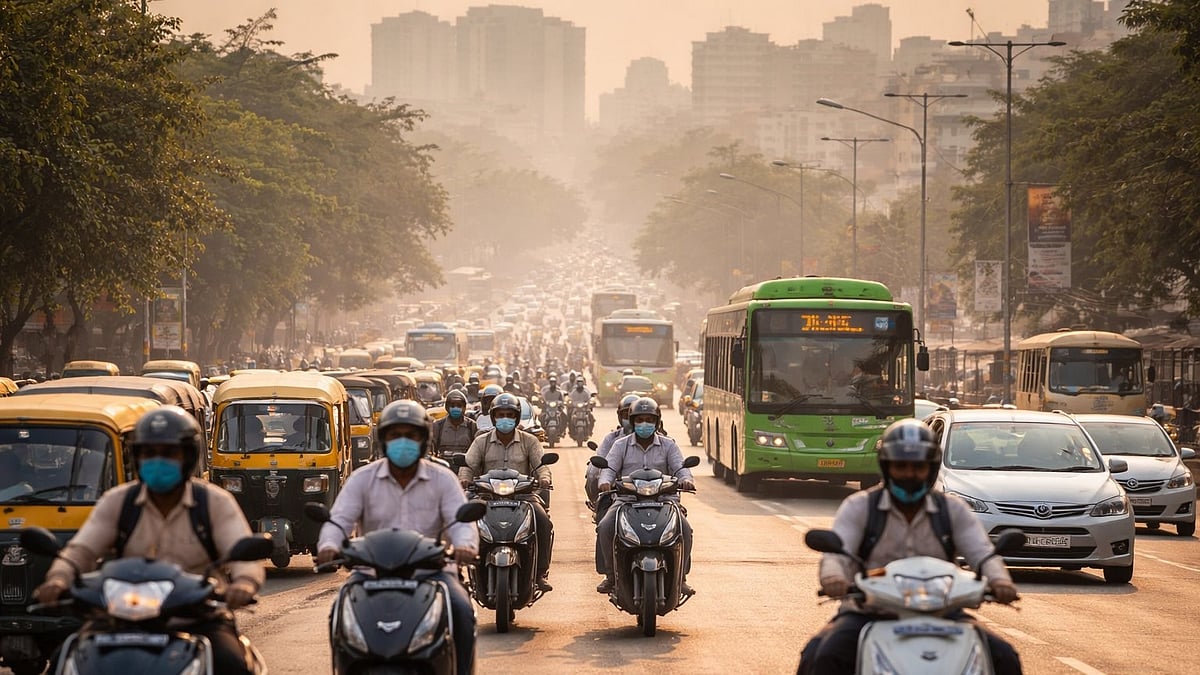
Pune: Air pollution has remained elevated across Pune throughout October, with the city's Air Quality Index (AQI) staying above 100 on most days. The lack of rainfall and continued emissions from traffic, construction and industrial activity have added to concerns as the city heads towards winter. Data from the Central Government's Sameer app showed that Pune's AQI reached 141 on October 22 before standing at 130 on October 25.
The city's AQI fell below 100 only on October 4, 5 and 6 this month. Monitoring stations reported varying pollution levels across different areas. Shivajinagar recorded the highest reading in Pune at 149, while Katraj registered an AQI of 91, placing it in the satisfactory category.
The situation was more concerning in neighbouring Pimpri-Chinchwad, where the average AQI stood at 142. Bhosari recorded a reading of 158, highlighting the pollution burden in the industrial area.

The extended dry spell has allowed dust and other pollutants to accumulate in the atmosphere. Dust from construction work, roads and uncovered surfaces can remain airborne for longer when there is little or no rainfall. Vehicle exhaust, industrial emissions and the burning of waste further contribute to the problem.
Weather conditions could make the situation worse in the coming weeks. Weak winds limit the movement of pollutants, while lower temperatures and stable atmospheric conditions during winter can prevent polluted air from dispersing. This can lead to a greater concentration of pollutants closer to the ground.
The impact of rising pollution is a particular concern for people with asthma, heart conditions and other respiratory illnesses. Prolonged exposure to air in the moderate AQI category can cause breathing discomfort, especially among sensitive groups and people who spend long periods near busy roads, construction sites and industrial zones.
Preventing open waste burning, covering construction materials, controlling dust at work sites and cleaning roads regularly can help reduce pollution. Civic authorities also need to monitor compliance and take action against violations to ensure these measures are effective.
With winter approaching, the coming weeks will be important for managing Pune's air quality. Regular monitoring and timely action by civic authorities will be necessary to control pollution from construction, transport, industries and waste burning. Officials from the Indian Institute of Tropical Meteorology (IITM) and the Pune Municipal Corporation (PMC) were unavailable for comment.

