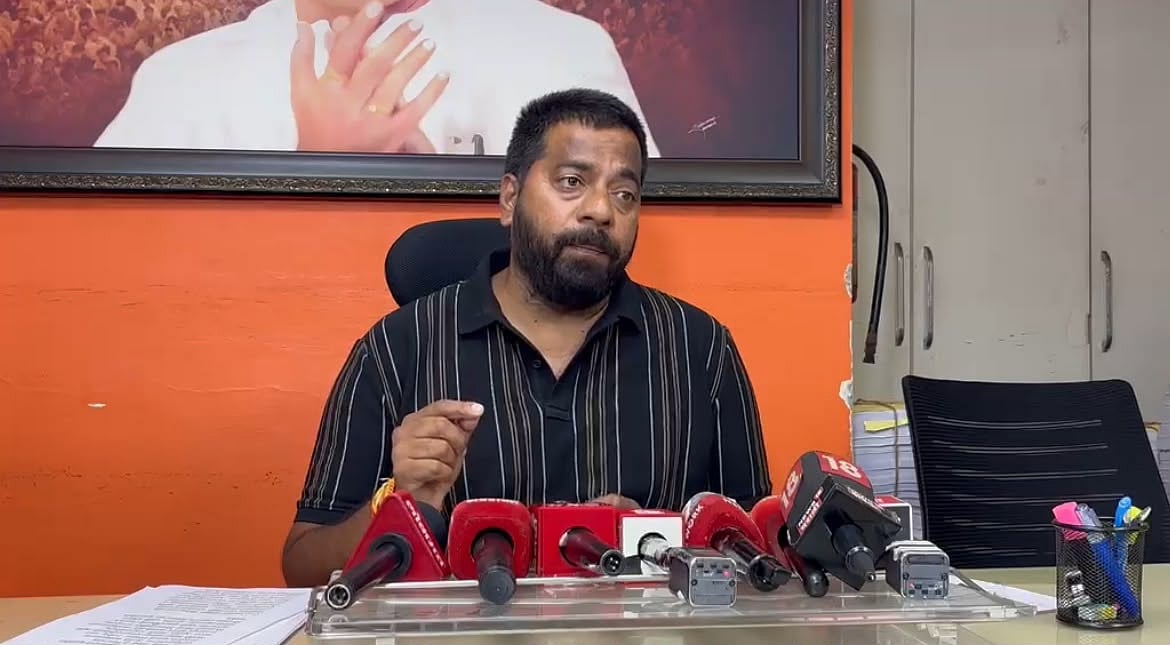
Pune: Maharashtra Navnirman Sena (MNS) leader Sainath Babar has criticised the Pune Police for allegedly making a ₹1 lakh security deposit mandatory for public mandals seeking permission to play dhol-tasha and other traditional musical instruments during processions, questioning the state government's silence over the issue.
Babar alleged that the police were misinterpreting a Bombay High Court order dated Oct 15 and demanded that the state government intervene to prevent financial restrictions on traditional public celebrations.
In a post on X tagging Chief Minister Devendra Fadnavis, Babar questioned the government's commitment to Hindu festivals, alleging that the deposit requirement would place an unreasonable financial burden on smaller mandals.
"This is a Hindu government, yet nobody from the government is speaking up when public mandals are being asked to deposit ₹1 lakh. Where are ordinary people supposed to get this money from?" Babar said.
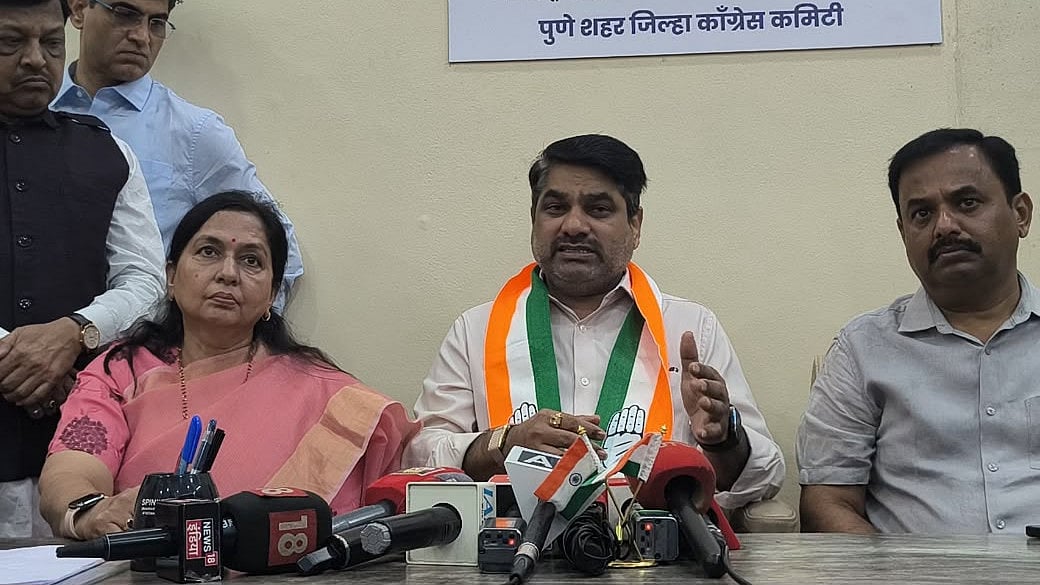
Addressing the press, Babar said the Pune Police had held meetings with mandals ahead of processions scheduled around Kojagiri Purnima following the Navratri festivities. Several mandals had reportedly obtained the necessary permissions. However, according to Babar, the police subsequently asked these mandals to deposit ₹1 lakh at their respective police stations.
He said he had visited a police station following complaints from mandals and had also spoken to Deputy Commissioner of Police (DCP) Shivlarkar of Zone 5, who showed him the High Court order.
According to Babar, the order refers to deposits of ₹1 lakh for public or collective events and ₹50,000 for individual events involving musical instruments, loudspeakers and similar equipment. However, he argued that the court had asked the police to consider the amounts rather than directing them to impose the deposits uniformly.
"The High Court has asked the police to consider the amount. But, by showing the order, the police are demanding ₹1 lakh from mandals and ₹50,000 for individual programmes. In my opinion, this is a completely incorrect interpretation of the court's directions," Babar alleged.
Highlighting the financial difficulties faced by smaller organisers, Babar said the deposit could exceed the actual cost of hiring a dhol-tasha troupe.
"Many mandals do not even collect ₹1 lakh in contributions. If a troupe costs ₹40,000 to ₹50,000, how are they expected to deposit ₹1 lakh? And after depositing the money, where must they go to get it back, and when will it be returned? There is no assurance," he said.
Babar also questioned whether similar deposits would be demanded for smaller religious and community programmes, including jagrans, where traditional instruments are commonly played. He alleged that the requirement could disproportionately affect community celebrations and smaller organisers.
Calling for political intervention, Babar urged the Bharatiya Janata Party (BJP), the Eknath Shinde-led Shiv Sena and the Ajit Pawar-led Nationalist Congress Party (NCP) to raise the issue with the government and seek relief for mandals.
He said he had not yet discussed the matter with MNS chief Raj Thackeray but would bring it to his attention.

