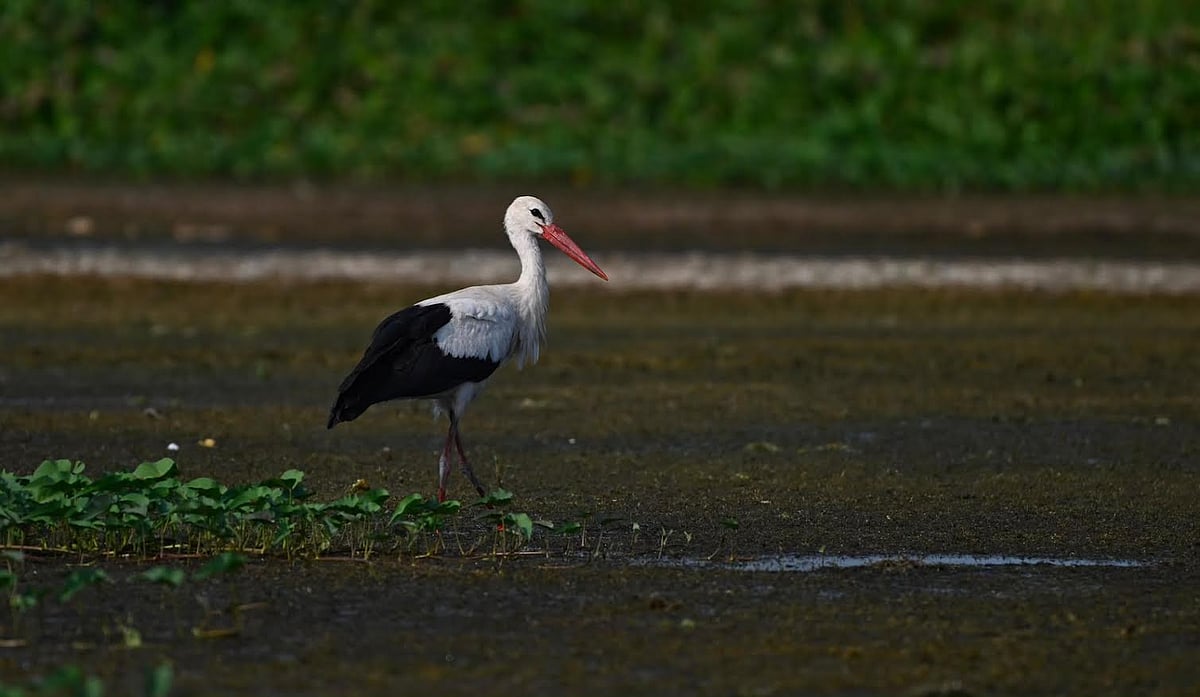
Nashik: A White Stork (Ciconia ciconia) has been spotted at Nandur Madhyameshwar Wildlife Sanctuary after a gap of several years, drawing attention to the sanctuary's rich biodiversity and its importance as a habitat for migratory birds.
The White Stork, which breeds in parts of Europe, North Africa and Central Asia, is known for its long-distance seasonal migrations. The bird's arrival at Nandur Madhyameshwar highlights the role of wetlands in providing feeding and resting grounds for migratory species.
Known for its striking appearance, the White Stork has a predominantly white body, contrasting black flight feathers, a long, pointed red bill and long red legs. Standing approximately three to four feet tall, the bird presents an impressive sight, particularly when it spreads its broad wings.
The species undertakes long-distance migrations to avoid harsh winter conditions in parts of its breeding range. During these journeys, it relies on rising columns of warm air, known as thermal currents, to soar and glide rather than continuously flap its wings. This helps the bird cover considerable distances while conserving energy.

A Bird Known for Bill Clattering
Unlike many other birds, the White Stork rarely produces conventional vocal calls. Instead, it communicates by rapidly clattering its bill, creating a distinctive rattling sound known as bill clattering.
This behaviour plays an important role in communication, particularly during courtship and interactions between mates.
The White Stork also plays an ecological role by feeding on frogs, small fish, insects, rodents and other small animals found in wetlands and surrounding agricultural areas.

By feeding on these organisms, the bird contributes to ecological balance and may benefit farmers by consuming certain agricultural pests.
The sighting after several years has added to the wildlife significance of Nandur Madhyameshwar Wildlife Sanctuary, which is known for its wetland habitat and diverse birdlife.
The bird's arrival also underlines the importance of protecting wetlands and natural habitats that provide migratory species with places to rest and feed during their journeys across continents.
- Hiralal Chaudhary, Range Forest Officer, Nandur Madhyameshwar Wildlife Sanctuary.

