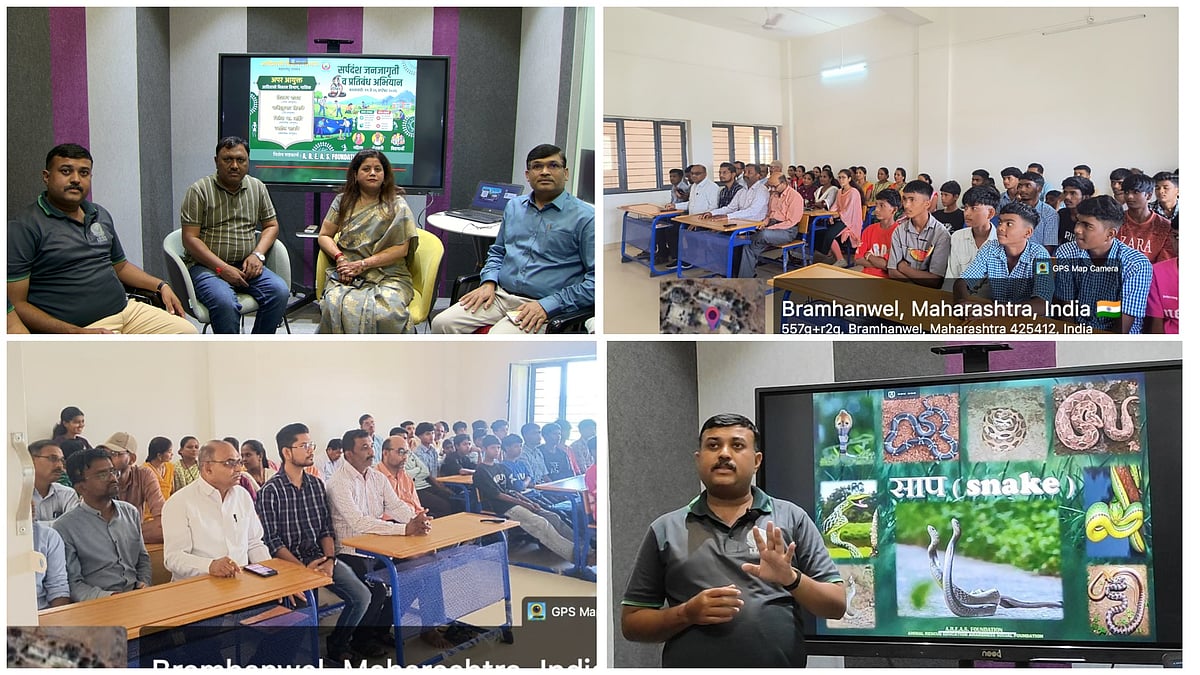
Nashik: The Tribal Development Department is conducting a state-wide ‘Snakebite Awareness and Prevention Campaign’ from September 19 to 26 to promote safety and awareness among students in remote and rural areas.
As part of the campaign, a live interaction was held through a digital studio on Saturday with approximately 2.25 lakh students from government and aided Ashramshalas, Eklavya Model Residential Schools and hostels under the jurisdiction of the Nashik Additional Commissioner’s office. The session focused on snakebite prevention, first aid and appropriate responses during emergencies.
Additional Commissioner Dinkar Pavra, Deputy Commissioners Rajendrakumar Hiwale, Nilesh B. Ahire and Swapnil Sable, Sushant Ranshur, Director of Areas Foundation and a snake and wildlife expert, Sonal Kasliwal-Dagade, Founder and President of Artha Foundation, snake and wildlife experts Rahul Naik and Anupam Saraf, Office Superintendent Avinash Shivrame, and Assistant Project Officers (in-charge) Sunil Nerkar, Ramchandra Tadvi and Nimba Kapadnis were present at the event.
During the session, Ranshur interacted with students and teachers through a PowerPoint presentation and explained the importance of remaining calm after a snakebite. He said panic can increase blood flow and potentially accelerate the spread of venom, making it important to reassure and calm the patient.
He stressed that the victim should be given appropriate first aid and transported to a hospital immediately and safely. He also cautioned against unscientific or incorrect treatment methods at the local level, which could prove fatal.
Ranshur further highlighted the importance of maintaining cleanliness in school and hostel premises. According to him, keeping these areas clean can help prevent snakes and other reptiles from entering the premises and reduce the risk of snakebite incidents.
Sonal Kasliwal-Dagade highlighted the dangers posed by superstitions and misconceptions surrounding snakes, noting that such beliefs can sometimes lead to fatal consequences.

The programme covered the importance of the food chain and ecosystem, identification of venomous and non-venomous snakes, first aid and practical demonstrations, misconceptions and incorrect treatment methods, cleanliness in Ashramshala premises, snakebite prevention and safety measures, and appropriate responses during emergencies and timely medical treatment.
“The safety of every student in Ashramshalas and hostels is our top priority. It was essential to dispel fears and misconceptions about snakes while providing students with scientific information and training on proper first aid. Our initiative to reach 2.25 lakh students simultaneously using digital technology proved successful. This campaign will enable our students to better protect themselves and their surroundings,” said Dinkar Pavra, Additional Commissioner, Nashik.

