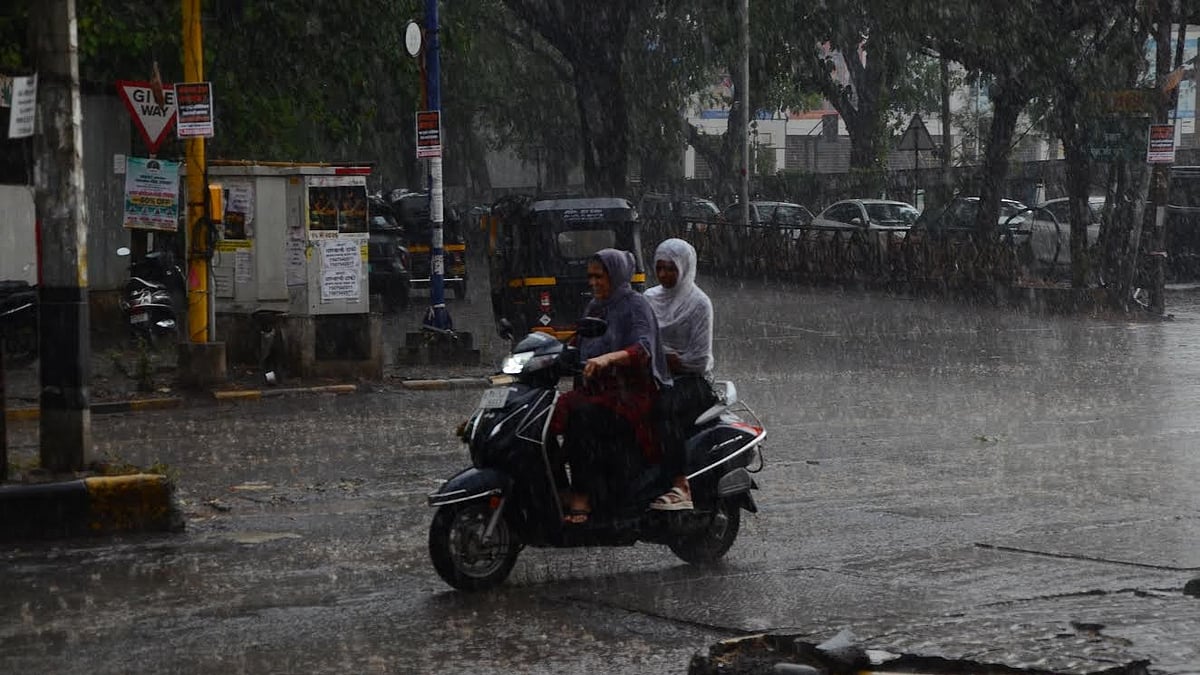
Nashik: The weather in Nashik district is expected to remain partially cloudy for the next five days (June 3 to June 7). Light rainfall has been forecast for some isolated areas. Maximum temperatures are expected to range between 35°C and 37°C, while minimum temperatures will hover between 23°C and 25°C. Wind speeds are likely to range from 13.1 to 16.8 kilometres per hour.
Yellow Alert Issued
Under its Impact-Based Forecast (IBF) framework for the agricultural sector, the Meteorological Department has indicated a possibility of gusty winds (30 to 40 km/h), lightning, and light to moderate rainfall in Nashik district on June 2. A Yellow Alert has been issued for June 3 and 4 as well, given the likelihood of stormy rains, lightning, and strong winds occurring in certain parts of the district, including the Ghat regions.

Agricultural Advisory for Farmers
The Rural Agricultural Meteorological Service, in conjunction with the Agricultural Research Centre, has issued the following advisory for farmers:
- Take measures to protect harvested summer crops, livestock, and poultry from stormy rains and lightning.
- Undertake field preparation (ploughing) for vegetable crops intended for the upcoming Kharif season. Apply farmyard manure during the ploughing process.
- Plan the cultivation of Kharif season crops such as onions, brinjal (eggplant), tomatoes, chillies, okra, cluster beans, vine vegetables, cauliflower, cabbage, etc. in a systematic and organised manner.
- Prepare nurseries for raising seedlings of onions, brinjal, chillies, tomatoes, cauliflower, and cabbage. Grow the seedlings on raised nursery beds.
- Establish these nurseries in locations where adequate water availability is assured.

- Ensure that seeds undergo proper treatment (seed treatment) prior to sowing. Initially, the nursery bed should be moistened using a watering can, followed by flood irrigation.
- Prepare the field for paddy (rice) and other crops, and conduct soil testing.
- Procure agricultural inputs such as improved seeds, fertilisers, etc.
- In regions with low rainfall, create furrows at intervals of 30 cm using a seed drill to conserve soil moisture.
- Purchase high-quality, certified seeds for crops intended for the Kharif season.
- Sowing cotton before the soil has cooled down increases the risk of pests and diseases; therefore, sowing should be undertaken only after the soil has cooled.
Farmers are urged to adhere to the advisories issued by the Meteorological Department and to take measures to protect themselves and their crops from stormy rains.

