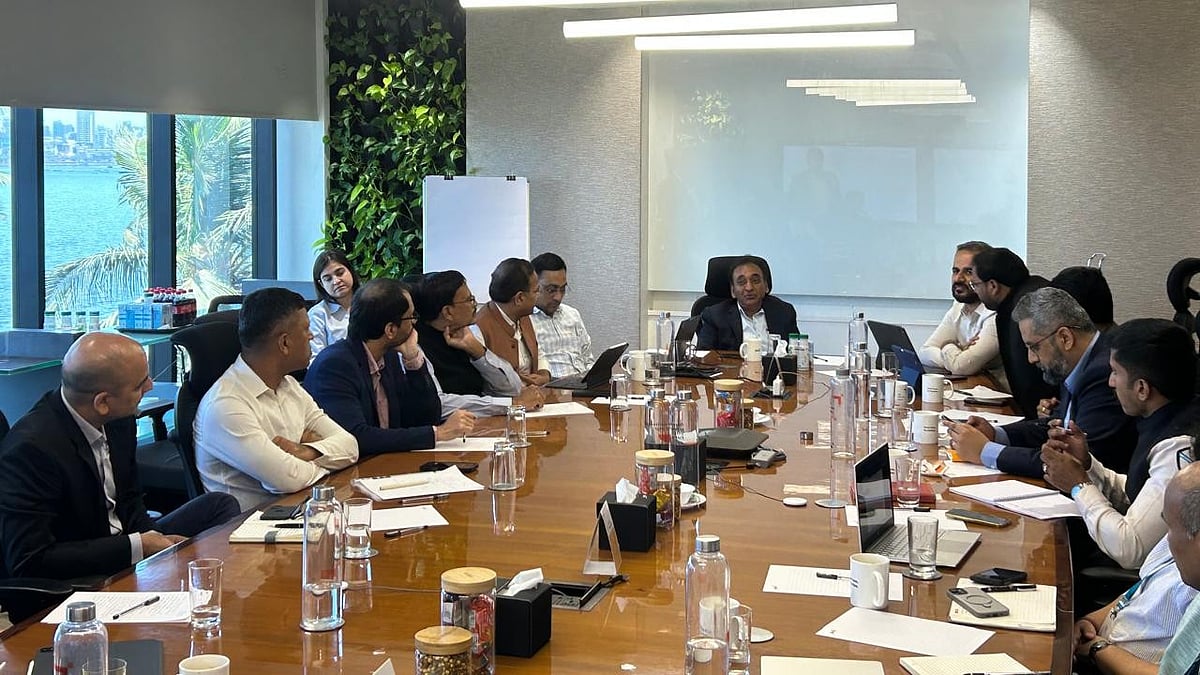
Nashik: What is the most effective way to manage 2.25 crore people descending on Nashik-Trimbakeshwar in a single day with zero fatalities? That was the central question at a high-level AI strategy workshop convened by the Nashik-Trimbakeshwar Kumbh Mela Authority (NTKMA) in Mumbai recently, and the answers that emerged were unlike anything attempted at a religious gathering in India before.
This workshop was part of a planned series of industry and expert consultation sessions to be undertaken by NTKMA basis vision set by the honourable CM Shri Devendra Fadnavis, who has always treated technology as a core governance infrastructure and made this addition of Kumbh the most technologically advanced Kumbh to date.

Senior government officials led by Chief Secretary Rajesh Aggarwal, Chief Advisor to hon CM Kaustubh Dhavse, Nashik Divisional Commissioner Praveen Gedam, IG Rajesh Pradhan, Kumbh Mela Commissioner Shekhar Singh, DIG Wireless G Shridhar, SP Wireless Raja Ramaswamy, NMC Additional Municipal Commissioner Amit Ranjan, MahaIT CEO Sanjay Katkar and NTKMA Additional Commissioner Kamlakar Randive sat across the table with engineers and strategists from Meta, Google, Microsoft, MIT Media Lab, Bhashini, Soket.ai, Adya.ai and several other AI-focused technology firms.
At the heart of the discussions was a proposed Kumbh AI Stack, a purpose-built artificial intelligence architecture that would process live feeds from thousands of CCTV cameras, IoT sensors, surveillance drones and mobile networks simultaneously and convert that raw data into real-time decisions on the ground.
Nashik is not starting from scratch here. The city already has around 1,300 CCTV cameras in place under its Smart City programme, with another 4,000 being added, alongside an intelligent traffic management system, smart parking, environmental sensors and smart lighting. The Kumbh AI architecture is designed to build on and extend this existing foundation.
The AI system is being designed to think in three directions at once, delivering real-time information to pilgrims, actionable instructions to field teams and control room personnel, and strategic insights to senior leadership, all from the same platform. This three-tier framework of Information, Instructions and insights forms the backbone of how AI will serve every actor at the mela, from a police officer managing a crowd surge to a first-time pilgrim trying to find a ghat.
One of the most significant outcomes of the workshop was the discussion around KumbhDoot, an AI assistant developed in partnership with a non-profit organization that will serve as the primary digital companion for pilgrims throughout their Kumbh journey. What makes KumbhDoot notable is its design principle: a pilgrim on a basic feature phone should be able to use it just as effectively as someone on a smartphone. Whether it is booking a cab, getting health guidance, or finding out which route is less crowded, the same AI will respond across WhatsApp, IVR helplines, mobile apps, public kiosks and PA systems.
Unlike past Kumbh editions, where technology was largely reactive, the 2027 edition aims to be predictive. The AI platform being planned is expected to anticipate crowd surges before they happen, flag sanitation and health stress points in advance, and coordinate emergency response across Nashik and Trimbakeshwar simultaneously.
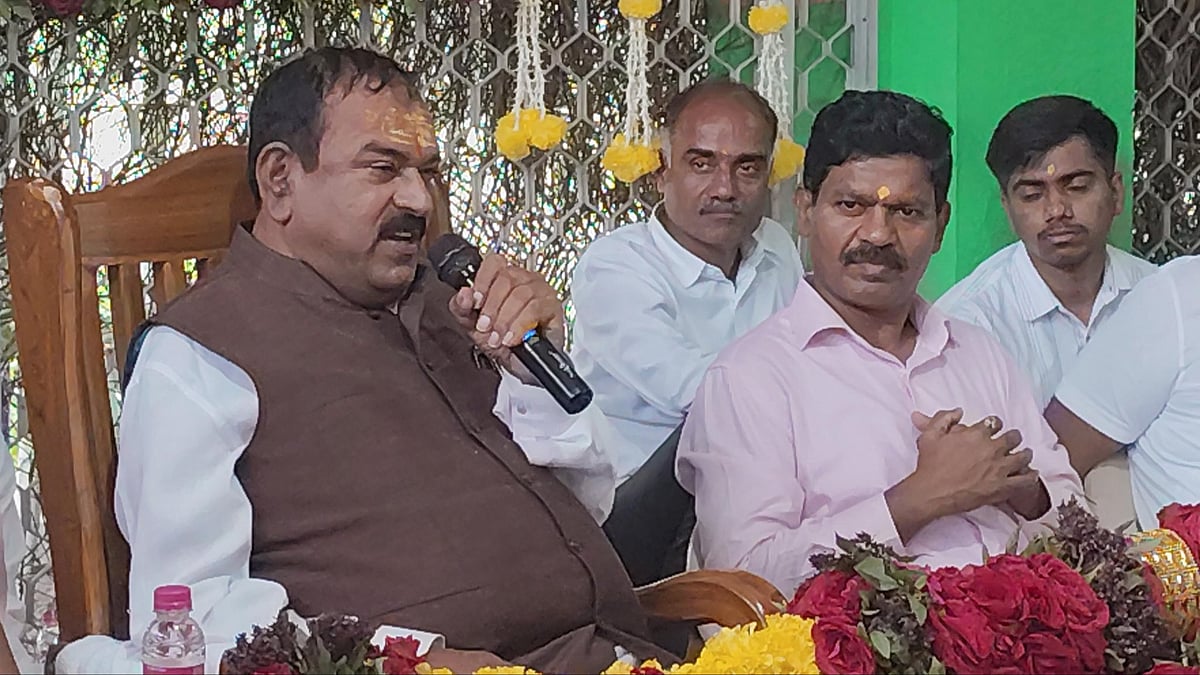
A dedicated Kumbh AI Sandbox will allow technology partners to build and stress-test their applications against simulated mela conditions before a single pilgrim arrives.
The Simhastha Kumbh Mela 2027 is expected to draw over 12 crores of pilgrims, with peak-day footfall projected at 2.25 crore across Nashik and Trimbakeshwar, which are 31 kilometres apart. The major mela period runs from June 15 to September 30, 2027.

