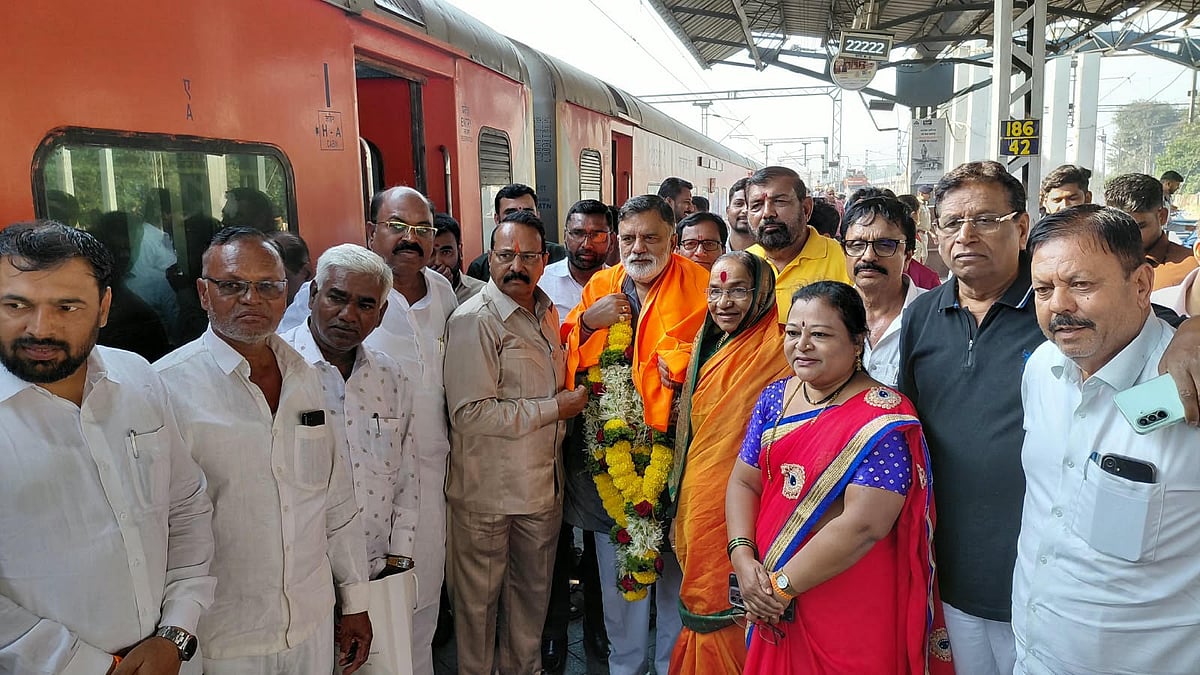
Nashik: Nashik Lok Sabha MP Rajabhau Waje returned to the city on Tuesday, Oct 13, after participating in the 81st Session of the United Nations General Assembly (UNGA) in New York as a member of the Indian parliamentary delegation. Citizens and party workers welcomed him at Nashik Road railway station.
Waje was among 12 members selected for the Indian parliamentary delegation and was the only MP from Maharashtra in the team.
During his visit to New York from Oct 5 to 9, 2026, he participated in discussions on social development, sustainable development, international cooperation and the functioning of the United Nations (UN).

Participation in UN Committee Discussions
During discussions in the Third Committee of the UN General Assembly, Waje addressed issues relating to digital and financial inclusion, food security, healthcare, social protection and sustainable development.
He also participated in deliberations on UN reforms, representation for developing countries and strengthening international cooperation to address global challenges.
His participation in the delegation was viewed as a significant development for Nashik.
Warm Welcome at Nashik Road Station
Citizens and party workers gathered at Nashik Road railway station to welcome Waje following his return from New York.
The station witnessed a celebratory atmosphere as supporters greeted the MP after his participation in the international proceedings.
Water Scarcity, Drought Concerns Now Priority
Following his return, Waje expressed concern over the possibility of drought-like conditions in Maharashtra, particularly in Nashik district, and said addressing potential water scarcity would be among his key priorities.
"Even while participating in proceedings at the global platform, I remained concerned about the possibility of drought-like conditions in the state and Nashik district. Now, my priority will be to address the potential water scarcity crisis facing the people of Nashik and the challenges posed by drought. I will consistently pursue necessary measures to ensure water for farmers' crops, drinking water for residents in villages and fodder for livestock," Waje said.
"Rather than waiting for a crisis to occur, it is essential to begin planning today to tackle the challenges ahead," he added.
Waje stressed the need for timely planning and sustained follow-up to safeguard agricultural activities, ensure drinking water supplies and meet the needs of livestock if drought conditions worsen in the district.

