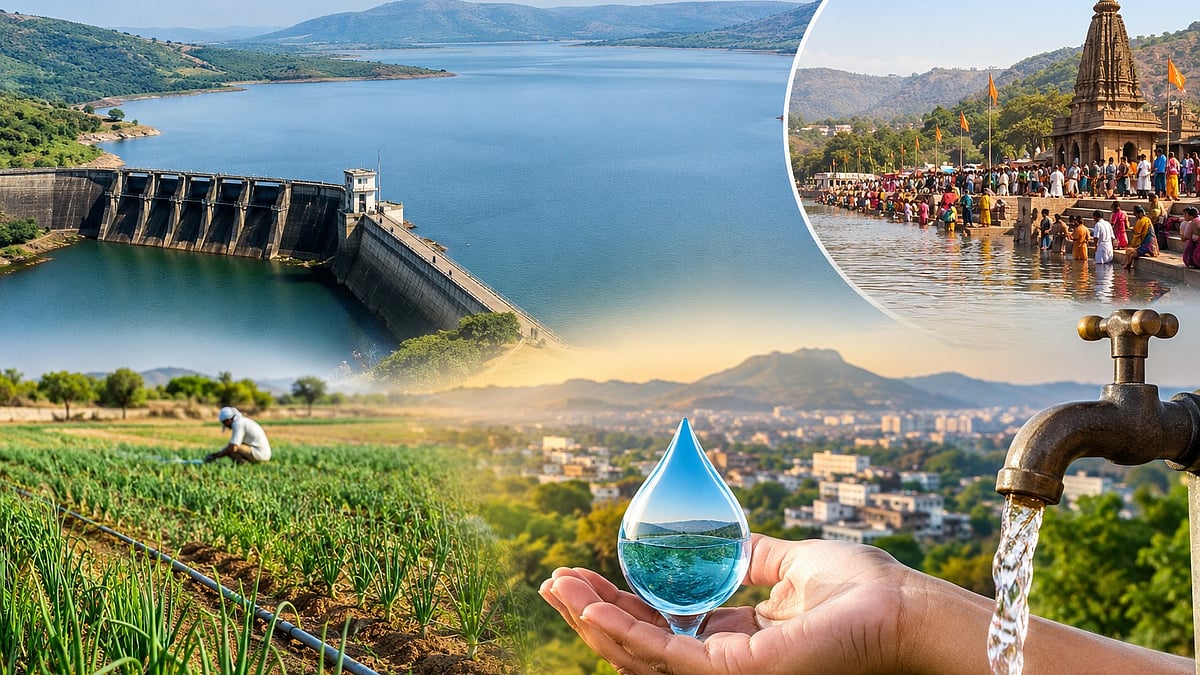
Nashik: The water situation in Nashik district is currently satisfactory, with major and medium reservoirs recording healthy storage levels following the monsoon. The good water availability is expected to provide relief to the city, rural areas, agriculture and industries. However, with the summer season and the Nashik-Trimbakeshwar Simhastha Kumbh Mela approaching, authorities will have to undertake careful and scientific water planning to ensure that the available stock lasts until the next monsoon.
The district has a large network of reservoirs that plays a crucial role in meeting drinking water, irrigation and industrial requirements. The Gangapur, Darna, Palakhed and Girna reservoir systems are particularly important for the district. The satisfactory storage in these projects has improved Nashik's water security. Gangapur reservoir, a major source of drinking water for Nashik city, has special significance, as adequate storage here directly supports the city's water supply.
Relief For Agriculture
The healthy water storage is also expected to provide relief to farmers during the rabi season. Adequate availability for irrigation will benefit crops such as onion, grapes, vegetables and other horticultural crops. However, officials will need to maintain a balance between irrigation requirements, drinking water needs and industrial consumption. Efficient irrigation methods such as drip and sprinkler systems can play an important role in reducing water consumption.

Groundwater Management Remains A Challenge
Despite the satisfactory reservoir position, groundwater management remains an important concern in several parts of the district. Nashik has significant variations in rainfall and geography. The western belt, including hilly and high-rainfall areas, receives substantial rainfall, but large quantities of water can flow away rapidly. Strengthening watershed development, check dams, farm ponds, rainwater harvesting and groundwater recharge measures will therefore be important for long-term water security.
Kumbh Mela To Increase Water Demand
The upcoming Nashik-Trimbakeshwar Simhastha Kumbh Mela will put additional pressure on the district's water resources. The arrival of large numbers of devotees will increase the demand for drinking water, sanitation, temporary accommodation, bathing facilities and other civic arrangements. Water supply arrangements for the Kumbh will therefore have to be planned well in advance, with adequate reserves maintained for the regular needs of Nashik city and rural areas.
Focus On Water Conservation And Reuse
Although the present water position is encouraging, authorities cannot afford to be complacent. Irregular rainfall, climate change, increasing population, urbanisation, industrial expansion and rising agricultural demand could affect future water availability. Greater emphasis will therefore be required on rainwater harvesting, groundwater recharge, water conservation, micro-irrigation and the reuse of treated wastewater.
Planning Until The Next Monsoon
The administration faces the task of ensuring that the current reservoir storage is used judiciously until the next monsoon. Drinking water must receive the highest priority, while irrigation and industrial requirements need to be managed through a balanced water allocation strategy. Regular monitoring of reservoir levels and groundwater conditions will also be essential.
Overall, Nashik district is presently in a comfortable water position, with satisfactory reservoir storage providing relief to citizens and farmers. However, the real challenge will be to conserve this water and manage it scientifically in view of the summer months and the additional requirements of the Simhastha Kumbh Mela. Effective water conservation and long-term planning will be crucial to maintaining Nashik's water security.

