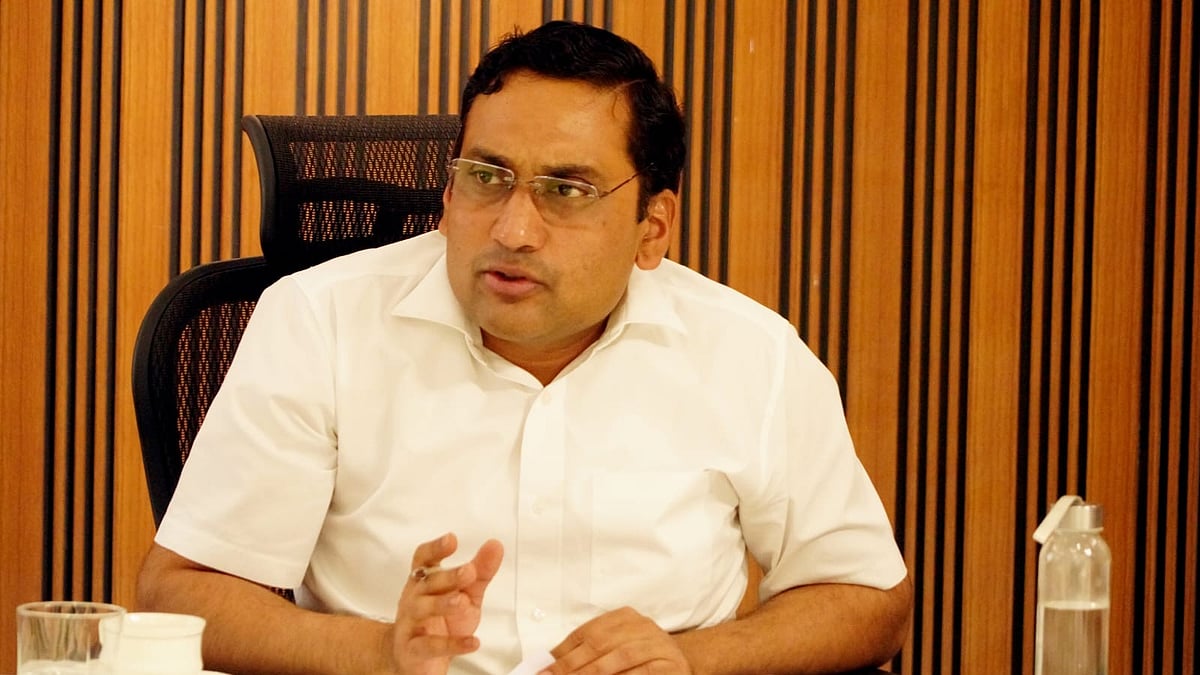
Nashik: Divisional Commissioner Dr Praveen Gedam has directed all concerned agencies to take swift action to make the Godavari River pollution-free. He emphasised the need to prevent encroachments in the riverbed and instructed the Zilla Parishad and Municipal Corporation to implement concrete measures for the removal of water hyacinth from the river.
He was speaking at a meeting of the committee appointed to address Godavari River pollution, held under his chairmanship. Present at the meeting were Chief Executive Officer of Zilla Parishad Omkar Pawar; Deputy Commissioner of the Municipal Corporation Nitin Pawar; Assistant Commissioner of Nashik Metropolitan Region Development Authority Babasaheb Pardhe; Regional Officer of Maharashtra Pollution Control Board V. V. Killedar; Executive Engineer of MIDC Jaywant Pawar; Assistant Commissioner of the Divisional Office Vitthal Sonawane; Dr Prajakta Baste; along with heads of various departments and non-official members Rajesh Pandit, Nishikant Pagare, and Jagbir Singh. District Collector Ayush Prasad and NMC officer Nitin Goyal attended the meeting online.
Dr Gedam stated that all departments must act in accordance with the directives of the High Court. In view of the upcoming Kumbh Mela, it is essential for all agencies to fulfil their responsibilities within the stipulated time to ensure the Godavari River is pollution-free.
He further said that all possible options should be explored for removing water hyacinth from the river, including mechanical methods or deploying manpower through the concerned authorities. Agencies such as the Municipal Corporation, Zilla Parishad, Nashik Metropolitan Region Development Authority, Maharashtra Pollution Control Board, Water Resources Department, and MIDC should jointly deliberate and take appropriate decisions. He clarified that the Zilla Parishad should handle such work in rural areas, while the municipal corporation should act in urban river stretches.
Dr Gedam also pointed out that some commercial establishments outsource cloth-washing work to private agencies, which wash clothes directly in the riverbed, causing pollution. He directed the municipal corporation and police authorities to take strict action against such practices and present detailed data in the next meeting.
Regarding industrial pollution, he instructed that the industrial effluent treatment project should be completed urgently. MIDC was also asked to cooperate with the municipal corporation in implementing measures for nearby residential areas. The Municipal Corporation has been directed to submit necessary proposals to the Industries Department.
He stressed the need for collective efforts to prevent encroachments along the riverbanks and to keep the area pollution-free. Earlier instructions have already been issued to take action against constructions within the blue line zone, and notices should be served accordingly.
He also directed the municipal corporation to inspect whether large housing complexes have implemented rainwater harvesting systems and to take action against those that have not.

