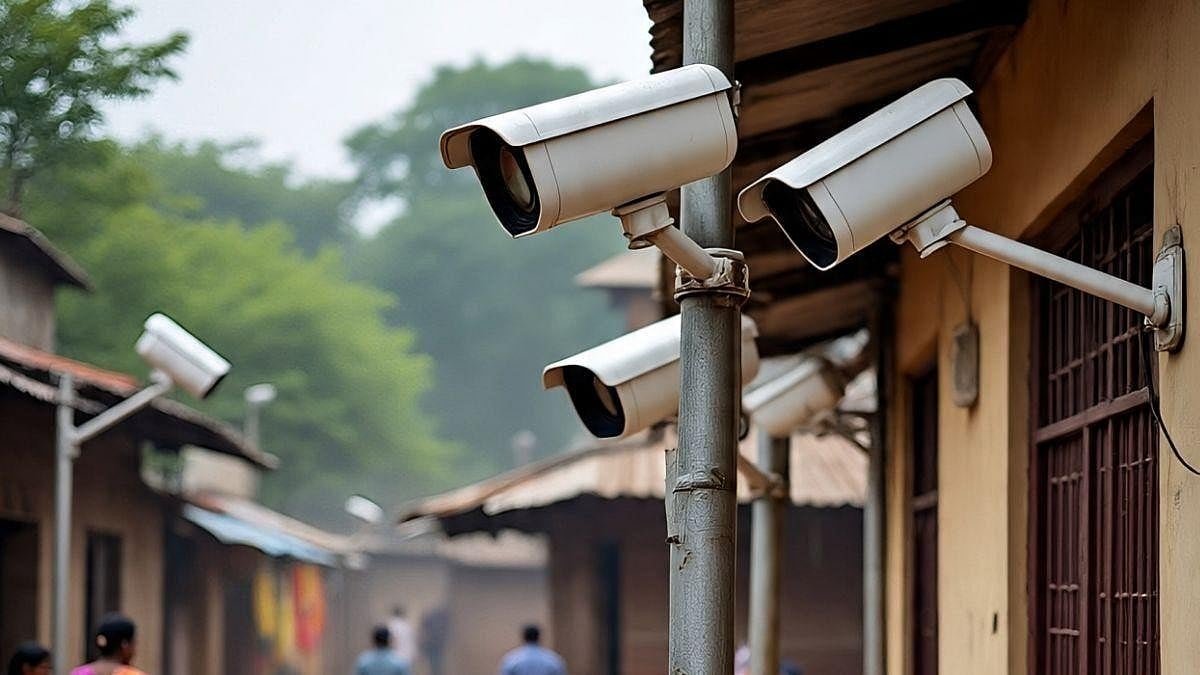
Nashik: With several crore devotees expected to converge on Nashik and Trimbakeshwar during the 2027 Simhastha Kumbh Mela, the administration is turning to artificial intelligence (AI) and advanced surveillance technology to ensure effective crowd management and pilgrim safety.
The administration is planning a comprehensive system integrating closed-circuit television (CCTV) cameras, drones and AI-based video analytics to monitor crowd movement in real time and identify potential risks.
Around 5,500 CCTV cameras, including approximately 4,500 in Nashik city and 1,000 in Trimbakeshwar, are proposed to cover sensitive locations such as Ramkund, Godavari ghats, Tapovan, Sadhugram, akharas, major roads, parking areas and transport hubs.
An optical fibre network will facilitate the transmission of live footage to centralised control rooms, enabling authorities to monitor crowd density, movement patterns and congestion.

Drones and AI to Identify Crowd Risks
Drones will complement the CCTV network by providing aerial surveillance of large gathering points, bathing areas, procession routes and other sensitive locations.
Live footage from drones and ground-based cameras will be integrated with AI-powered analytics to identify sudden increases in crowd density, slowing movement, bottlenecks and potential stampede risks.
The system is expected to generate alerts whenever crowd pressure reaches potentially dangerous levels, allowing police and administrative teams to intervene promptly by regulating entry, diverting pedestrian movement or opening alternative routes.
The Nashik City Police have already initiated a pilot project involving AI and machine learning-based video analytics, focusing on crowd counting, real-time monitoring and early identification of potential stampede risks. Police personnel are also undergoing training to operate these advanced systems.
Three Command and Control Centres Planned
To coordinate this technology-driven security network, three Integrated Command and Control Centres (ICCCs) are planned.
These include the existing Smart City facility at Panchavati, the monitoring infrastructure at the Nashik City Police Commissionerate and a proposed new centre at the Rural Police Headquarters in Adgaon.
The Kumbh Authority has granted administrative approval for the ₹32.8 crore Adgaon control centre, which is scheduled for completion by March 2027.

Digital Twin Technology to Aid Crowd Management
The administration is also exploring AI-enabled digital twin technology, which would create a virtual replica of the Kumbh area by integrating geographical information system (GIS) data, two-dimensional (2D) and three-dimensional (3D) maps, CCTV footage, traffic movement, parking information, weather updates and river water levels.
This integrated digital platform could help officials simulate crowd scenarios, anticipate congestion and identify vulnerable locations before emergencies develop, enabling better preparedness and coordinated decision-making.
Human Intervention Remains Crucial
However, the success of the initiative will depend on how effectively authorities translate technological inputs into action on the ground.
Uninterrupted connectivity, accurate AI alerts, trained personnel and swift coordination between police, municipal authorities, health services and disaster management teams will be crucial.
Authorities will also need adequate backup arrangements to address technical failures, network disruptions and sudden changes in crowd movement.
While AI, CCTV cameras and drones are expected to transform conventional crowd management methods, human intervention and timely decision-making will remain indispensable.
The real test of this technology-driven strategy will come during the major bathing days, when large crowds converge simultaneously.
Ensuring that technology serves as an effective early warning and response mechanism, rather than merely a surveillance tool, will be critical to the safe and effective management of the Nashik-Trimbakeshwar Kumbh Mela.

