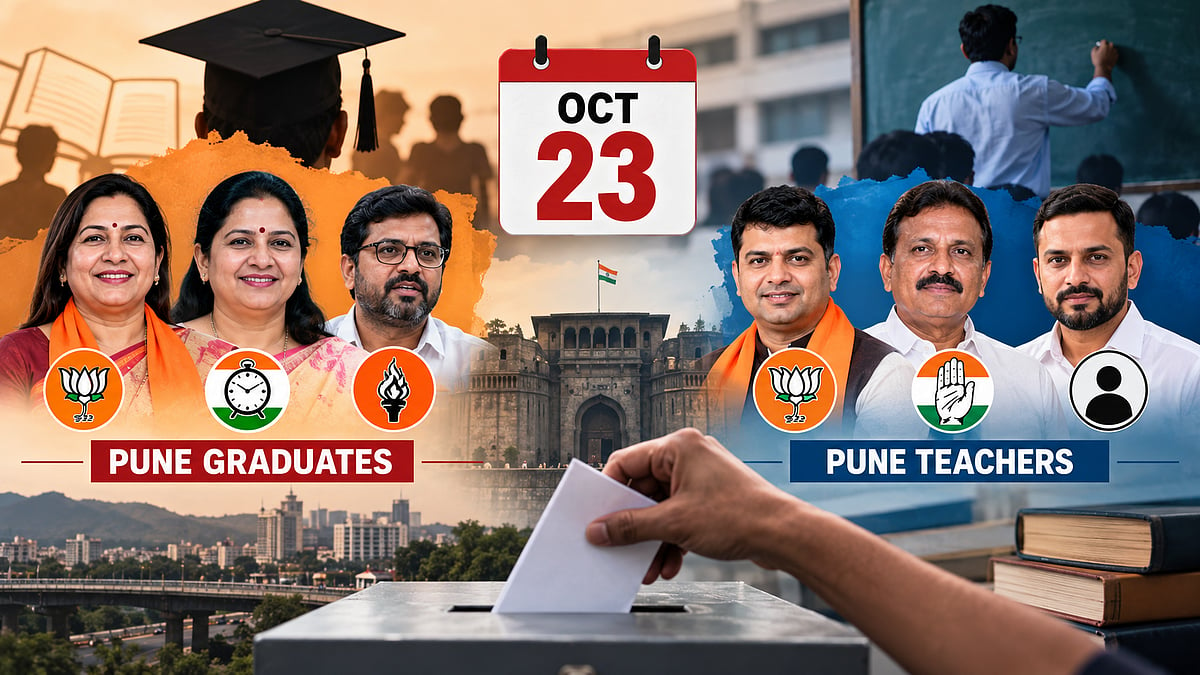
Pune: The Maharashtra Legislative Council elections on Oct 23 will see contests in two constituencies covering Pune division, with the ruling Mahayuti alliance backing Bharatiya Janata Party (BJP) candidates for both seats. However, the final candidate lists include nominees from other parties and independents, making both contests multi-cornered.
The Pune Division Graduates' constituency will see BJP candidate Dr Smita Jadhav face Harshada Jadhav-Deshmukh of the Nationalist Congress Party-Sharadchandra Pawar (NCP-SP), and Sunil Modi of Shiv Sena (Uddhav Balasaheb Thackeray), among others. In the Teachers' constituency, BJP's Kaustubh Gawde is the Mahayuti candidate against Congress's Jayant Dinkar Asgaonkar and independent candidate Sachin Sanap.
Polling will take place from 8 am to 4 pm on Oct 23. Counting is scheduled for Oct 27. The election process is scheduled to be completed by Oct 31, subject to the Election Commission's official notification.
The elections are significant for Pune because the Graduates' constituency covers five districts and has 3,88,019 registered voters. The Teachers' constituency has around 62,000 registered voters. These figures cover the respective constituencies across Pune division, not Pune district alone.
Not every graduate or teacher can vote. Voters must meet the prescribed eligibility conditions and have their names on the relevant special electoral roll.
Pune Graduates' Constituency: Candidates and Electorate
The Pune Division Graduates' constituency covers Pune, Satara, Sangli, Kolhapur and Solapur districts. It has 781 polling stations, according to figures reported after the nomination withdrawal deadline.
The main contest is between BJP's Jadhav and NCP (SP)'s Jadhav-Deshmukh. Shiv Sena (UBT) candidate Modi has also remained in the race.
Smita Jadhav is associated with Dr DY Patil Vidyapeeth, where she serves as Pro-Chancellor and Secretary, and the Pudhari media group. Her campaign has highlighted employment opportunities for graduates, skill development, start-ups and incubation centres.
Jadhav-Deshmukh is the NCP (SP) candidate, while Shiv Sena (UBT) has retained Modi. The failure to reach a consensus within the Maha Vikas Aghadi (MVA) has left the opposition without a single candidate against the BJP nominee.
Pratap alias Bhaiya Mane, associated with the Ajit Pawar-led NCP, withdrew his nomination on Oct 9 after discussions within Mahayuti. His withdrawal helped the ruling alliance avoid an additional candidate in the Graduates' constituency.
The final field has 47 candidates. The contest will test the candidates' ability to mobilise registered graduates across all five districts rather than voters in Pune city alone.
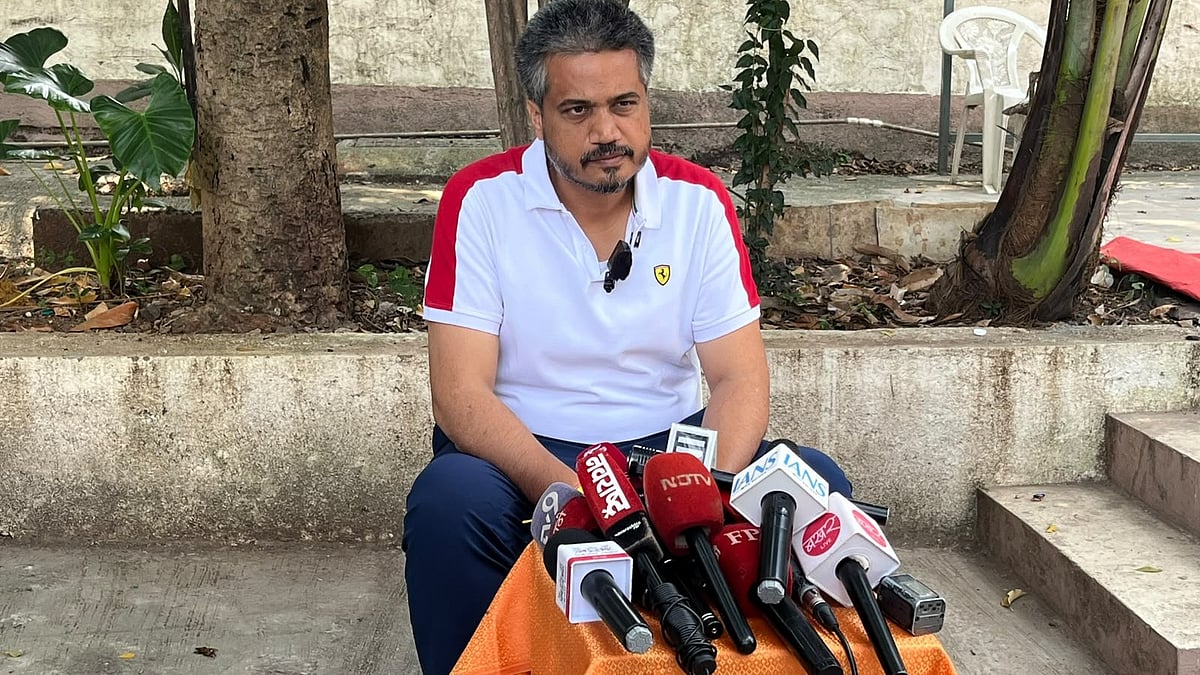
Pune Teachers' Constituency: BJP and Congress Face Off
The Teachers' constituency is also witnessing a contest between the ruling alliance and the opposition.
BJP has fielded Gawde, who is associated with the education sector. Congress has nominated sitting Member of the Legislative Council (MLC) Asgaonkar, whose term is ending.
Independent candidate Sanap is also in the contest. He previously served as an officer on special duty to Industries Minister Uday Samant.
Shiv Sena's Mangesh Chivate withdrew his nomination during the withdrawal period, helping resolve a dispute within Mahayuti over the alliance candidate.
The constituency has 30 candidates and 310 polling stations, according to reports published after the nomination process.
The contest will test the BJP's efforts to secure both Pune division seats and Congress's attempt to retain the Teachers' seat.
Who Can Vote in the Graduates' Election?
Being a graduate does not automatically make a person eligible to vote in this election. Voters must meet the prescribed eligibility conditions and be enrolled in the Pune Division Graduates' constituency electoral roll.
The voter must be an Indian citizen and ordinarily reside within the constituency. The person must also hold a recognised university degree or an equivalent qualification accepted under the applicable rules.
The degree must have been obtained at least three years before the qualifying date of Nov 1, 2025. The voter's name must appear on the relevant electoral roll.
A person who graduated from a university in Pune but now lives elsewhere cannot vote solely because they studied in the city. Similarly, a graduate who lives in Pune but has not registered on the special roll cannot automatically vote.
Having a regular voter ID for Lok Sabha or Assembly elections is not enough. Graduates must check their names on the separate electoral roll.
The registration process for the Oct 23 election has closed. A supplementary electoral roll is scheduled to be published on Oct 12, so voters should check the official portal for their latest registration and polling station details.
Eligible voters can check their names through the official Maharashtra electoral-roll portal.

Who Can Vote in the Teachers' Election?
The Teachers' constituency has separate eligibility rules and a separate electoral roll.
A voter must ordinarily reside within the constituency and must have worked as a teacher for at least three years in total during the six years immediately preceding the qualifying date. The teaching service must meet the requirements for recognised educational institutions under the applicable rules.
For this election, the qualifying date is Nov 1, 2025. A person who currently works as a teacher is not automatically eligible unless they meet the service and registration requirements.
Teachers should check their names on the special electoral roll through the official Maharashtra electoral-roll portal.
How Will the MLC Election Be Conducted?
Unlike regular Assembly elections, the Graduates' and Teachers' constituency polls use proportional representation through the single transferable vote system.
Voters mark their preferences for candidates on the ballot paper. They indicate their first choice by marking '1' against the candidate's name. They can also mark further preferences against other candidates.
The counting process considers first-preference votes and the required quota. Depending on the results, surplus votes or votes of eliminated candidates can be transferred according to the next available preferences.
This means later preferences can influence the outcome. Voters must follow the ballot paper instructions carefully.
Five Seats Going to Polls Across Maharashtra
The Oct 23 elections will fill five Legislative Council seats across Maharashtra. Apart from the two Pune division seats, the polls will cover the Nagpur Division Graduates' constituency, the Chhatrapati Sambhajinagar Division Graduates' constituency and the Amravati Division Teachers' constituency.
The seats are falling vacant as the terms of the sitting members end on Dec 6, 2026.
The other sitting members whose terms are ending are Abhijit Govindrao Wanjari from Nagpur Graduates, Satish Bhanudasrao Chavan from Chhatrapati Sambhajinagar Graduates and Kiran Ramrao Sarnaik from Amravati Teachers.
The final candidate lists and election instructions can be checked on the Chief Electoral Officer, Maharashtra website and the Pune Divisional Commissioner's election page.
With polling approaching, the focus in Pune will be on how candidates mobilise the two special electorates and whether the ruling alliance can convert its candidate selection into victories in both constituencies.

