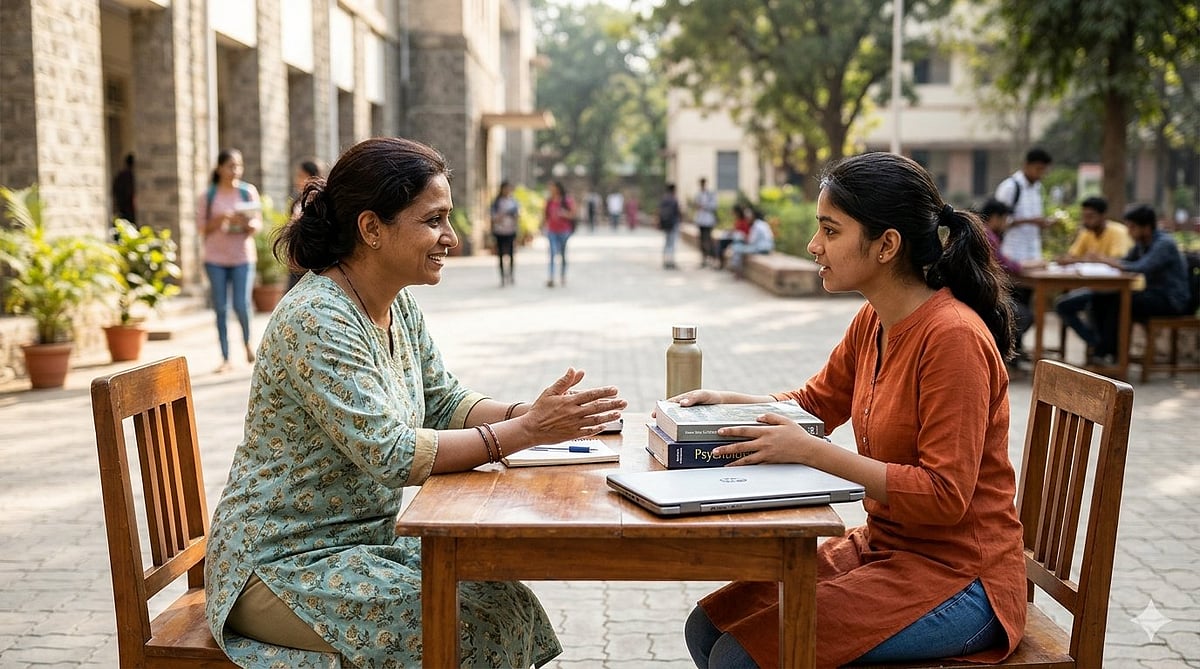
Pune: In a step towards making higher education more accessible to children of single mothers, the Maharashtra Higher and Technical Education Department has appointed 1,238 counsellors across aided colleges in the state. The initiative aims to address the financial, social and emotional challenges these students face and ensure they receive appropriate guidance, institutional support and access to available welfare facilities.
The department has undertaken the initiative under the directions of Higher and Technical Education Minister Chandrakant Patil, with the Maharashtra State Faculty Development Academy (MSFDA) taking responsibility for training the appointed counsellors. The academy will conduct the training programme in two phases, beginning with the selection and training of master trainers from public universities.
Shailendra Deolankar, Executive Director of MSFDA and Director of Higher Education, said children of single mothers often encounter several difficulties while pursuing higher education, making institutional support necessary to help them continue their studies.
Deolankar said, “Children of single mothers often face financial, social and emotional challenges while pursuing higher education. For that, only now, the department has appointed one counsellor in each aided college to guide these students, understand their concerns and ensure that they receive the support and facilities available to them.”
The department had earlier constituted a committee under the chairmanship of Hemlata Bagla to study the challenges faced by children of single mothers in higher education and recommend appropriate support measures. The committee has submitted its report to the government. A statewide survey is also underway to determine the exact number of such students pursuing higher education across Maharashtra, which will help the department assess the extent of support required.
Under the first phase of the training programme, the department will select three master trainers from each public university. The selected trainers will include associate professors, professors and directors of student welfare. The first batch of master trainers will undergo training at MSFDA on Nov 27. In the second phase, these master trainers will train all 1,238 college-level counsellors at their respective universities.
The counsellors appointed in individual colleges will guide students, understand their specific difficulties and help them access the facilities and assistance available to them. The department also intends to use the findings of the survey and the recommendations of the Bagla committee to develop targeted welfare measures.
Emphasising the government’s commitment to ensuring that financial or family-related difficulties do not become obstacles to education, Patil said, “Children of single mothers should not have to discontinue their education because of the difficulties they face. The government is committed to providing them with the necessary support. Counsellors appointed in colleges will guide these students and extend assistance to them. Based on the recommendations of the Bagla committee and the findings of the ongoing survey, concrete welfare schemes will also be formulated for these students.”
The Minister is personally reviewing the implementation of the initiative, which the department considers an important social intervention aimed at creating a more sensitive and inclusive higher education system.

