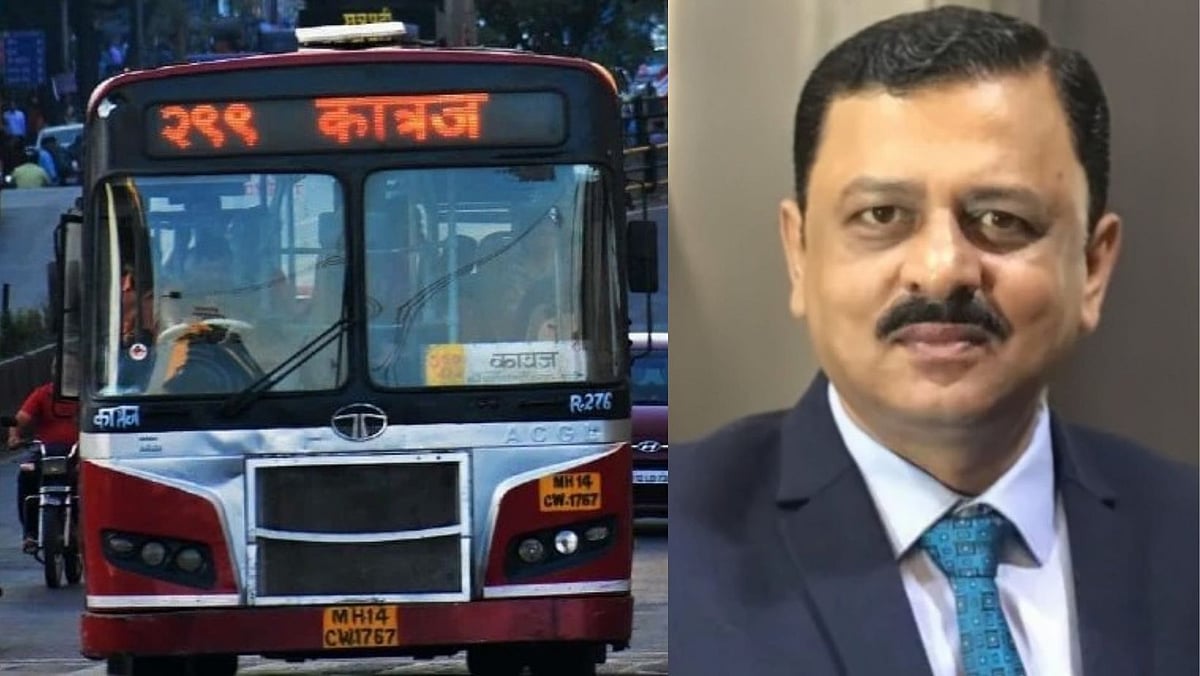
In an exclusive conversation with The Free Press Journal, newly appointed Pune Mahanagar Parivahan Mahamandal Limited (PMPML) Chairperson and Managing Director Mahesh Awhad outlines an ambitious roadmap to transform Pune’s public transport system with thousands of new buses, better metro connectivity, reduced breakdowns and an improved commuter experience.
With Pune’s growing population and increasing dependence on public transport, the PMPML is preparing for a major overhaul. From fleet expansion and feeder services for metro commuters to route rationalisation and commercial monetisation, Awhad says the focus is firmly on improving reliability, accessibility and frequency of buses across the city.

Q. Nearly 6,000 PMPML buses are required as per Pune’s population, but the current fleet strength is below 2,000.
A. Yes, of course. As per the requirement, at least 60 buses are needed for a population of one lakh. Currently, PMPML has nearly 27 buses per one lakh population. However, 1,715 new buses will soon be added to the fleet.
All the buses are based on the ITMS system, which has around 10-12 automatic functions, including vehicle tracking, panic buttons and a vehicle announcement system. Now, we are getting 1,000 buses along with ITMS.
Secondly, 100 buses will be added to the fleet under the GCC model. Additionally, a tender has been floated for 500 buses. Another 115 electric buses will be added by the end of June. Moreover, through the Pradhan Mantri e-Drive scheme, PMPML will get an additional 1,000 electric buses approved by the Central Government.
With these additions, a total of 2,715 new buses will be added to the fleet by the end of 2026.
Q. What about the quality of the buses?
A. A period of 60 days is considered the prototype period during which we analyse the functions and quality of the buses. Once satisfied, the dedicated team proceeds with the final delivery.
Q. Commuters are hoping for more feeder buses, and there is also a need at metro stations.
A. Metro was introduced after buses in the city. After the metro was introduced, several things needed to be changed and revised. There are two major challenges: vehicles parked on roads near metro stations and a shortage of space at metro stations to park vehicles, which has led to the narrowing of roads.
If we can adjust more buses by implementing services from commuters’ residences to metro stations and from metro stations to workplaces, then definitely footfall will increase. That process is called route rationalisation. Secondly, improving frequency and the number of trips on particular routes will be sorted out soon. This will help metro, PMPML and passenger safety.
Apart from that, we have chalked out a plan to analyse footfall and bus frequency on busy routes. Accordingly, buses on routes where footfall is less will be reduced, and those buses will be deployed on routes where more footfall is recorded.
Additionally, we are having a tie-up with MahaMetro and have requested them to provide some land near stations so our buses can stand there. If we can increase the frequency of buses to every five minutes, then passengers leaving stations will prefer PMPML buses for further journeys.
Q. Is PMPML in loss?
A. We are providing concessions to senior citizens, women and students. PMPML bus expenses are around ₹130-140 per kilometre, whereas in reality, PMPML earns only ₹60-70. We are operating at around a 50 per cent loss, but we have chalked out plans regarding how we can monetise premises on a commercial basis. The civic administration bears the loss amount, but if we perform better in the commercial sector, we can recover the loss on our own.
Q. What is your target?
A. Our target is to reduce the distance between PMPML bus stands and commuters' homes. The distance of a bus stand should not exceed 500 metres, so people can reach it within five minutes. We are proud that we have covered 94 per cent of the population.
Secondly, another target is that passengers should get buses within five minutes on each route.
Additionally, by identifying peak periods, mechanical work, including manpower, will be improved, which will help reduce waiting times.
Q. What is your plan for crowded routes?
A. A comprehensive ground-level study is going on segment-wise on stretches where more footfall is recorded. For example, a route may have 19 stops, but buses get crowded from the first stop itself. Then what about commuters waiting at the second and subsequent stops? So we are planning to deploy more buses from crowded points too.
Q. What about PMPML bus breakdowns?
A. We are working on that, and the numbers will reduce. Definitely, after the addition of new buses, the figures will decline. We have discussions with depot managers and aim for zero breakdowns in upcoming buses. However, zero breakdowns are not possible, but we will reduce them as much as we can. Our target is that bus breakdowns should not exceed 0.9 per cent.
Q. There are issues regarding bus schedule timings.
A. Overall, 92 per cent of buses run as per schedule. Our target is to achieve at least 95 per cent and not go below that.
Q. What about the Prime Minister's request to provide maximum facilities to commuters?
A. The optimum utilisation of the current PMPML fleet is our target. We plan to reduce breakdowns and accelerate maintenance work. Additionally, after analysing crowd patterns on routes, we are planning to shift buses from low-footfall routes to heavily crowded routes.
Q. What about the deteriorating condition of bus shelters?
A. Such work comes under PMC and PCMC, and accordingly, they install shelters. That issue will be solved soon.

