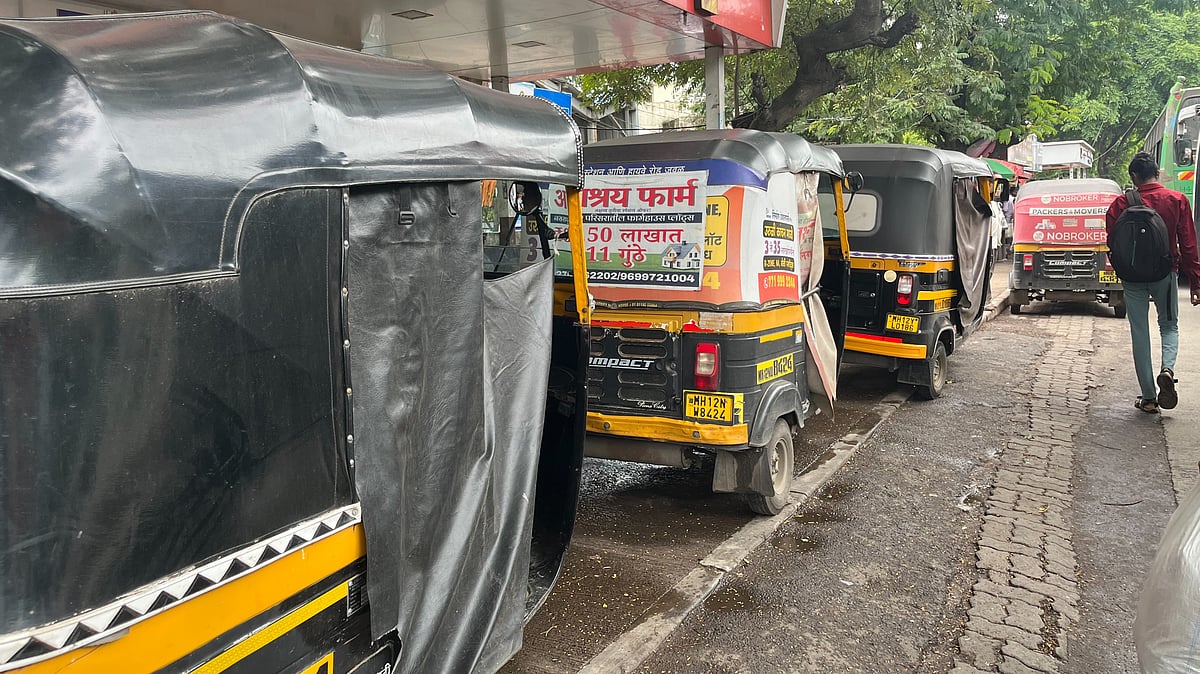
Pune: Pune’s daily commute became costlier from Tuesday as revised autorickshaw fares came into effect on the same day that Compressed Natural Gas (CNG) prices were increased by ₹2 per kg, leaving both drivers and commuters worried about how the twin hikes will affect their daily travel.
Under the revised fare structure, the minimum autorickshaw fare for the first 1.5 km has increased from ₹25 to ₹30, while every additional kilometre will now cost ₹20 instead of ₹17. At the same time, CNG prices in Pune, Pimpri-Chinchwad and adjoining areas have increased from ₹95.75 to ₹97.75 per kg.
For autorickshaw drivers, the timing of the two increases has brought some relief through the higher fare but also renewed concern over rising operating expenses. Drivers have repeatedly pointed to CNG, maintenance, spare parts and waiting time in traffic as factors eating into their daily earnings.

Near Pune Railway Station, autorickshaw driver Suraj Kadam said that the ₹30 minimum fare was acceptable but would provide only limited relief. “Everything has become expensive over the last few years,” he said, pointing out that a substantial part of his earnings goes towards CNG and household expenses.
Another driver, Tukaram Raj, said, “Fuel costs take away a large portion of my daily income, and traffic and waiting time further reduce the number of trips I can complete. Also, waiting for long trips at this price hike makes no sense because commuters don’t want us to charge them higher prices.”
However, not all drivers believe the fare hike will solve the problem. Near Wakdewadi, driver Nauman Shaheed Khan warned that higher fares could discourage passengers from taking autos for short distances. “If customers stop coming, even higher fares won’t help us earn more,” he said.

Another Wakdewadi driver, Prathamesh Kulkarni, argued that the government should address CNG prices instead of placing the entire burden on passengers. He said, “Passengers were already bargaining over even ₹10, ₹20 or ₹30, and I fear that disputes could increase after the revised fares.”
The concern is particularly visible for passengers travelling short distances around Shivajinagar, Wakdewadi and Deccan. Commuters who previously depended on autos for quick last-mile journeys now have to account for the ₹30 minimum fare, while longer journeys will also become more expensive.
A commuter concern reported was that regular users, including office-goers, students and senior citizens, would feel the cumulative impact of higher fares. “Every small increase affects people who depend on autos every day,” Rohini said, arguing that the government should consider reducing CNG prices or providing relief instead of passing the burden directly to passengers.
Another commuter, Soham Kanase, said, “Drivers have genuine financial difficulties, but is increasing fares the only answer?” He added that authorities should examine ways to reduce fuel costs rather than repeatedly increasing the cost for passengers.
The simultaneous hikes have therefore raised a larger question in Pune: if CNG prices continue to rise, will higher fares actually improve drivers’ earnings, or will they simply make passengers avoid autos, particularly for short trips?

