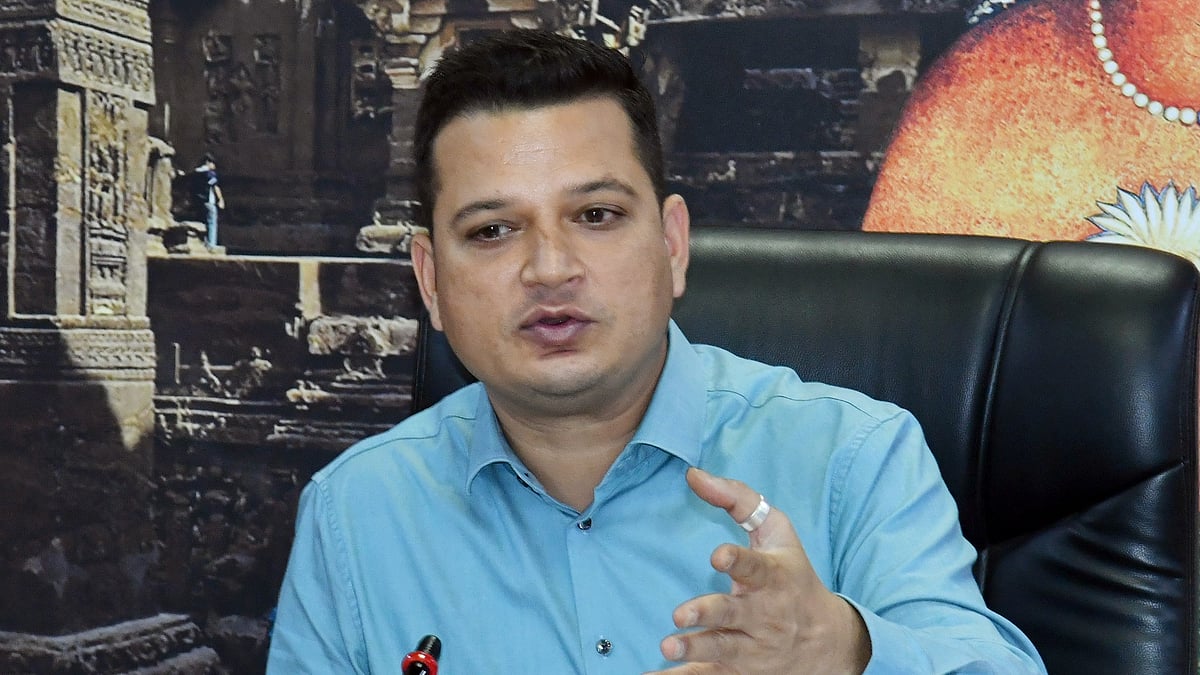
After a new case of Coronavirus variant JN-1 was reported from Maharashtra this week, the Chhatrapati Sambhajinagar Collector Astik Kumar Pandey held a meeting and instructed the district's health systems to maintain mutual coordination following the detection of the new COVID-19 variant JN.1 in some state cities.
Precautions regarding facilities, equipment, test kits, and medicine stock were emphasised. The meeting confirmed no cases of this variant in the district, urging citizens to remain alert without panicking. The Collector also appealed for mask usage in crowded places.
In this context, a state-level review was conducted online on Thursday under the chairmanship of Chief Minister Eknath Shinde. After this review, Collector Astik Kumar Pandey assessed the management in the district.
Zilla Parishad Chief Executive Officer Dr Vikas Meena, Additional Collector Dr Arvind Lokhande, District Health Officer Dhanorkar, District Surgeon Dr Dayanand Motipavle, Municipal Health Officer Dr Prerna Sanklecha, Dr Archana Rane, Dr Laddha, and others were present.
The Collector emphasised that all health systems in the district should maintain mutual coordination, following the guidelines given by the World Health Organisation.
He directed testing for patients with fever, cold, and cough symptoms. Additionally, he instructed keeping the necessary medicinal stock, treatment facilities, and all other ancillary equipment well-equipped.

What is JN.1 variant?
The World Health Organisation has classified COVID-19 strain JN.1 as a separate "variant of interest" given its rapidly increasing spread but said that it poses a "low" global public health risk. The JN.1 variant was previously classified as a variant of interest (VOI) as part of the BA.2.86 sublineages, the parent lineage that is classified as a VOI, the world body said on December 19.
However, in recent weeks, JN.1 continues to be reported in multiple countries, and its prevalence has rapidly increased globally. India has also reported its first case of the JN.1 variant. It now represents the vast majority of BA.2.86 descendent lineages reported to the Global Initiative on Sharing All Influenza Data (GISAID), according to the World Health Organisation (WHO).


