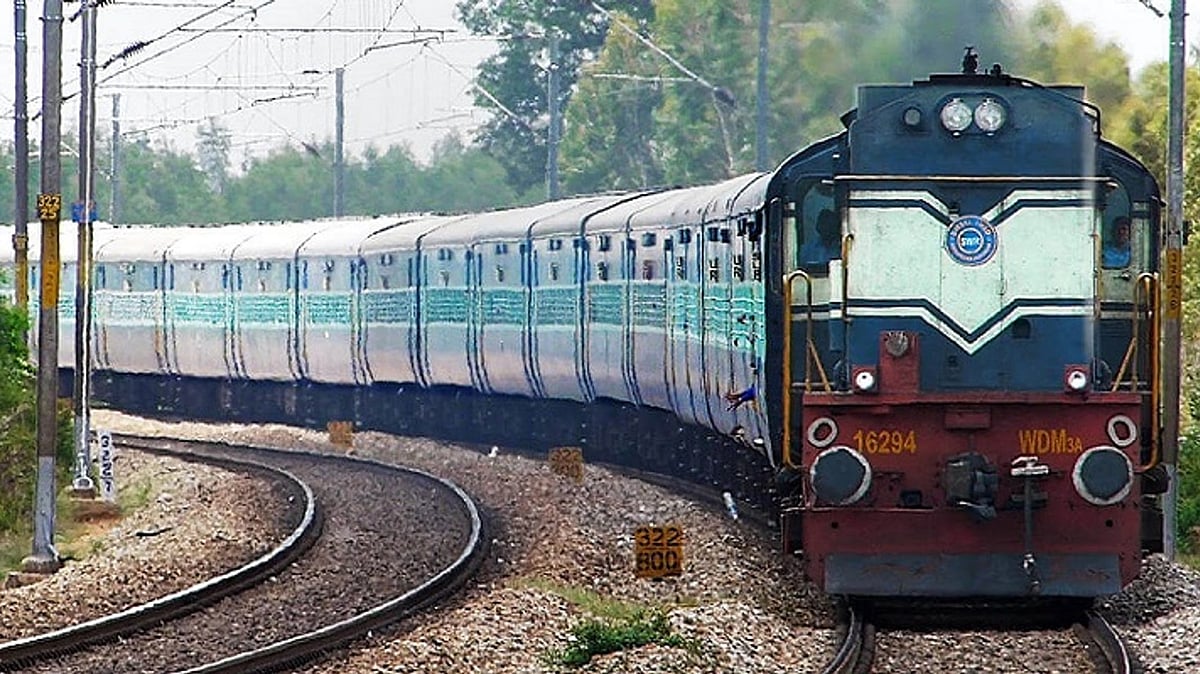
Nashik: The ambitious Nashik–Pune High-Speed Rail Corridor, which aims to connect Maharashtra’s two major cities with direct and rapid rail connectivity, has received significant momentum. Responding to queries in the Lok Sabha, Union Railway Minister Ashwini Vaishnaw announced a revised alignment for the project, stating that the corridor will bring major growth to the state’s industrial, tourism, educational, and logistics sectors.
The earlier proposed Narayangaon route had drawn objections from the Department of Science and Technology and the Department of Atomic Energy, as it posed potential interference with operations at the Giant Metrewave Radio Telescope (GMRT), an internationally acclaimed observatory. After consultations and detailed studies with the state government, experts, and local representatives, an alternative alignment has now been finalised.
A committee comprising state officials, local representatives, the railway administration, and the project authority will take further decisions to ensure holistic development of the region.
New Proposed Route
Nashik → Sainagar Shirdi → Puntamba → Nimblak → Ahilyanagar → Pune (via Chakan Industrial Area)
The revised alignment ensures the safety of the international research facility while significantly reducing the travel time between Nashik and Pune.
Current Status According to the Railway Ministry:
DPR prepared for Nashik Road–Sainagar Shirdi double line
Approval of ₹240 crore for doubling the Sainagar Shirdi–Puntamba (17 km) stretch
Puntamba–Nimblak (80 km) doubling work completed
Nimblak–Ahilyanagar (6 km) work in progress
Ahilyanagar–Pune (133 km) new double line DPR prepared with an estimated cost of ₹8,970 crore
Major Boost to Tourism
The corridor is expected to enhance religious, cultural, and heritage tourism:
Faster connectivity to Sainagar Shirdi, Trimbakeshwar, and Pandharpur
Improved access to Pune’s historic forts and Peshwa-era heritage sites
Impetus to rural tourism and local handicrafts
Pilgrims and tourists to benefit from faster, safer, and smoother travel
A Game-Changer for Industrial Growth
The route will be vital for industrial belts such as Chakan, Ambegaon, Shirur, Sinnar, and Nashik.
Direct rail connectivity will:
Reduce freight transport costs
Strengthen logistics supply chains
Provide new markets for MSMEs
Attract fresh industrial investment

New Opportunities in Education and Technology
Nashik and Pune are among Maharashtra’s fastest-growing education hubs. The rail corridor will enhance academic exchange, research collaboration, and student mobility.
Vaishnaw also stated that under the Prime Minister’s multimodal connectivity vision, 130 “Gati Shakti Multimodal Cargo Terminals” are operational nationwide. The Nashik–Pune corridor will also be integrated into this multimodal network.

