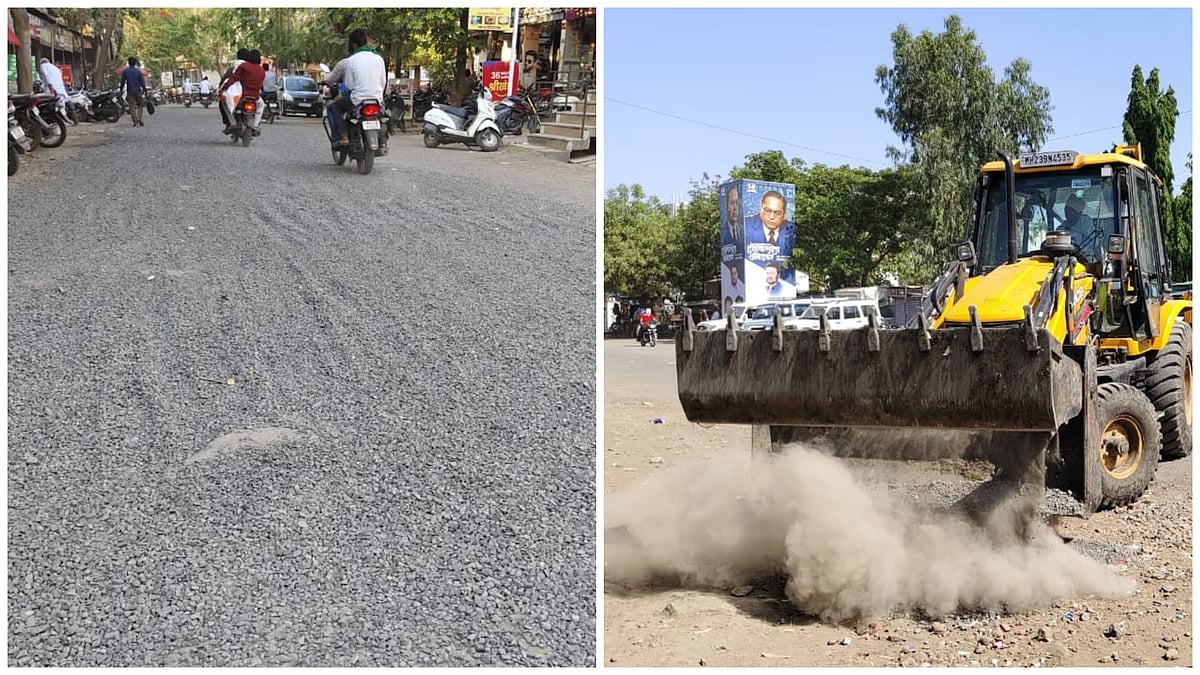
Beed: Nearly 100 commuters were injured in a series of road accidents across Beed town after loose gravel scattered on several major roads by the Beed Municipal Council (BMC) led to widespread two-wheeler skidding incidents on Monday and Tuesday. The incidents occurred during the 135th birth anniversary celebrations of Bharat Ratna Dr Babasaheb Ambedkar, when traffic movement across the town was unusually high.
According to municipal officials, the civic body had attempted to address worsening potholes on key city roads by spreading loose gravel as a temporary repair measure. The work was carried out on prominent stretches, including Karanja Road, Dhondipura, the Siddhivinayak Complex area, and adjoining commercial zones.
However, instead of improving road conditions, the uncompressed loose gravel created dangerously slippery surfaces. Two-wheelers, particularly scooters, began skidding soon after the material was laid, triggering multiple accidents throughout the day.
Eyewitnesses said riders lost control while braking or turning, as tyres failed to grip the scattered gravel. The situation worsened during peak hours, when large numbers of citizens were travelling to attend Ambedkar Jayanti processions and public programmes.
Medical sources confirmed that a majority of the injured were two-wheeler riders, with women commuters among the worst affected. Many women reportedly fell after failing to maintain balance on the uneven and loose road surface.
Several injured persons suffered fractures, head injuries, bruises, and deep abrasions. Victims were rushed to government and private hospitals across Beed for treatment. Fortunately, no fatalities were reported till late evening, though doctors described some injuries as serious.
Local residents alleged that accidents continued for hours before any corrective measures were initiated by the authorities.
The incident sparked widespread anger among residents, social activists, and motorists, who criticised the civic administration for what they termed a “Tughlaki” and a poorly planned decision.
Citizens questioned why loose gravel was spread without proper rolling, compaction, or traffic regulation measures. Many alleged that the work was carried out hastily ahead of Ambedkar Jayanti celebrations without adequate engineering supervision.
Residents demanded immediate removal of the loose stones and urged the administration to undertake permanent road repairs using cement, concrete or asphalt, rather than temporary solutions that compromise public safety.
“This is not road repair but a risk to human life. Authorities must ensure scientific road maintenance,” said a local shopkeeper near Iqbal Ali Khan.
Facing mounting criticism, Beed Municipal Council Chief Officer Shailesh Fanase acknowledged lapses in execution and admitted that the decision had proved incorrect.

