When most people see a barren hill, they see a lost landscape. Shekhar Jayantrao Gaikwad saw a forest waiting to return.
For nearly three decades, the mechanical engineer-turned-environmentalist has quietly transformed Nashik's ecological landscape through relentless tree plantation, conservation and public awareness. His work has earned him the title of Nashik's "Forest Man", but for Gaikwad, the mission has never been about recognition. It has always been about giving the city its green lungs back.
As rapid urbanisation, concretisation and population growth began swallowing Nashik's natural cover, Gaikwad realised that the city's hills and open spaces needed more than plantation drives; they needed ecological restoration using native species.
His journey began nearly 30 years ago when he started caring for neglected saplings planted by the Nashik Municipal Corporation (NMC). Every morning, from 6am to 9am, before beginning his professional work, he would water plants, replace dead saplings and plant new trees. He also visited schools, colleges, industries and government offices, encouraging citizens to become partners in protecting the environment.
The defining moment of his mission came on World Environment Day in 2015, when he launched the Nashik Devrai (Sacred Grove) Project on the barren slopes of Phashi Dongar near Satpur MIDC. The land, dominated by the invasive Gliricidia species, had little biodiversity and was often described as a "dead forest".
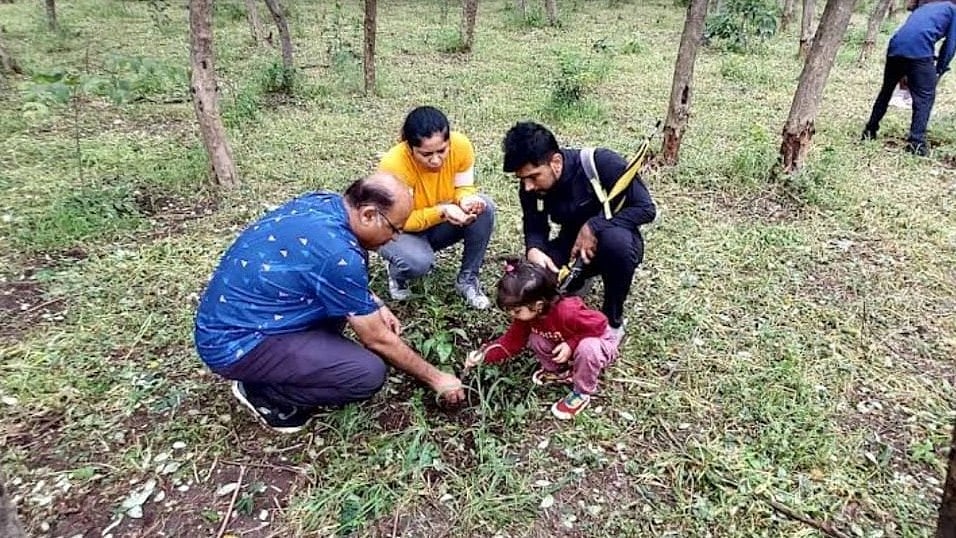
Gaikwad believed the area could be revived only by restoring native vegetation. He formed the Harit Mitra Sena and mobilised thousands of volunteers. More than 10,500 pits were prepared before the monsoon, filled with fertile soil and readied for plantation. During Van Mahotsav, nearly 15,000 citizens participated in a record plantation drive that saw 11,000 trees planted in a single day.

Today, the Devrai has spread across nearly 100 acres and stands as one of Nashik's finest examples of ecological restoration. More than 35,000 native plants, representing over 250 tree species, along with dozens of species of bamboo, shrubs and climbers, now flourish where barren land once existed.
Gaikwad's vision did not stop there. Through the Nashik Vanrai Project near Mhasrul, another 40-acre green zone has been developed with over 13,500 native trees, creating yet another urban forest for the city.
The impact extends far beyond greenery. The restored forests now support rich biodiversity, attracting nearly 50 species of birds, along with peacocks, mongooses, civet cats, wild boars, snakes, wolves and even occasional leopards. The revival of native vegetation has also improved soil quality and strengthened the local ecosystem.

Education has remained central to Gaikwad's work. His Nature Interpretation Centre has introduced more than three lakh students and citizens to environmental conservation. QR codes installed on trees provide information about native species, while hundreds of workshops and awareness programmes have inspired people to value biodiversity. Through his organisation Apla Paryavaran, he continues to promote green belts and environmental education across the region.
Over the years, Gaikwad has personally helped plant more than three lakh native trees and inspired over 12 lakh people through awareness campaigns, workshops and training programmes.
Despite the scale of his work, he continues to describe tree plantation in simple terms: "Planting native trees is nature's answer to pollution. Protecting biodiversity is the greatest gift we can leave for future generations."

For Nashik, Gaikwad has done much more than plant trees. He has restored ecosystems, educated generations and shown that lasting environmental change begins with one person willing to dedicate a few hours every day to a larger purpose.

