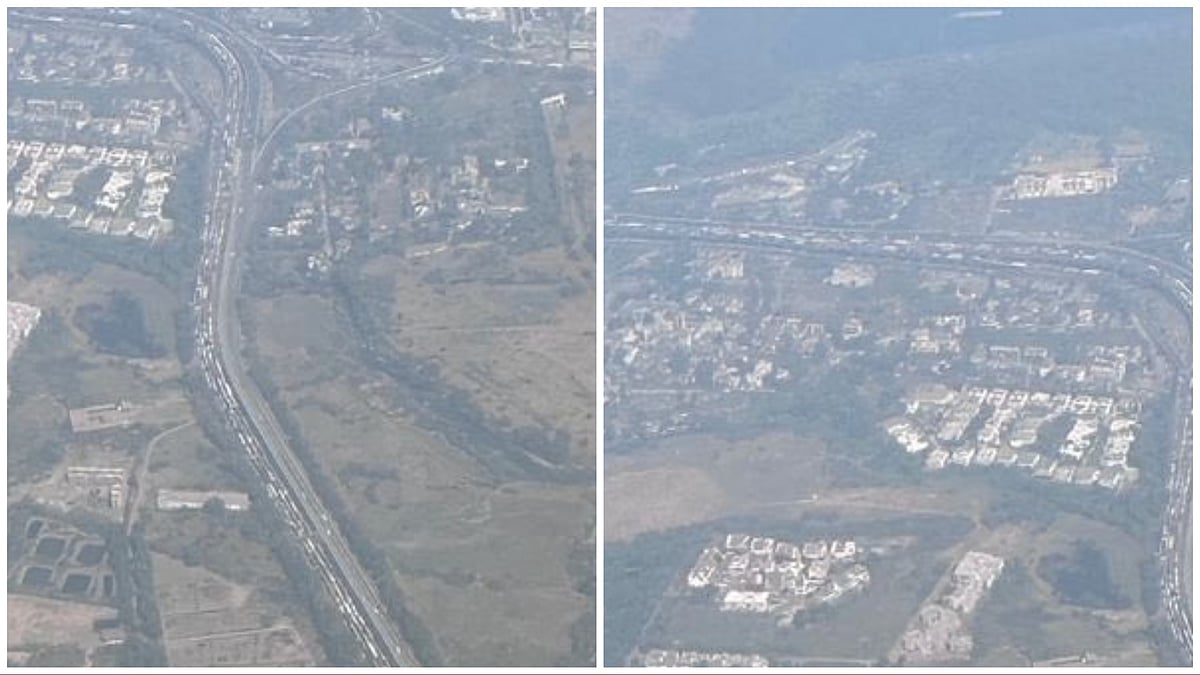
Pune: There is no debate that Mumbai and Pune are indeed the two biggest cities in Maharashtra, and it leaves little room for doubt that the Mumbai-Pune Expressway, which connects these two cities, is one of the most crucial roads in the state. However, once again, the debate over the condition of this supposed ‘state-of-the-art’ infrastructure has gained momentum. From Tuesday at 5 pm to Wednesday night at around 10 pm, the expressway was stuck in an unprecedented 30-hour traffic jam.
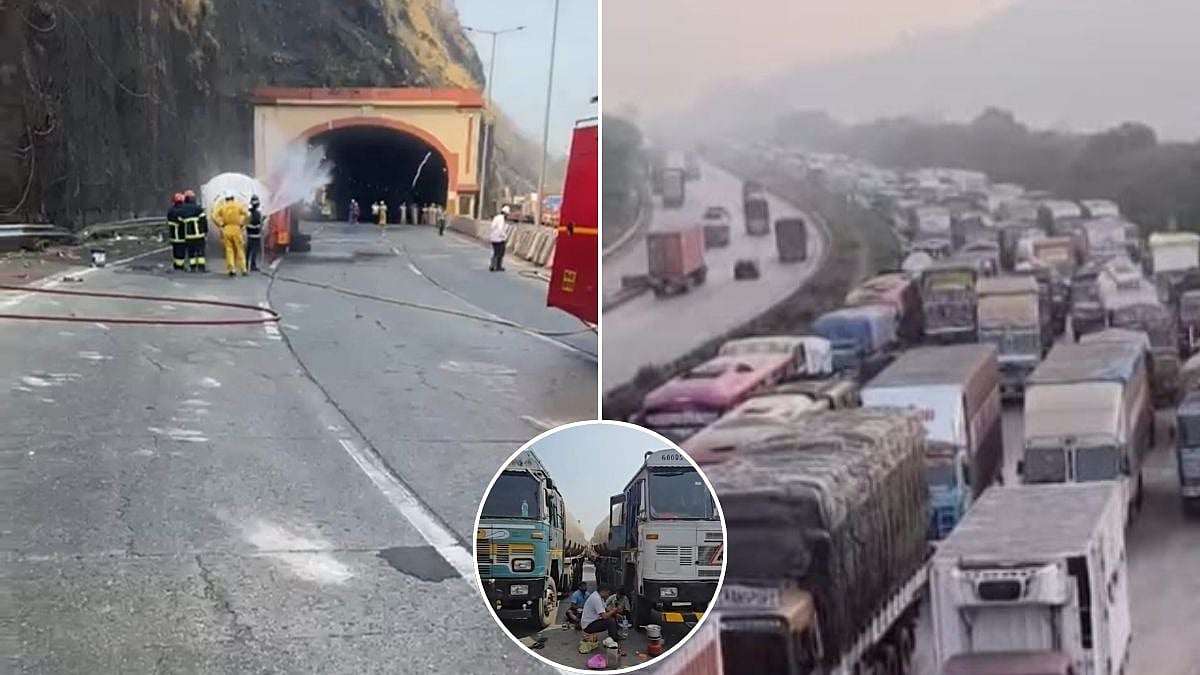
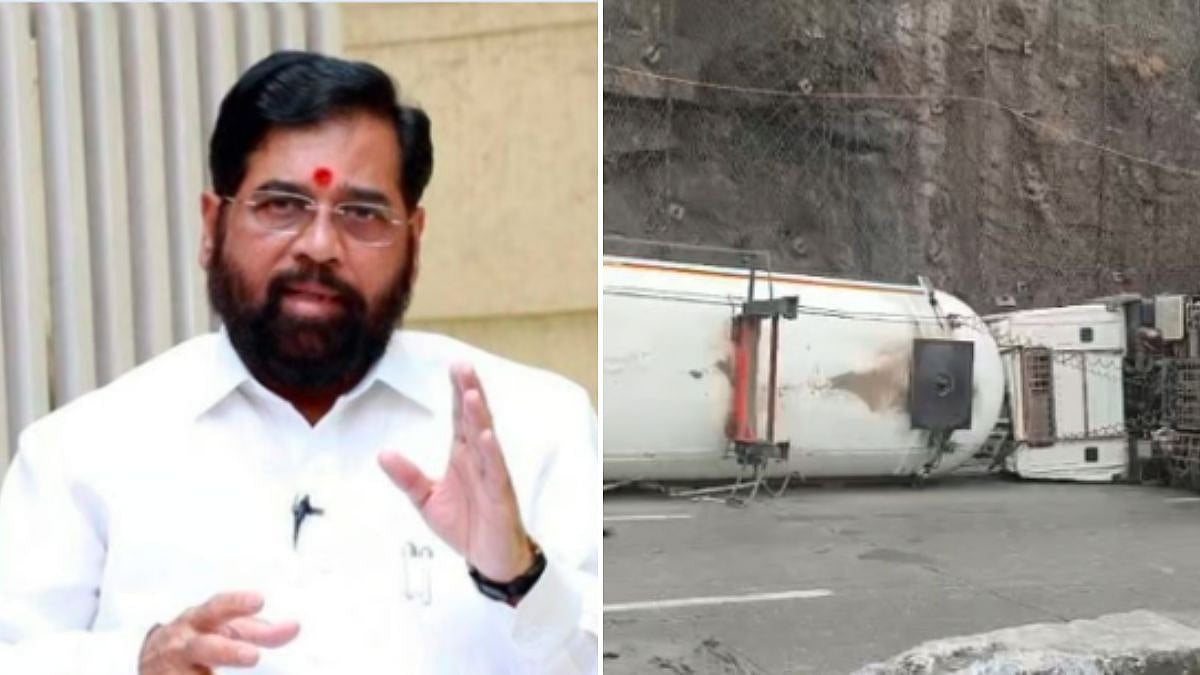
A tanker carrying highly flammable propylene gas overturned near the Adoshi Tunnel (km 41), within the Raigad district limits on the Pune–Mumbai Expressway, at around 5:00 pm on Tuesday. Authorities took nearly 30 hours to remove the tanker, which was finally cleared from the area near the tunnel at around 10:00 pm on Wednesday.
When the tanker overturned, a leak of propylene gas began. To avoid any potential major catastrophe, the Mumbai-bound traffic was completely shut down, while Pune-bound traffic from Mumbai was allowed to continue with extreme caution. It is reported that the accident occurred after the driver lost control of the vehicle. Teams from the National Disaster Response Force (NDRF), Bharat Petroleum Corporation Limited (BPCL), and chemical experts were deployed to handle the situation.
The accident caused a 60-km queue from the Adoshi Tunnel back to Kiwale (the start of the Mumbai-Pune Expressway from the Pune side). Using the internal links, the vehicles were released on the Old Mumbai-Pune Highway, which resulted in traffic congestion between Kamshet and Lonavala. Passengers heading to Mumbai Airport, critical patients with hospital appointments, and regular commuters remain stuck.
Commuters were left stranded without food or water, with many taking over eight hours to complete a journey that normally takes three-and-a-half to four hours. The expressway was cleared late Wednesday night, only for a cement truck to meet with another accident near the Lonavala stretch in the wee hours of Thursday. It triggered yet another traffic jam. Though the mishap was minor, it was enough to disrupt traffic once again. These back-to-back incidents have reignited debate over the Mumbai–Pune Expressway. Questions are being raised about why accidents and traffic congestion continue to plague the corridor.
Major Accidents on the Expressway
- 15th August 2023: Five-vehicle collision near Khalapur Toll Plaza; three members of a family killed.
- 23rd April 2023: A private bus fell into a gorge at Borghat; 13 dead, over 25 injured.
- 25th March 2021: A tanker-car collision near Lonavala triggered a gas leak and resulted in two deaths.
- 16th June 2020: A chemical tanker overturned near Amrutanjan Bridge. Four people were burnt alive.
- 18th March 2019: Three cars collided while overtaking; five fatalities.
The ‘Missing Link’ Project: A Long-Term Solution
Currently, the stretch between Khalapur Toll Plaza and Lonavala is winding and steep. This area frequently sees major accidents, landslides, and traffic jams.
Madhusudhan Divekar, a frequent traveller of the expressway, said, “Every morning, the stretch from Khopoli to Lonavala has a traffic jam. The train journey usually takes four hours from Pune to Mumbai. However, with road transport, it should be less, but because of frequent traffic, the time always increases. No one is even talking about the traffic jam one experiences when they enter Mumbai or Pune cities.”
Divekar, along with many other commuters, thinks that this problem will be solved in the future as the 'Missing Link' project is underway. This 13 km stretch is expected to open in the coming months. It features a 10.8 km tunnel and a bridge approximately 180 feet high. By bypassing the difficult Ghat section, this new route will reduce travel time between Pune and Mumbai by 20–25 minutes and shorten the distance by 6 km.
The 13.3 km “Missing Link” project on the Mumbai–Pune Expressway is a major upgrade that bypasses the winding Khandala–Lonavala ghat section with tunnels, viaducts and a high cable-stayed bridge. This project aims to improve safety and cut travel time by around 30 minutes while shortening the distance by about 6 km. The Rs 6,600+ crore project is in its final stages and is expected to open to traffic in May 2026 after repeated delays.
Main Causes of Accidents on the Expressway
- Overspeeding: High speeds often result in sudden loss of vehicle control. The speed limit on the Mumbai–Pune Expressway is 100 kmph for cars and 80 kmph for heavy vehicles. However, to control the speed, from time to time, speed cameras are in place, and people know when they have to follow the speed limit. During other times, the speed limit is simply not followed.
- Highway Hypnosis: Long, straight stretches cause drivers to enter a trance-like state. Psychologists believe it reduces reaction time despite being awake. Expressway stretches are filled with similar-looking scenes, especially from Kiwale to Lonavala.
- Concrete Surface & Tyre Bursts: The majority of the city roads are made of asphalt in Pune and Mumbai. But an expressway is made of concrete. Concrete retains more heat than asphalt. At high speeds, heat and friction cause air inside tyres to expand. This many times leads to sudden bursts, especially in old or under-inflated tyres. Also, breaking judgement changes with the change in surface.
- Lane Discipline Violations: Heavy vehicles frequently move out of the left lane to overtake. Vehicles that move slowly should stick to the left lane to avoid people overtaking them from the right. But heavy and slow-moving vehicle drivers don't follow this rule. This forces fast-moving vehicles to brake abruptly or change lanes, which increases collision risk.
- Faulty Tail Lamps: Broken or dust-covered tail lamps on trucks make it difficult to judge distance at night. In some ghat spaces, the visibility on the expressway is low. This results in rear-end crashes many times, as light motor vehicles hit heavy vehicles from behind.
- Khandala Ghat Descent: Continuous braking on steep slopes overheats brake liners, particularly for heavy vehicles. Brake failure in heavy vehicles often leads to loss of control and accidents. A similar trend is also seen on the Navale Bridge on the Katraj-Dehu Road bypass section of the Mumbai-Bengaluru Highway.
Safety Measures Suggested by Experts
- Nitrogen-filled tyres to reduce overheating and burst risk
- Mandatory rest breaks for drivers, especially during early morning hours
- Strict action on lane violations, including licence suspension
- Improved reflectors and signage for fog and monsoon conditions
- Mandatory tyre inspection points at toll plazas and food malls
- Enhanced camera surveillance to penalise speeding and lane cutting
- Additional emergency escape ramps in ghat sections
Why Traffic Jams Last for Hours
1) Holiday & Weekend Surges: Large spikes in vehicle numbers during long weekends or festive breaks overwhelm the capacity of the highway. It causes slow-moving traffic and long queues, especially in ghat sections.
2) Ghat Bottlenecks: Steep gradients and narrow stretches in the Khandala–Bor Ghat significantly slow traffic, creating persistent chokepoints. In this section, the four-lane old highway and the six-lane expressway merge for traffic from Maval tehsil, effectively squeezing ten lanes into six and resulting in severe congestion.
3) Vehicle Breakdowns: Cars or heavy vehicles breaking down on key stretches block lanes and worsen gridlocks.
4) Maintenance Closures: Unplanned or late-night roadwork narrowing lanes can create bottlenecks that take hours to clear.
5) Overall High Number of Vehicles: The Mumbai–Pune Expressway serves as a vital link between Maharashtra’s two most important cities and carries a massive volume of daily commuters. Due to this consistently high traffic load, even a single disruption quickly results in hours-long congestion across the corridor.
6) The "No-Exit" Trap: The Bor Ghat section of the Mumbai–Pune Expressway creates a dangerous “no-exit” zone spanning nearly 20 km between Khalapur and Kusgaon. The stretch is carved into the mountains and lined with tunnels, and the stretch has no service roads, U-turns, or local exits.

