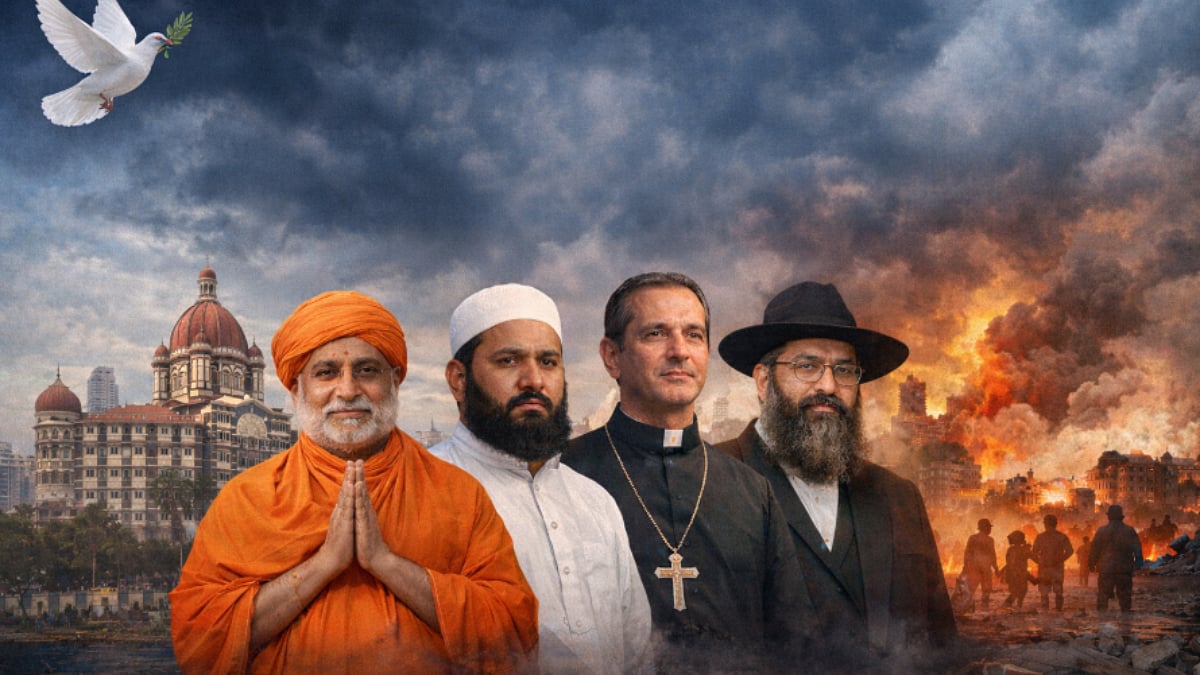
Mumbai: The Inter-Religious Solidarity Council (IRSC), Mumbai, has issued a strong appeal for restraint, accountability and renewed ethical reflection, as violence continues to escalate across several regions of the world and religious identities are increasingly drawn into conflict narratives.
In a statement on Monday, titled “On Faith, Violence, and Moral Responsibility in a Time of Global Crisis,” the Council said it stood in solidarity with faith leaders globally who are urging dialogue over war and cautioning against the normalisation of violence.
Referring to the recent Easter message of Pope Leo XIV, the Council highlighted his call to world leaders to “abandon every desire for conquest and domination” and prioritise dialogue. The IRSC noted that such appeals reflect growing concern that cycles of violence, once entrenched, become increasingly difficult to contain.

The statement also drew attention to voices emerging from conflict zones. It cited Rev. Munther Isaac in Bethlehem, who urged the global community to “talk to us, not about us,” underscoring the importance of engaging directly with those affected by war. His remarks, the Council said, challenge attempts to distance or abstract human suffering.
Highlighting internal dissent within faith communities, the IRSC noted that Jewish groups, including those in Australia, have expressed concern over the humanitarian impact of recent military actions, including bombings in Lebanon. Such responses, it said, demonstrate that moral resistance to violence exists within all religious traditions.
The Council emphasised that no religion can claim legitimacy when used to justify harm, exclusion or the dehumanisation of others. It added that the convergence of voices across faiths points to a shared ethical foundation rooted in compassion and accountability.

Turning to India’s context, the IRSC said the country’s religious diversity makes the issue particularly significant. It warned that rising polarisation, misinformation and identity-based mobilisation require a renewed commitment to ethical values that uphold social harmony.
Reaffirming its position, the Council stated that violence against innocent lives cannot be justified in the name of religion, and cautioned against the misuse of religious teachings for political or exclusionary purposes. It also stressed that solidarity with those suffering remains a moral obligation across all faiths, and that dialogue grounded in humility is essential for sustaining peace in plural societies.
The IRSC concluded by reiterating its commitment to fostering meaningful interfaith engagement that goes beyond symbolic coexistence and addresses contemporary ethical challenges with sincerity and care.
To get details on exclusive and budget-friendly property deals in Mumbai & surrounding regions, do visit: https://budgetproperties.in/
