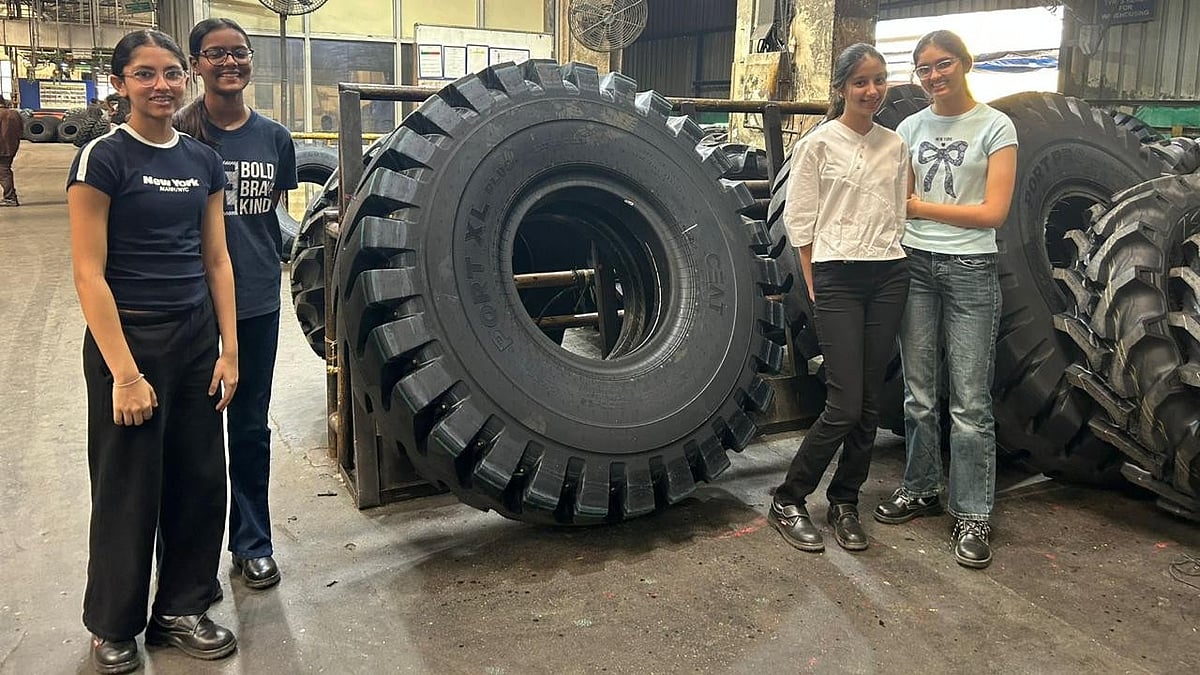
Mumbai, the ‘City of Dreams’, is grappling with an alarming rise in pollution driven by rapid urbanisation and industrial expansion. Even in a city already known for its dense population and traffic, industrial activity remains one of the biggest contributors to environmental degradation. Four Mumbai school students — Navya Goenka, Amaira Mehta, Priya Kanojia and Sonakshi Patni — decided that instead of simply observing the growing crisis, they would act. Their school project examines the causes, consequences and solutions linked to industrial pollution, urging industries and citizens alike to step up before the damage becomes irreversible.
Four faces of pollution
The students spotlight four major forms of industrial pollution, starting with the most visible and harmful: air pollution. Factories release toxic gases and particulate matter that trigger respiratory illnesses, weaken immunity and accelerate global warming.
“In Mumbai, the MPCB found that about 20% of smog-causing particulate matter comes from industrial emissions and fossil fuel burning,” the students note.

These emissions also fuel smog formation and acid rain, eroding buildings, degrading soil fertility and damaging crops.
Water pollution emerged as another critical concern. When industries discharge untreated chemical effluents into rivers, lakes and the sea, they alter water temperature and pH levels, threatening aquatic ecosystems and reducing biodiversity.
“Nearly 50% of sewage waste gets released into the Arabian Sea,” they highlight, “contaminating coral and fish that eventually enter the food chain and pose severe health risks.”
Land pollution, often overlooked, also drew their attention. “Industrial waste such as hazardous chemicals, plastics and rubber frequently ends up in dumping grounds or unregulated sites,” they mention. “Improper disposal contaminates soil, lowers agricultural productivity and allows toxins to seep into groundwater. Expanding landfills further reduce usable land and accelerate long-term environmental decline.”
Noise pollution adds yet another layer to the challenge. “Communities living near industrial areas endure constant exposure to loud machinery, resulting in stress, sleep disruption, poor concentration and even hypertension,” the students opine.
Field visit
During their research, the students discovered that textiles, cement and transportation rank among the heaviest polluting industries. Curious about how greener practices could be integrated into such sectors, they visited the CEAT tyre factory, known for its sustainability efforts despite operating in a traditionally polluting field.
At CEAT, they saw innovations such as replacing fossil fuels with biomass briquettes, energy-efficient machinery and improved waste-treatment systems.
“Seeing how a major industry can actively cut emissions showed us that sustainability is possible when leaders make it a priority,” they observed.
These initiatives significantly lower carbon output and offer a model for other industries aiming to reduce their environmental impact.
Beyond classroom
To expand their impact, the students created a website called ‘The Green Plant’, which compiles sustainable industrial practices drawn from their research and field visits. “The platform doubles as both an educational resource and a collaborative space for industries to share solutions and inspire one another toward eco-friendly transformation,” they say.
Collective responsibility
Through their project, these young researchers offer a powerful message: combating pollution is not solely the government’s responsibility, it is a collective effort. “By raising awareness, demanding accountability and encouraging sustainable change, these students hope to help shape a city where its dreams are matched by its commitment to protecting the planet,” they conclude.

