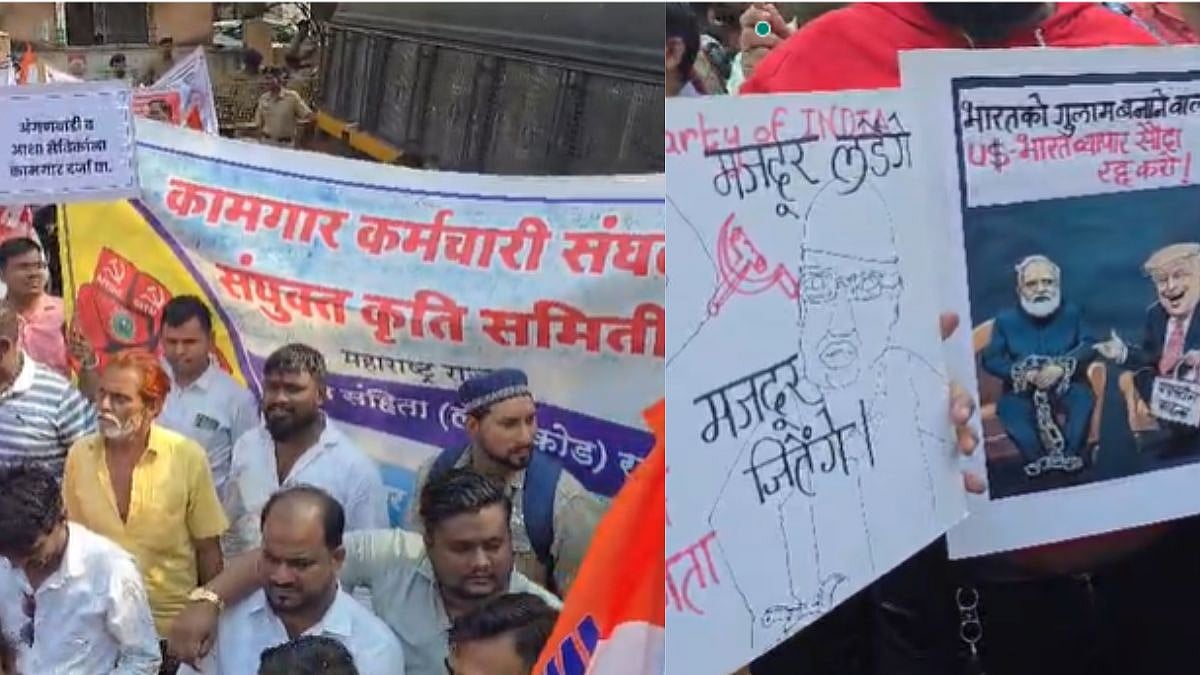
Mumbai: As part of the nationwide strike against the central government's policies, protests are being held outside the Labour Commissioner's office in Bandra on Thursday, February 12, by a coalition of central trade unions and farmer groups. The strike is directed against the four Labour Codes, the Electricity Bill 2025, the Seed Bill 2025, and concerns over the India-US trade agreement.
The Samyukt Kisan Morcha (SKM) urged farmers to join workers to make the strike stronger. The farmers’ groups are demanding the withdrawal of four labour codes, the Electricity Bill 2025, the Seed Bill 2025 and the VB-G RAM G Act 2025. According to SKM, the Electricity Bill could increase electricity charges for farmers and households. The group also opposed smart meters and demanded 300 units of free electricity. They also raised concerns that the new Seed Bill could lead to seed black marketing.

The farmer unions also opposed changes related to rural employment programmes. They claimed that the VB-G RAM G Act could weaken the MGNREGA scheme.
Meanwhile, several labour organisations from different states distanced themselves from the nationwide strike call given by certain trade unions, describing it as "politically motivated" and asserting that it does not reflect the broader interests of workers.
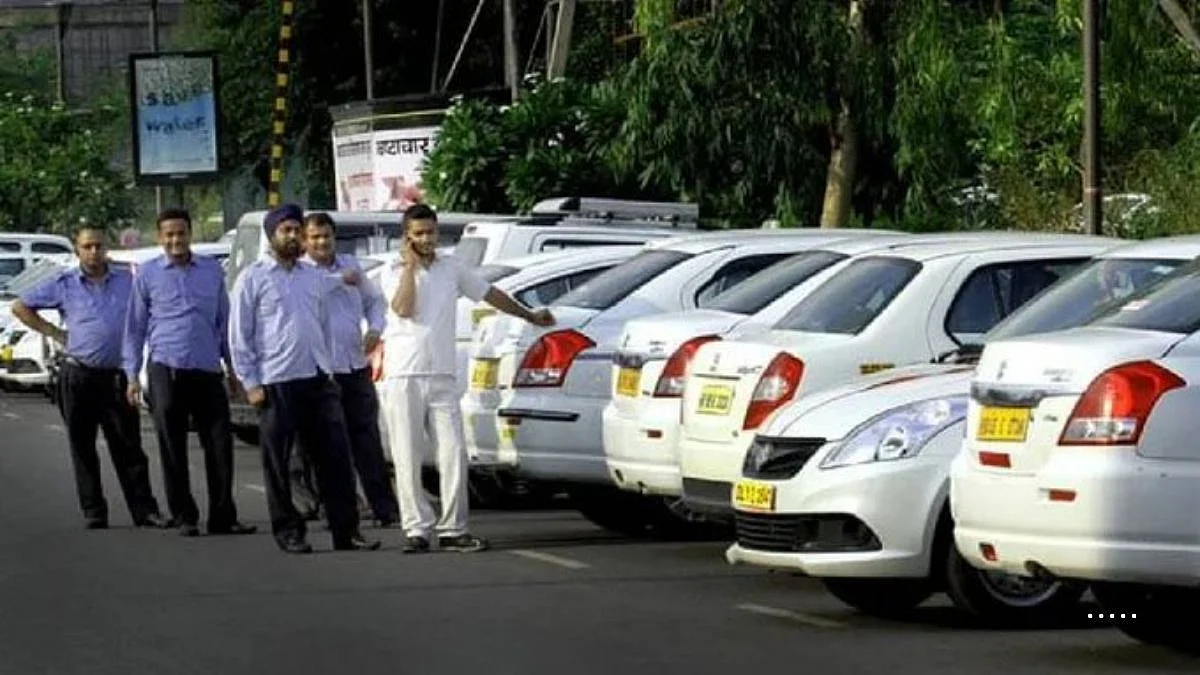
Rakesh Mani Pandey, National Secretary of the Hind Mazdoor Kisan Panchayat (Uttar Pradesh), said his organisation, along with 18 major bodies, including the Bharatiya Mazdoor Sangh, has not supported the strike. "First of all, let me clarify that the Hind Mazdoor Kisan Panchayat and 18 major organisations, including the Bharatiya Mazdoor Sangh, are not participating in this strike. Claims that 3 crore or 30 crore people are taking part are purely imaginary. Not even 10 per cent of workers are involved in this movement," he said.
Prashant Padhi, State President (Odisha) and National Vice-President of the National Front of Indian Trade Unions (NFITU), termed the protest politically motivated and said it does not serve workers' welfare. Kashmir Labour Union President Ashraf Gani also defended the four labour codes, stating that their objective is to ensure social security, minimum wages and greater transparency.
