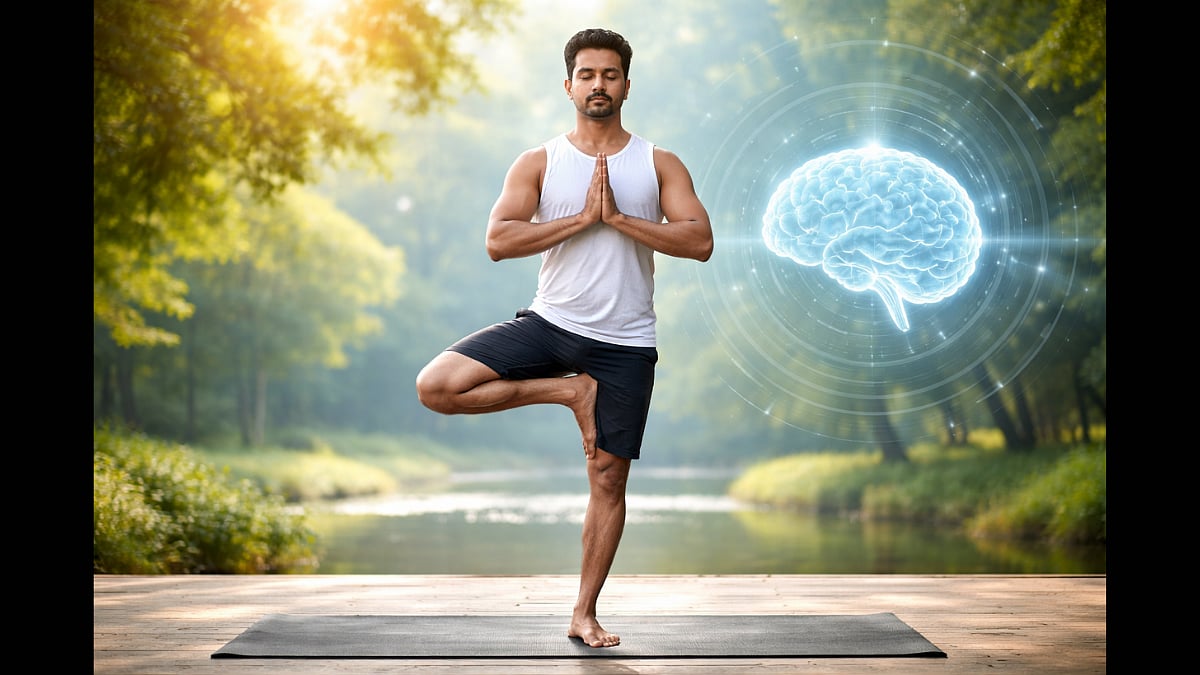
In a day and age where worries feed on the mind’s health, anxieties feed on one’s sleep, anger feeds on one’s peace, dissatisfaction feeds on one’s tolerance capacity, jealousy feeds on one’s ability to think clearly, greed feeds on one’s notion of happiness; imagine what load the poor brain has to withstand! So how do we help our brain while it continues to overwork trying to meet our non-stop demands?
Instead of concentrating on the stigma, one should understand that it is similar to when the body lacks sufficient micronutrients and manifests as physical symptoms as weakness, exhaustion, disorientation, body aches, etc. For the body to become more focused and centered, proper physical exercise is also necessary. Take control of your life, assist in finding your core, and restore mental equilibrium.
Exercises focusing on bodily balance are fundamentally based on the strong link between mental and physical stability. Our physical and cognitive processes are engaged when we partake in activities that test our ability to maintain balance. This simultaneous involvement increases our awareness of our body and mind, which enhances our ability to focus and control our emotions.
Optimizing performance is facilitated by learning about the mechanics of the body. Applying kinesiology concepts, such biomechanics, makes it easier to understand specific postures in a scientific manner, helps one execute a posture or exercise accurately and skillfully, and eventually helps with mental control as well.
To produce an infinite state of expansion, a body-balancing exercise should, in its final form, become effortless and natural.
The hindbrain's cerebellum is in charge of maintaining the body's equilibrium. Your posture is maintained by your musculoskeletal system. Your position is always controlled by the muscles, ligaments, and tendons that work with the joints throughout your body. They reposition your body to keep you in a comfortable, steady position.
The sympathetic and parasympathetic nerve systems, agonists and antagonists in muscles, joints, and other physiological processes are examples of the opposites at action in the body. Homeostasis will be reached when these systems are in equilibrium. As a result, the Bhagavad Gita states, "Samatvam Yogamuchyate," meaning that doing yoga aids in achieving equilibrium.
Here are benefits of body balancing exercises on mind control
•By training your mind to focus on the here and now, you may minimize distractions and improve your general mental clarity while you work on maintaining stability and concentration.
•A lot of balancing exercises are naturally thoughtful. They assist you into a meditative state that lowers tension and anxiety by encouraging you to be aware of the motions and sensations in your body.
•Exercises that improve body balance help you become more aware of your physical boundaries and presence. As a result of increasing awareness of your thoughts and feelings, you are able to better regulate your emotions.
•Physical activity, especially focused and controlled activities, can help reduce cortisol levels. This physiological shift results in elevated mood and reduced overload.
•Confidence and self-worth are raised when balance exercises are successfully mastered.
Yoga definitely works the best. Regular yoga practice promotes mental clarity and resilience in addition to bettering physical balance. Postures regulated with breath makes it simpler to handle tension and anxiety to quiet the mind.
Other exercises that can be helpful are,
Standing on one leg with knee up, hands by the side for as long as you can, gradually increasing the duration. You can add variations like closing your eyes or moving your arms.
Practicing plank with one hand up opposite hand up.
Exercises Using a balance board tests your stability and core strength and demands focus and attention.
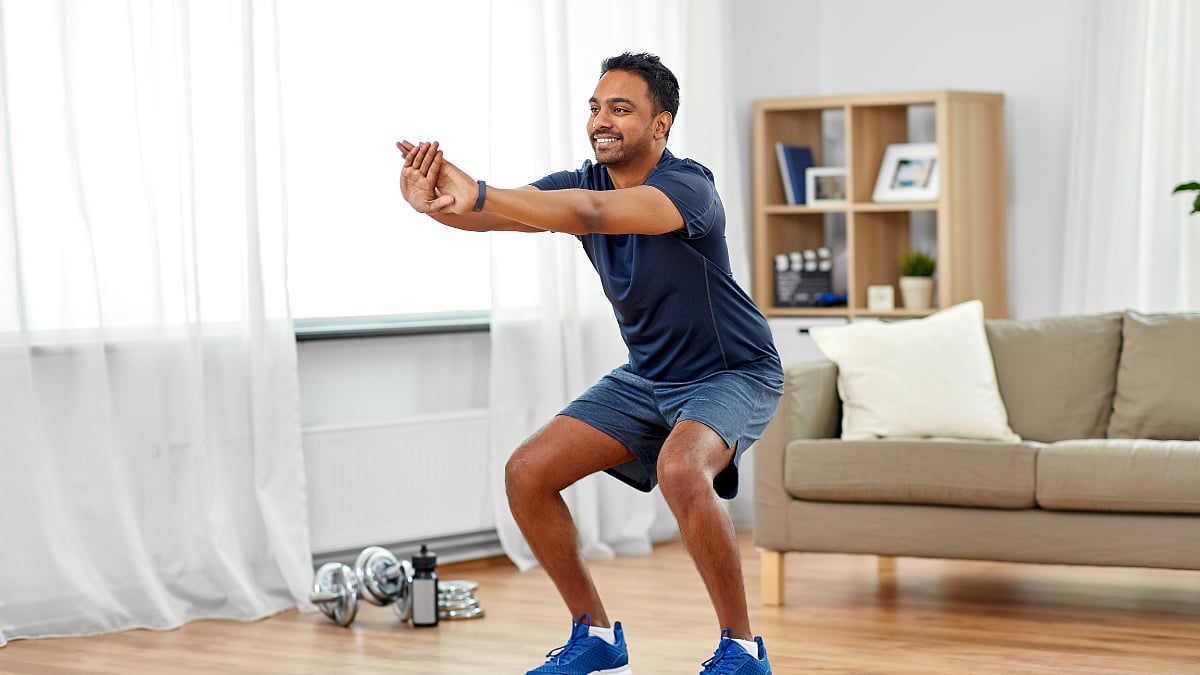
Walking from Heel to Toe: Step one foot in front of the other exactly, maintaining a straight gait. This easy workout enhances coordination and balance.
Bosu Ball Exercises incorporating with lunges or push-ups can add challenge in your workouts.
Learning Cycling slowly can also help us learn balancing.
Maintaining stability during this exercise, works at the core muscles, mental focus is necessary. Proprioception, or the awareness of one's own bodily position, can be improved over time, resulting in increased mindfulness in day-to-day tasks.
All practices promote strength, flexibility, and balance while cultivating mindfulness. It make us effort counter balance and maintain the center of gravity, and balance of the mind otherwise also.

