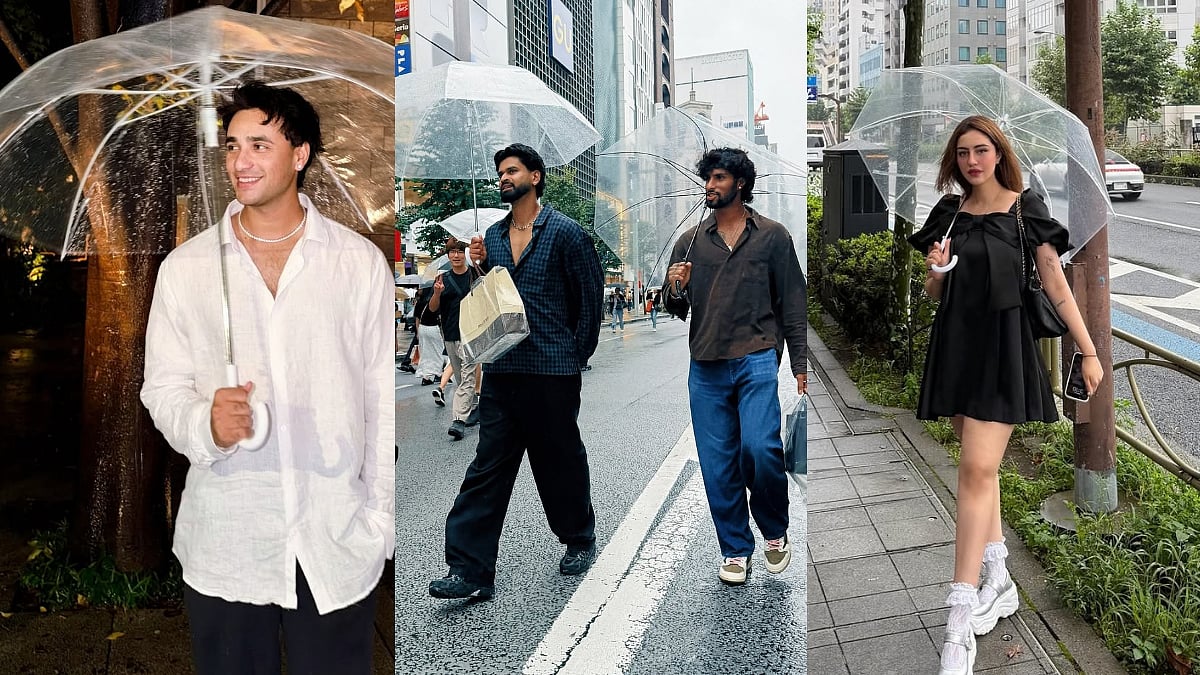
The Indian men’s cricket team is currently touring Japan for the ongoing Asian Games 2026, and after their first encounter with the Japan cricket team on September 22, the players found some time to explore the streets and soak in the local atmosphere.
Pictures shared by cricketers including Shreyas Iyer and Abhishek Sharma offered fans a glimpse of their off-field moments in Japan. However, it wasn’t just the players or the scenic streets that caught attention. The transparent umbrellas carried by the cricketers quickly became a talking point.

Clear plastic umbrellas are an unmistakable sight across Japan. Known for their simple design, affordability and easy availability, they are commonly found at convenience stores and shops, making them a go-to choice when unexpected rain arrives.
But their transparency serves a practical purpose beyond aesthetics. Japan’s busy urban areas often feature crowded streets and narrow sidewalks. The clear canopy allows pedestrians to maintain visibility while walking, reducing the chances of bumping into others or obstructing their view.
The umbrellas are generally made with clear plastic or vinyl that provides protection from rain while keeping the surroundings visible. Their uncomplicated design and relatively low cost have helped make them an everyday item rather than merely a seasonal accessory.
The popularity of transparent umbrellas in Japan dates back several decades. Early models emerged in the mid-20th century, with their use becoming increasingly widespread around the period of the 1964 Tokyo Olympics and in subsequent decades as Japanese manufacturing and design industries expanded.

These modern clear umbrellas are distinct from traditional wagasa, the colourful, handcrafted Japanese umbrellas associated with traditional culture. The word kasa broadly refers to umbrellas, while wagasa specifically denotes traditional Japanese umbrellas.

