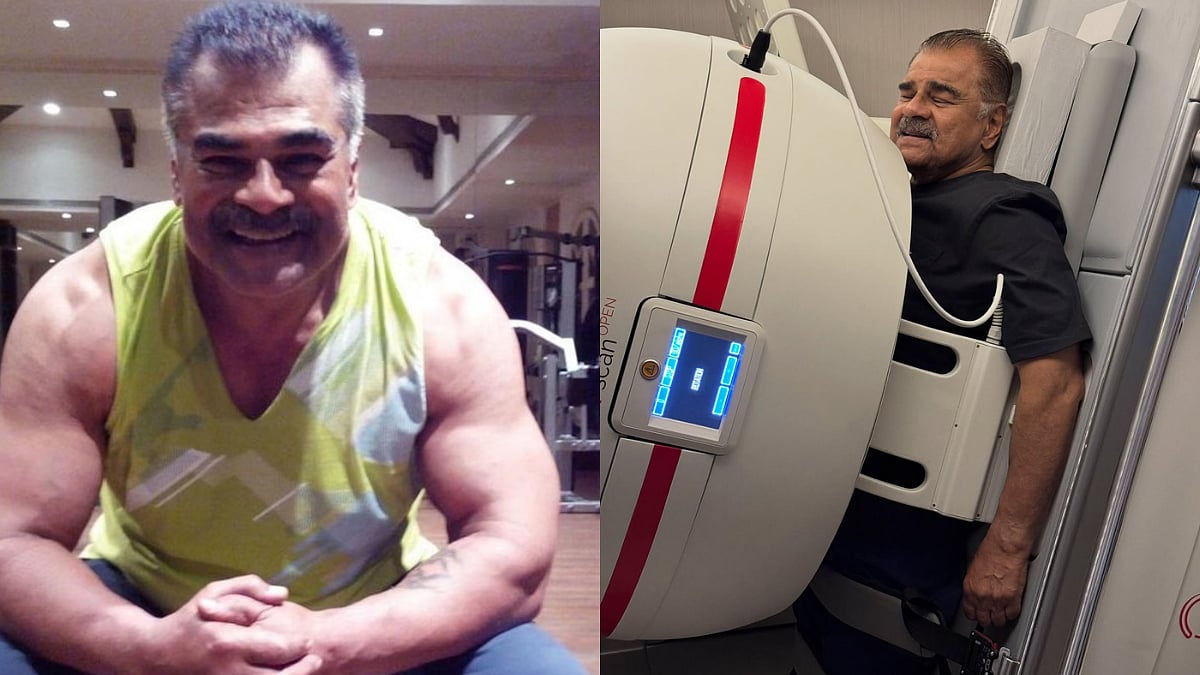
Veteran actor Sharat Saxena recently shared a health update with his followers, revealing that he is preparing for lumbar spine surgery. On September 9, the actor posted multiple pictures from the hospital showing him undergoing a standing MRI at Bombay Hospital.
Sharing the pictures on Instagram, Sharat wrote, “Standing MRI before lumbar spine surgery at Bombay Hospital.” In the images, the actor can be seen facing the camera with a smile despite appearing to be dealing with discomfort. This is Maharashtra's first open standing MRI machine, located at NM Medical, Marine Line
TAKE A LOOK:
The post prompted several fans and industry colleagues to send him their wishes for a speedy recovery. Sharat later thanked everyone in the comments, writing, “My thanks to all of you who have wished me well. I hope to walk properly again and be able to work. Thank you all. Sharat Saxena.” Actor Tisca Chopra was also among those who sent him her wishes, commenting, “Sending lots of love and prayers, Sharad sir.”
While Sharat's mention of a standing MRI caught the attention of many, this type of scan is different from the conventional MRI that most people are familiar with.

What Is A Standing MRI?
A standing MRI, also known as an upright or weight-bearing MRI, is a specialised form of magnetic resonance imaging that allows certain parts of the body to be scanned while a person is sitting, standing or in another weight-bearing position.
Unlike a conventional MRI, where the patient usually lies flat and is moved into a tunnel-like scanner, upright MRI systems are designed to accommodate the patient in a more open position. This can also make the experience more comfortable for people who find traditional enclosed MRI machines difficult.
Why Is It Used For The Spine?
One of the potential advantages of a weight-bearing MRI is that it can show the spine and joints under conditions that more closely resemble everyday posture. When a person is standing, their body weight puts pressure on the spine, which can affect the alignment and position of different structures.
For certain spinal conditions, doctors may therefore consider weight-bearing imaging useful alongside other scans and clinical examinations. It can help specialists assess the spine in positions that may reproduce or reveal problems not as clearly seen when a patient is lying down.

