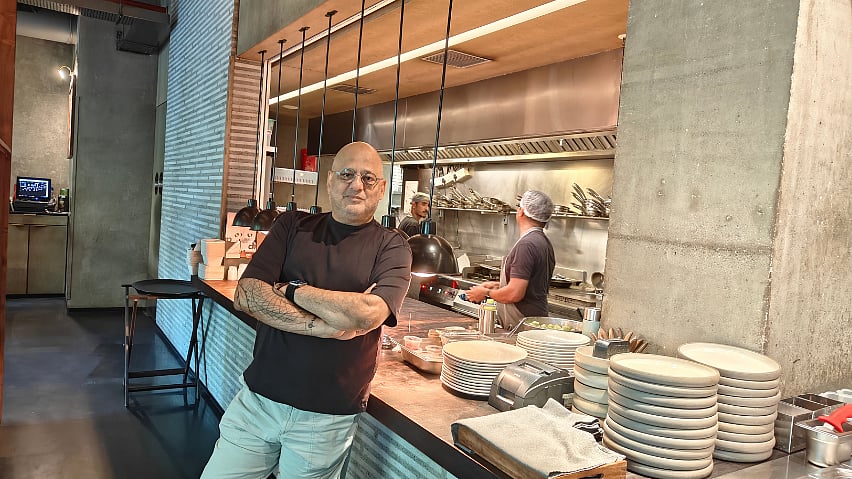
Chef Rahul Akerkar's "food-first" philosophy is rooted in his multicultural upbringing. He trained in biochemical engineering, but has always been driven by cooking. Raised in a household blending European-American and Maharashtrian influences, Akerkar does not distinguish between cuisines. For him, food is about how flavours come together, a philosophy that defines the menus across his restaurants.
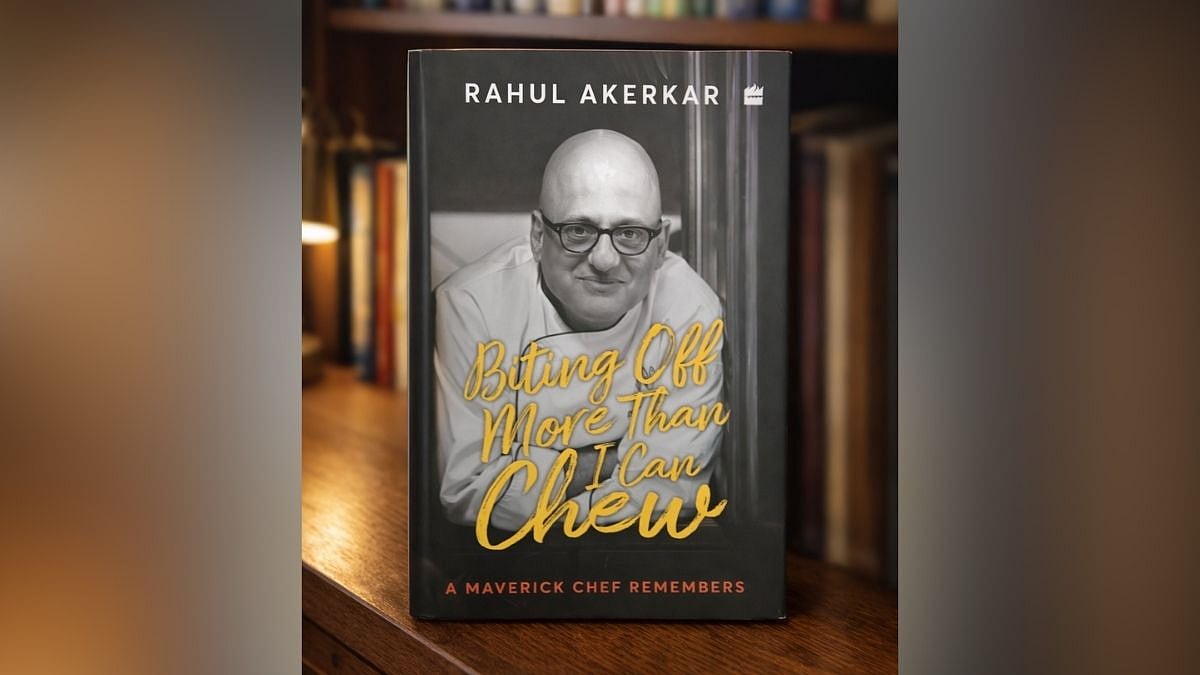
His memoir Biting Off More Than I Can Chew: A Maverick Chef Remembers traces his journey from running a catering business out of his mother’s kitchen to building Indigo, one of India’s most acclaimed restaurants. Known for bold, ingredient-driven cuisine, Akerkar helped shape Mumbai’s dining culture.
In an interview with FPJ, he speaks about his new book, how he manages to stay relevant in the business of food, getting inspired by his aaji, his dad's mother, who early on planted the seeds of food in his life, and his mom being his closest friend.
How would you describe your book Biting Off More Than I Can Chew: A Maverick Chef Remembers in your own words?
It is my story set against how I stumbled into food, first in the USA, and then here, along with the various restaurants I have led through my journey. It is an honest tell-all. I talk about success. I talk about failure. I had a lot of fun writing the book, and I hope it is a fun read for people. It will give them insight into what food is all about commercially, what F&B is, about restaurants and the mad, frenetic life that a chef leads.
How did the book take shape?
When I started, I wanted to do a book, but it was more of a cookbook. That was a long time ago, during my Indigo days. I had started to put recipes together, but it never happened. However, in the back of my head, I always wanted to write a book. During COVID, when things quietened down a bit, I took stock of how I got to where I got. It made me reflect, and that's how the book started to develop.
Who came up with the title of the book?
Me, because it is true. I've gone through life like that by taking on more than I can chew.
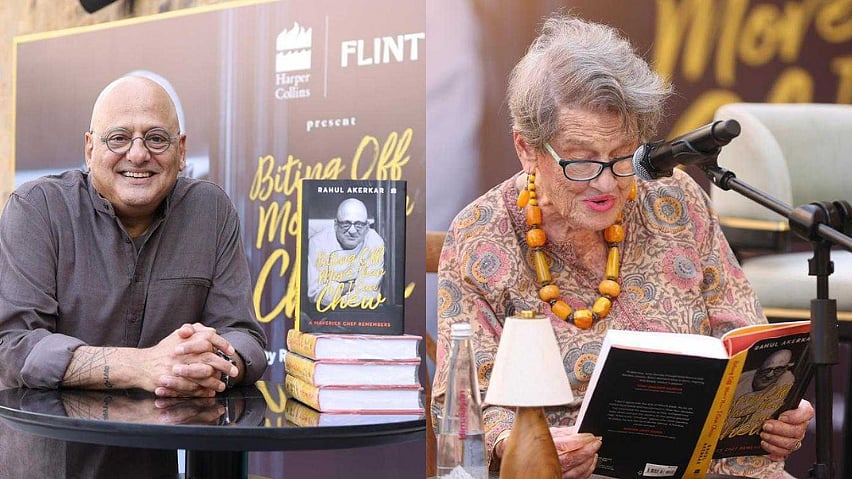
Pics of Chef Rahul Akerkar and his mother Hanna Jinx Akerkar (fondly known as Jinx) from the book launch. |
If you were to describe yourself as a food, what would you be?
Something sweet, something sour, depending on my mood.
How do you stay so relevant in the food industry?
I love doing what I'm doing, and I don't know anything else.
I never worked in the field in which I studied i.e. biochemical engineering. From the vocational point of view, I have always only done cooking. That's what I love to do as well.
I, myself, am concerned about my relevance. I think about it a lot. I am 67 now, and I have been cooking for close to 40 years. I do question my relevance. People don't eat the same way anymore like they did back in the 90s or early 2000s, which was a couple of generations ago. Hence, it's important to keep your hand on the pulse of things.
The hero in each of your restaurants is your food. Is it easy to nail it, every single time?
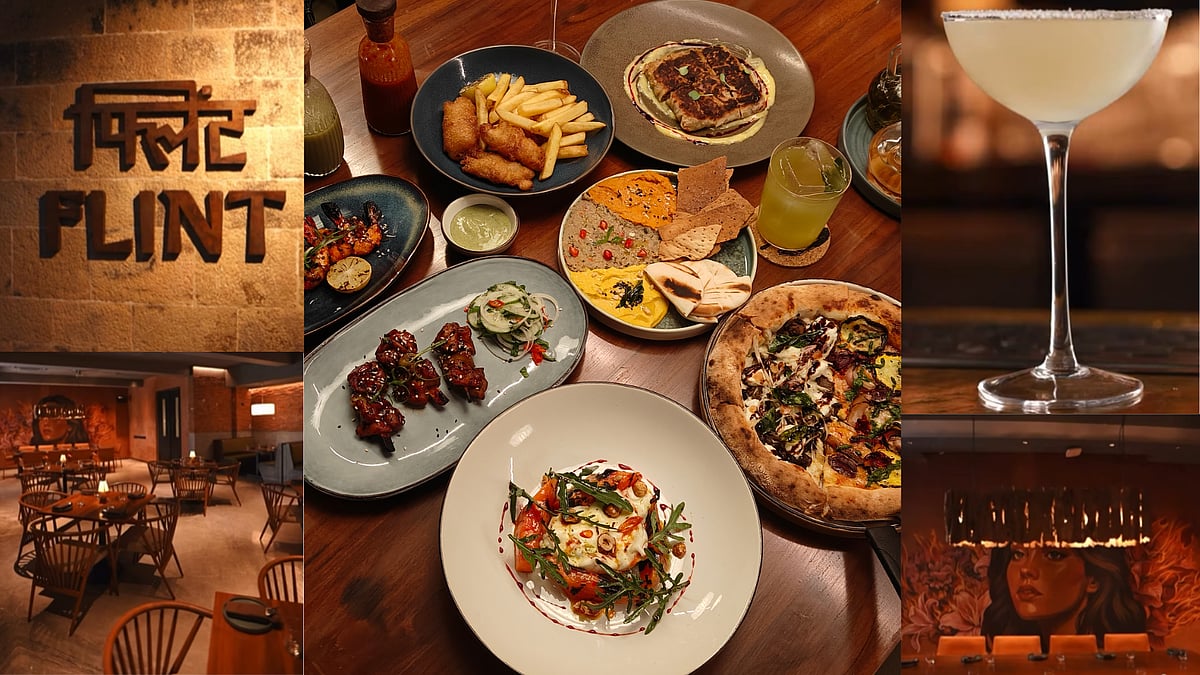
I have always come from a food-first philosophy. All my restaurants are always about the food. I believe people fundamentally go to a restaurant to eat. You don't go there to be entertained.
Who inspired your cooking journey? Was it your mom?
No, she had nothing to do with my cooking. It was my aaji, my dad's mom, who early on planted the seeds of food. My only regret is that I wasn't involved in food at the time when she was still around.
I went to college in the US, and after that she passed away. She wasn't there at the point when I beginning to understand food as a chef.
My mom is my closest friend. She's a survivor. She has been around in India for 70 odd years. She made it very clear to us that nothing is impossible. She believed that if you put your mind to it, you can do just about anything. She always says, 'Growing old is inevitable, but growing up is optional'. I live my life that way.
Both mom and dad encouraged my sister and me. They were tolerant, accepting and patient — three interesting qualities, especially when one is in this line of work where we are constantly fire-fighting. It is chaotic and to keep that stillness and calmness through it all, one needs to have these traits. My mother and I also have this really stupid sense of humor that keeps us going. We laugh at everything.
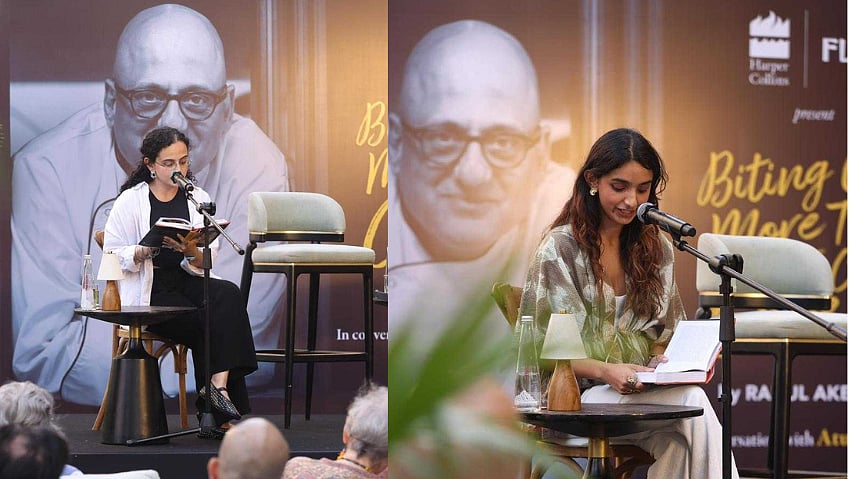
Chef Rahul's daughters Shaan and Amalia read chapters from his book at the launch |
What was the food you grew up eating?
To me, food is about rolling up your sleeves and eating. My food comes from generosity and graciousness. It is comfort, warm flavours and food that touches the soul. I play with flavours because I grew up in a mixed household. There was my mom's European, American, German-Jewish side, and the Maharashtrian side of dad's family. We ate Indian and European food at home. I don't differentiate. For me, it is how the flavours come together, and I think you'll see that in my food.
What was it like to start off something as Indigo? Was it a risk or gamble of sorts?
Back then, I had no idea. If I were to look at the business plan I made for Indigo today, I'd throw it in the garbage. It was mad. We spent 5 crores back in 1999, or earlier, in '97 when we were building it. It is a huge sum today, but back then it was insane. Nobody spends that kind of money on a standalone restaurant. However, I do feel one needs to be a little bit ballsy or foolish at times.
Do you still spend a lot of time in the kitchen?
No. It is the job of a 20-year-old. You are up on your feet a lot and it's hot. I can't do it everyday or for long periods of time. Yes, I am in the kitchen. I do new dishes. If my restaurant is short-staffed, I do jump in. But do I cook everyday? No, I don't.
Do you cook at home?
My wife and I run two households. I live with my older daughter in Mumbai. My wife and younger daughter live in Goa, and we go back and forth all the time. We all cook. My wife cooks, I cook, but not enough.
Any advice for young chefs?
If you're not willing to put in the time, and effort (because it takes both), if you're not willing to be yelled at once in a while, if you break down like a lot of kids today, I'd say find another job.
This is a tough job! It involves long hours of being up on your feet. Very often, it is a thankless job, and there is repetition — it is about doing the same thing daily, and sadly, it is also about a lot of egos.
At the end of the day, it's a perception management business as you are dealing with people and taste for which there is no right or wrong. You work when everyone else plays, and if you're not comfortable with that, don't stay here.
Do you feel the food industry is a man's domain?
There's no such thing! Of course, it's demanding, but I have worked with many fantastic women chefs. For me, there's no difference between men and women. The job has to do with skill, taste and fortitude. You have women chefs all over the world who are unbelievably good. It is nice to have more women to cut down on the high amounts of testosterone in the kitchen.
40 years in the industry....do you plan on hanging up your boots any time soon?
I don't think retiring is an option. I need to keep doing things. For the next few years, I still see myself cooking.
Did any of your daughters take to food?
Yes, Amalia, the younger one. She is the gourmand. She likes food. She has a great palette. She went to culinary school in New York. She doesn't want to work in a restaurant, but she has a good palette. She understands food.
Shaan, the older is more the 'meat and potatoes' kind of girl. Simple, she loves her Indian food, dal-chawal, and red meat.
Which are your go-to restaurants in Mumbai?
For Chinese, I love Royal China. I enjoy their dim sums. They are very consistent and have been doing the same thing for years. For seafood, I like Trishna. For veg food, there's Thaker Bhojanalay, and Izumi for Japanese food.
How would you rate Mumbai as a city?
Mumbai loves to eat. We're a melting pot of different cultures. You'll find a strong vegetarian and non-vegetarian presence here. The city has plenty of seafood options as well. Today, there's a certain amount of filtering that is happening in the food business here, and there's a finesse that's starting to appear as well.
Do you see yourself in a documentary anytime soon?
I'm not afraid of the camera, so it could just happen. I am not shutting off to the idea because I'm always ready to bite off more than I can chew.

