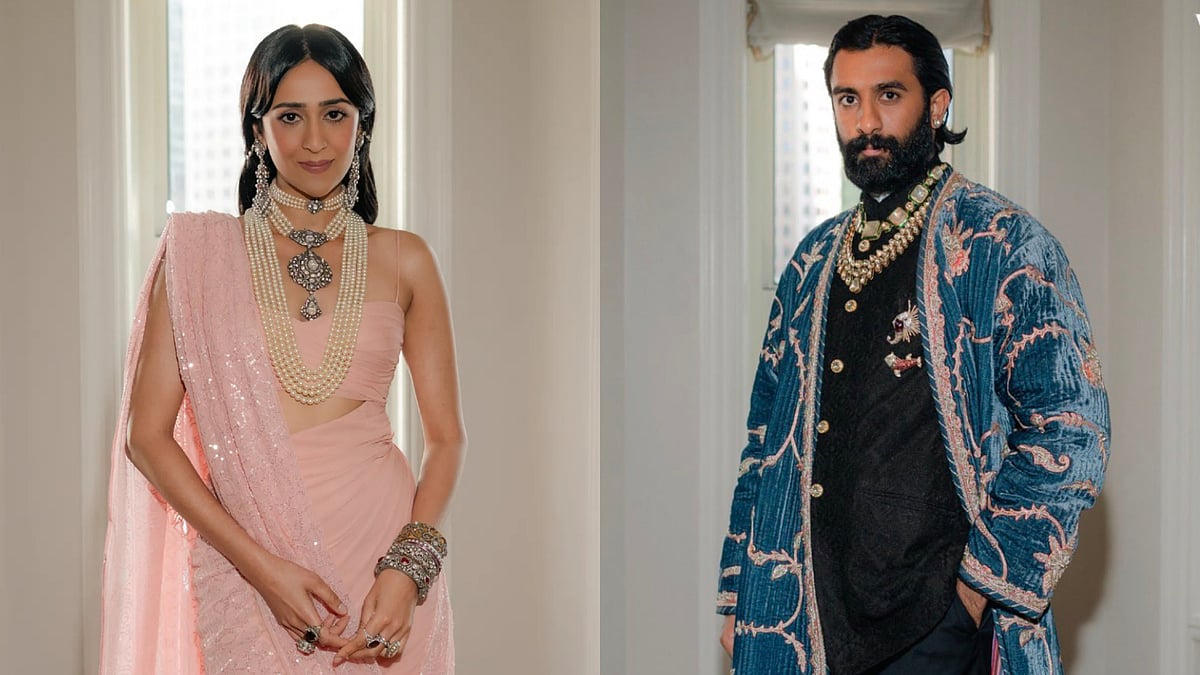
It wasn’t just Karan Johar making his much-talked-about debut at the Met Gala 2026, Indian royalty arrived in full force too. Making an elegant first appearance, princess Gauravi Kumari and the titular Maharaja of Jaipur Sawai Padmanabh Singh (fondly known as Pacho) brought Indian regal legacy to the global stage, blending heritage with high fashion in the most personal way.
Gauravi in reimagined grandmother’s saree
For her first appearance at the Metropolitan Museum of Art, Gauravi revived her grandmother Gayatri Devi’s old saree, which was transformed into a flowing gown. Designed in collaboration with Prabal Gurung, the look retained the soul of the original soft pink chiffon drape while evolving into a structured silhouette fit for the red carpet.
Her jewellery followed the elegance of her grandmother’s iconic style. Layers of pearls took centre stage, complemented by uncut diamonds and rubies sourced from Jaipur’s famed ateliers, as reported by Vogue. Ear chains, stacked bangles, and rings added a regal finish, while tonal heels, glowing makeup and sleek hair completed the look without overpowering the ensemble.
Pacho’s regal statement in velvet and gold
Standing beside her, Sawai Padmanabh Singh delivered a look that was equally rooted in tradition but bold in execution. His ensemble centred around a richly embroidered velvet coat, layered over a tailored bandhgala. Crafted over hundreds of hours by skilled artisans, the piece showcased intricate aari and zardozi work, with fine detailing that gave it both texture and depth.
The silhouette stayed sharp and structured, allowing the craftsmanship to take the spotlight. But the real storytelling element was on the back, featuring a massive sun motif inspired by Jaipur’s royal architecture, symbolising his Suryavanshi lineage.
His jewellery further elevated the look, incorporating traditional polki and jadau elements that subtly blended into the ensemble through buttons and layered accents.

