
Bottled water has become a norm in our lives. And in India, some bottled water brands are synonymous with trust. Recently, Bisleri, a trusted brand, faced prosecution from FSSAI authorities when one of the six samples from their Goa plant was found with bromate at 12 micrograms. After an appeal in court, the sample was further checked, and polynuclear aromatic hydrocarbons, or PAHs, were also found.
Bisleri has come out with a statement mentioning that only one sample has shown PAHs at 0.144 micrograms in later checking, whereas the earlier samples were cleared and passed. They have demanded PAH retesting in February 2026. They mentioned continuous help with FSSAI and have stated that no contrary incidents have occurred since then.
Yet, the question still hovers over trust and usage of bottled water in our country, where insufficient testing and regulations often result in substandard products.
The Bisleri episode
Dr Gopal Kalambe is a food analyst and technical director at HHCS Laboratory & Research Center LLP, Ahmedabad, Gujarat. Previously, he oversaw bottled water manufacturing plants in Ahmedabad for brands such as Yes Brand, Bailley, Clear Water, Reliable Fresh and Helly Water. He sees the episode as an eye-opener for the industry. “Brand reputation does not necessarily guarantee product safety.”
He mentions two essential scientific concerns. “Bromate is a chemical contaminant that can form during ozone-based water disinfection. Long-term exposure to elevated bromate concentrations is a toxicological concern because it is classified as a potential human carcinogenic hazard. PAHs are a group of organic chemical compounds, some recognised as carcinogenic or potentially carcinogenic. Their detection requires appropriate confirmatory analytical investigation, depending on the compounds and applicable method requirements.”
He states that findings relate to one sample and should not be taken as evidence that every Bisleri bottle or manufacturing facility is unsafe.
Dr Saurabh Arora, Managing Director, Auriga Research, wants the company to undertake a detailed root-cause inquiry and review routine testing records to see if earlier results showed deviations or emerging trends to prevent recurrence. “While no failure is acceptable, regular surveillance aims to identify such issues and bring them to light. At this stage, it is important to establish which batch was non-compliant and communicate this clearly to consumers so they can avoid the affected product,” he states.
The episode is a vital cue that even renowned brands need nonstop checks, strong internal testing, and transparent statements to retain consumer trust.
Dr Jagat Jot Singh Gill, Consultant, Gastroenterology, Sarvodaya Hospital, Greater Noida, West, wants such reports to make consumers check drinking water quality closely. “Contaminated water can expose people to harmful microorganisms and cause gastrointestinal infections and food-borne illnesses.”
Consumers should know that packaged water does not instantly become contamination-free with branding and a seal.
The regulars
Devanshu Gupta, a components sales manager at Tetra Pak India Pvt Ltd, is a regular bottled water consumer. He considers Bisleri one of India’s established packaged drinking water brands and thinks isolated quality-related instances can occur. “They highlight the importance of consistent quality checks and stringent safety standards across the industry. This is also an opportunity to encourage greater consumer awareness around water quality and responsible packaging choices.”
Bengaluru-based Sukrut Chowkidar, a team lead at Accenture, also drinks bottled water daily at home. “It has become a regular part of our household because we prefer not to take chances with the quality of regular water. The Bisleri episode is concerning because it is a brand many of us have trusted for years.”
He highlights that, like many living in cities, bottled water has become a daily need. He feels brands must take responsibility for ensuring the water reaching consumers is safe.
The present scenario
Dr Kalambe has seen India’s packaged drinking industry develop significantly via adoption of technologies such as reverse osmosis, UV treatment, micron filtration and ozonation. “However, the industry needs stronger quality assurance, particularly concerning source-water quality, heavy metals, pesticide residues, bromate formation, microbiological contamination and packaging-related chemical migration. The industry needs a comprehensive review of its manufacturing practices, process validation, hygiene management and independent testing systems.”
From a healthcare perspective, safe drinking water helps avoid water borne ailments. So, quality assurance must be an ongoing concern rather than a one-time regulatory option.
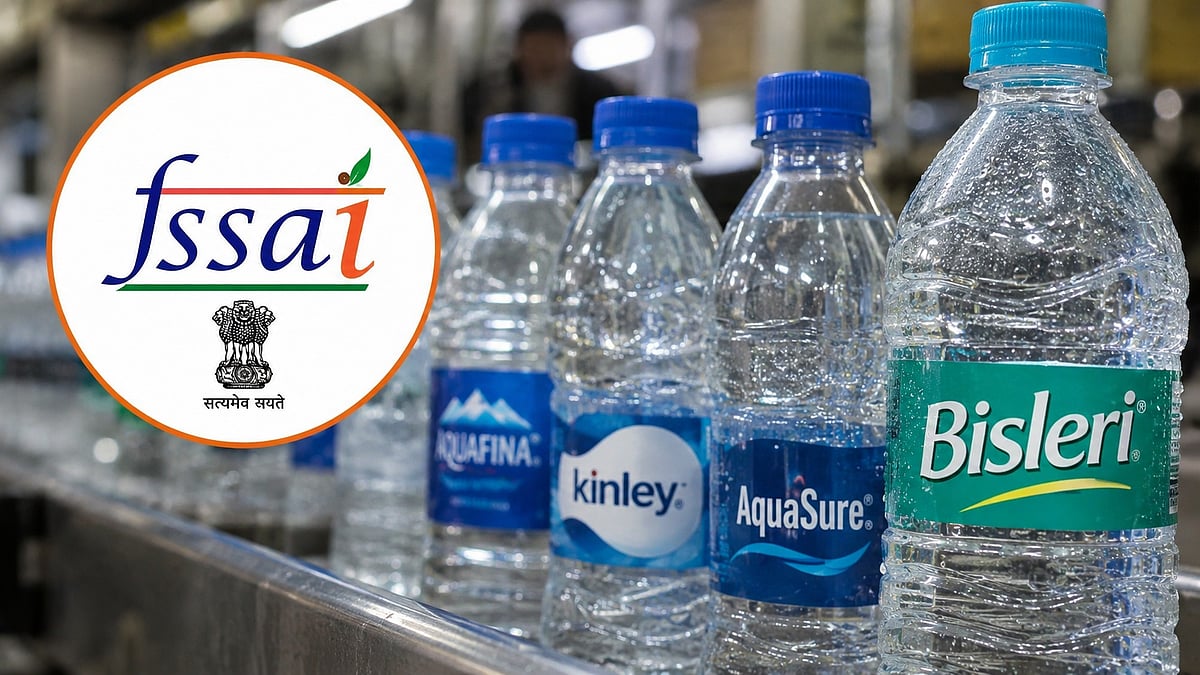
Currently, Dr Arora sees India’s bottled water industry already being ruled by known quality standards under BIS and FSSAI supervising the food safety and regulatory compliance. “However, following the shift away from the earlier BIS testing requirements, the frequency of testing has come down, with testing at intervals of even six months being considered acceptable. I believe the more exhaustive testing frequency that was followed earlier should be reinstated and mandated.”
The future
Sukrut sees bottled water remaining important in India, especially in cities. “However, consumers will become more conscious about what they are drinking and will expect greater transparency from brands. I also hope we see more focus on sustainable packaging and recycling.”
Dr Gill too sees the future of the industry being gradually dependent on consumer trust, quality assurance and responsible production. “As awareness around waterborne illnesses and drinking water safety grows, consumers are likely to become conscious of sourcing, purification and packaging standards. However, the long-term focus should also be on strengthening public drinking water infrastructure, improving water-quality monitoring and ensuring affordable access to safe water.”
Thus, the main focus should be on making safe drinking water easily available to everyone, whether it is packaged or provided via public systems.
Dr Arora suggests the industry become more rigorous in its approach to quality testing. “In many cases, testing is treated as a regulatory formality, where the objective is simply to obtain a test report to fulfil a requirement. Manufacturers need to view testing as an investment in consumer safety and brand protection. Good testing practices can help identify early warning signs before they become larger quality issues."
One must also shift from a volume-driven to a science-driven and quality-oriented business, along with getting into non-stop process monitoring, stronger regulatory compliance, and digital batch traceability.

Dr Kalambe adds, “At the same time, packaged drinking water should complement, rather than replace, improvements in municipal drinking-water infrastructure. Every manufacturer must be accountable for the quality of every bottle placed in the market. Consumer trust can only be sustained through transparency, reliable testing and unbending commitment to public health.”
Eventually, American politician Lincoln Chafee’s quote should be every brand’s motto – Trust is built with consistency.
How to pick the right bottled water
Always check if the bottle purchased is an authentic one from a recognised brand.
Look at proper labelling, valid FSSAI and applicable BIS licensing details, and other required product information.
Pay attention to batch details, especially if a specific batch has been identified by regulatory authorities.
Stay safe from counterfeit products.
Avoid frequent reuse of single-use plastic bottles.
Avoid drinking from bottles left open for long periods.
Avoid consuming water if it smells unusual or has a different smell, colour or taste.
Check bottle seals, and avoid damaged or tampered packaging.

