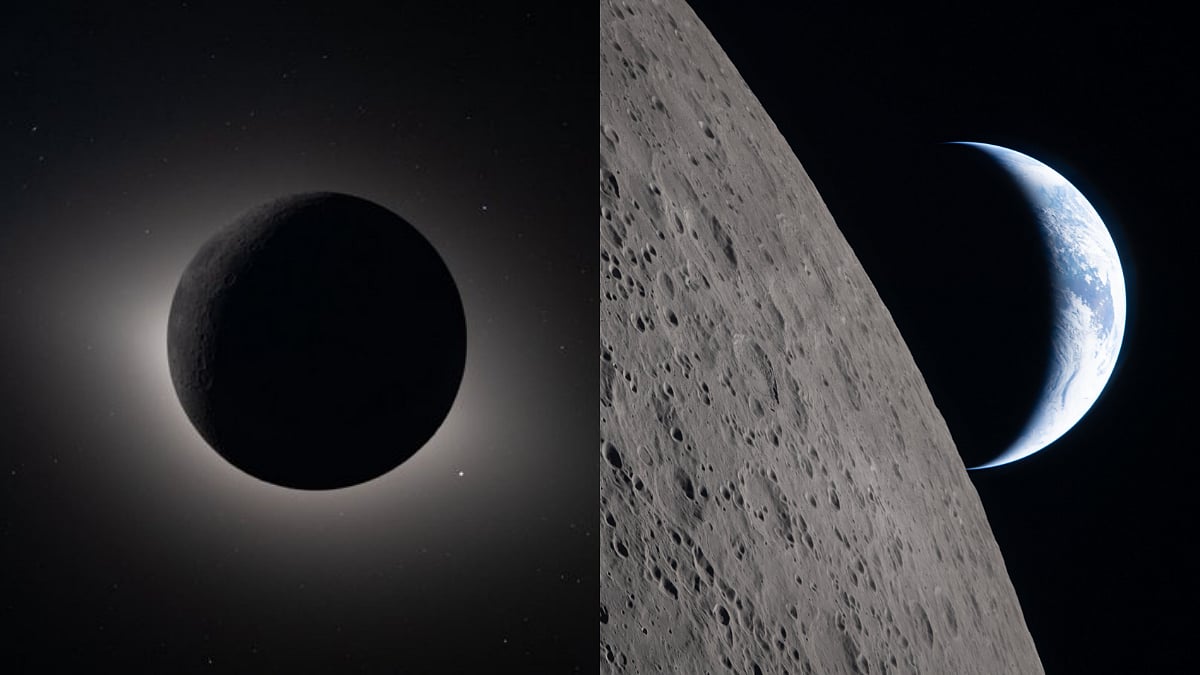
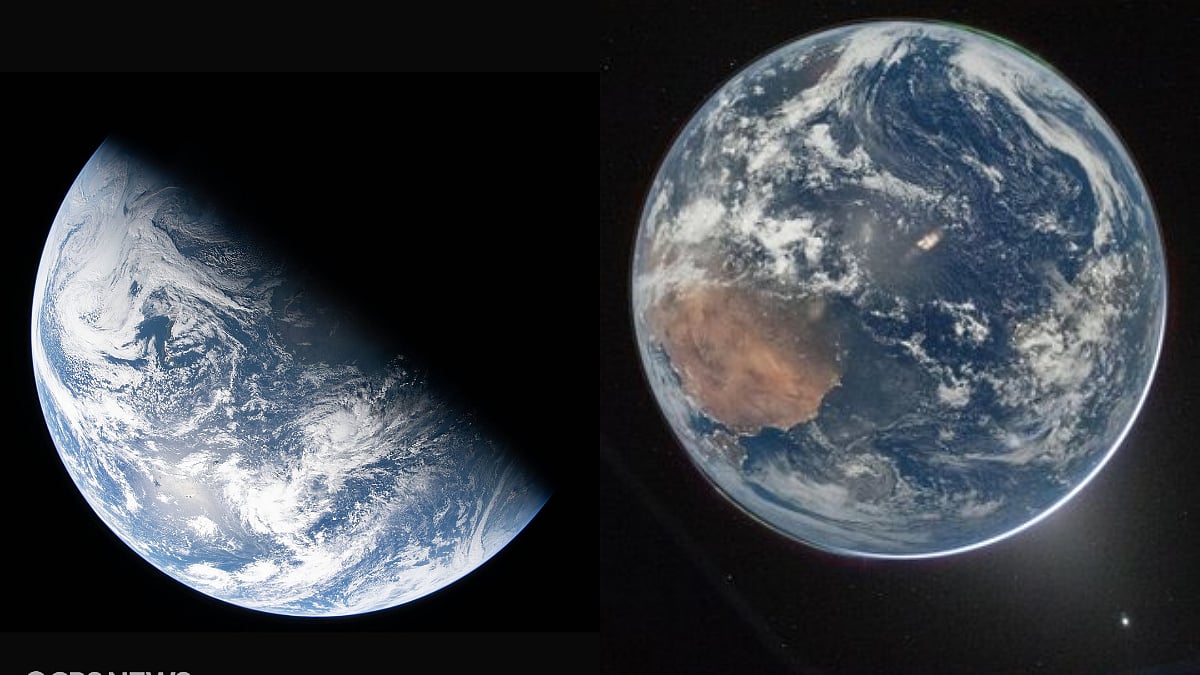
In a historic moment for space exploration, NASA has released the first images captured by astronauts aboard Artemis II during their fly-by of the Moon. Just days after sharing stunning visuals of Earth from space, the crew has now offered a breathtaking glimpse of the lunar surface and a rare celestial phenomenon known as “Earthset.”
One of the standout images shows Earth appearing to dip behind the Moon’s rugged, crater-filled landscape, a visual similar to a sunset but from a lunar perspective. This phenomenon, reminiscent of what astronauts witnessed during the Apollo 13 era.
The mission has also set a new milestone, with the crew traveling approximately 252,756 miles away from Earth, surpassing the record previously held by Apollo 13 and marking the farthest distance humans have ever journeyed into space.
Onboard the Orion spacecraft, astronauts Reid Wiseman, Victor Glover, Christina Koch and Jeremy Hansen worked in shifts over several hours, capturing nearly 10,000 photographs of space, the Moon and Earth. During the spacecraft’s transit behind the Moon, communication with Earth was temporarily lost for about 40 minutes, a standard occurrence during such missions.

Adding to the awe-inspiring experience, the astronauts witnessed a prolonged solar eclipse lasting nearly 54 minutes, with the Moon completely blocking the Sun, far longer than eclipses seen from Earth. They also observed distant planets like Mars, Venus and Saturn, along with stars and the soft glow of “Earthshine.”

