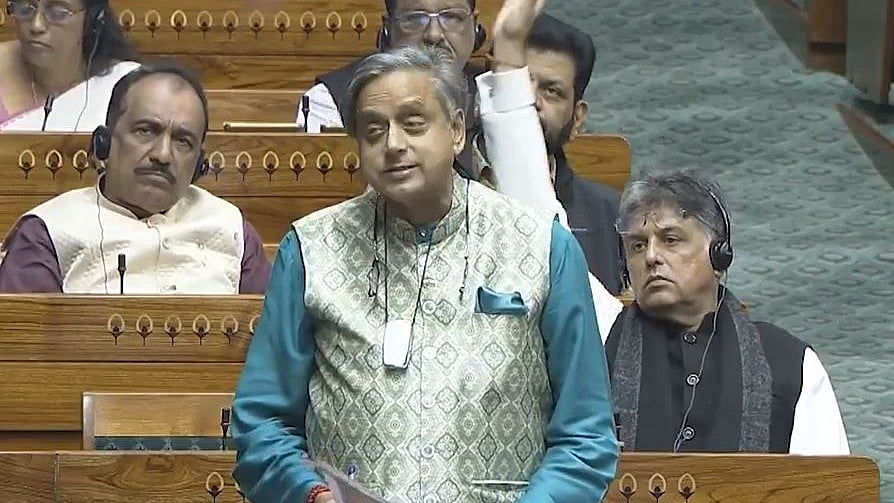
Congress MP Shashi Tharoor, who has been at odds with the party high command over various issues, raised his voice against the Bharatiya Janata Party’s move to replace the Mahatma Gandhi National Rural Employment Guarantee Scheme, introduced by the Congress-led UPA government in 2005, with the Viksit Bharat Guarantee for Rozgar and Ajeevika Mission.
Tharoor’s criticism of the BJP-led Centre comes at a time when there is strong buzz about his possible switch to the saffron party.
Speaking in the Lok Sabha on Tuesday, Tharoor opposed the new bill, named G Ram G. While the bill offers 25 additional days of paid work, it also mandates that states bear 40 per cent of the financial burden.
The Thiruvananthapuram MP, who had earlier drawn the ire of party leaders after praising Prime Minister Narendra Modi following Operation Sindoor, also opined that it was “immoral” to remove Mahatma Gandhi’s name from the scheme. He urged the government not to “sully Ram’s name.”
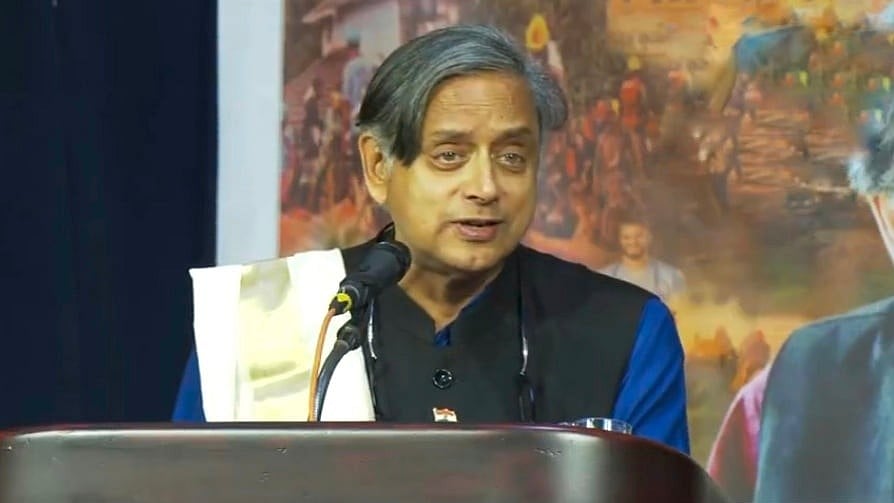
The Thiruvananthapuram MP expressed these views on X yesterday evening, though with some uncertainty, noting that removing Gandhi's name from a program designed for rural communities overlooks the deep connection between his vision of self-sufficient villages and the concept of ideal governance. He urged against disrespecting Gandhi's contributions by introducing unnecessary divisions.
He wasn't alone in his criticism of the government's decision. Congress politician Priyanka Gandhi Vadra also urged withdrawal of the legislation, questioning the obsession with renaming programs and highlighting the financial expenses involved in such changes. She emphasized that the program had been operating effectively for two decades in supporting rural economic development and called for the proposal to be reviewed by a standing committee before any hasty approval.

The original program receives full central government funding for wages paid to unskilled laborers, with states covering only a small portion of total costs. The new legislation alters this arrangement, shifting 40 percent of overall expenses to state governments. Opposition figures, including members from a significant BJP coalition partner (Andhra Pradesh's Telugu Desam Party), have raised concerns about the increased financial pressure on state budgets.
However, northeastern and Himalayan states would maintain a 90:10 federal-state funding split, while union territories would continue receiving complete central funding. Under this restructured model, the central government's contribution to the program's estimated annual budget of Rs 1.51 lakh crore would decrease to approximately Rs 95,692 crore.

